
- Starting MSRP: $45,300
- EPA-Estimated Range: Up to 281 miles
- Horsepower: 375 HP (dual-motor all-wheel-drive system)
Experts view the 2026 Toyota bZ Woodland as a strategic and capable entry into the electric adventure SUV market, combining rugged utility with competitive performance and charging infrastructure, positioning it as a strong contender against both electric and gasoline-powered rivals.
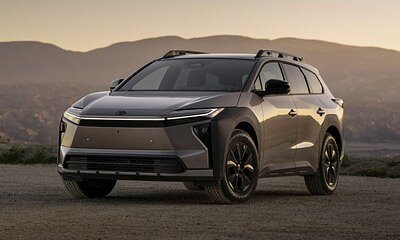
Toyota's bZ Woodland: A Rugged Electric SUV for Road and Trail
PLANO, TX – February 17, 2026 – Toyota is venturing beyond the pavement and into the heart of the growing adventure vehicle market with its latest all-electric offering, the 2026 bZ Woodland. Set to arrive in U.S. dealerships in March 2026, the rugged mid-size SUV combines potent performance with genuine utility, signaling a significant and aggressive step in the automaker’s electrification strategy. With a starting MSRP of $45,300, the bZ Woodland is positioned to challenge both established electric SUVs and their gasoline-powered counterparts.
As the second battery-electric vehicle (BEV) to join the brand's 'Beyond Zero' lineup, the bZ Woodland is a clear statement of intent. It arrives not just as another electric crossover, but as a purpose-built machine for those whose weekends involve dirt roads and heavy gear. Boasting a standard 375-horsepower dual-motor all-wheel-drive system, an EPA-estimated range of up to 281 miles, and a host of off-road-ready features, Toyota is betting that practicality and power can drive its EV ambitions forward.
A New Breed of Electric Adventurer
Where many first-generation EVs were designed with urban efficiency in mind, the bZ Woodland is engineered for versatility. Its rugged aesthetic is backed by legitimate capability, starting with 8.4 inches of ground clearance and a standard all-wheel-drive system enhanced with X-MODE®, a feature designed to optimize traction and control in slippery conditions. For low-speed crawling over challenging terrain, a Grip Control function modulates power delivery, acting as a sort of off-road cruise control.
This adventurous spirit is more than skin deep. Compared to its bZ sibling, the Woodland is nearly six inches longer, translating directly into greater utility. With the second-row seats folded flat, it opens up an impressive 74.3 cubic feet of cargo space, ample room for camping equipment, bikes, or luggage. Standard roof rails add another layer of practicality for mounting accessories. For those who need to haul heavier toys, the bZ Woodland offers a towing capacity of up to 3,500 pounds.
The vehicle's exterior styling reinforces its purpose, with rugged black overfenders, 18-inch aluminum wheels with aero covers, and an available all-terrain tire option for those planning to venture further off the beaten path. While not a hardcore rock-crawler in the vein of a 4Runner, it is positioned as a highly capable all-weather vehicle, a sort of “electric Outback” that provides a compelling alternative to higher-priced adventure EVs like the Rivian R1S, but with more off-road credibility than many mainstream electric crossovers.
Power, Performance, and a Pragmatic Powertrain
The bZ Woodland is the most powerful vehicle yet in Toyota's bZ lineup. The dual electric motors, one on each axle, deliver a combined 375 horsepower, enabling the SUV to accelerate from 0 to 60 mph in an estimated 4.4 seconds. This instant torque and confident acceleration are hallmarks of modern EVs, but here they are paired with a chassis designed for stability in varied conditions. The 74.7 kWh lithium-ion battery pack is placed flat under the floor, creating a low center of gravity, while a battery cross-framing structure enhances overall vehicle rigidity for stable handling on and off the road.
Range, a critical factor for any EV buyer, is competitive. The bZ Woodland achieves an EPA-estimated 281 miles on a full charge. Opting for the more aggressive all-terrain tires brings that figure down slightly to a still-respectable 260 miles. To manage energy consumption, drivers can use steering-wheel-mounted paddles to adjust the level of regenerative braking, capturing energy during deceleration to feed back into the battery.
Inside, the cabin is spacious and well-appointed. The BEV-dedicated e-TNGA platform allows for ample legroom in both front and rear seats. Standard features on the base bZ Woodland grade include SofTex®-trimmed seating, a heated steering wheel, heated front seats and outboard rear seats, and dual Qi-capable wireless device chargers. The Premium trim elevates the experience with a JBL® premium audio system, ventilated front seats, a fixed glass panoramic sunroof, and front radiant heaters for added cold-weather comfort.
Charging Forward with NACS and Enhanced Tech
Perhaps one of the most significant strategic decisions for the bZ Woodland is its standard inclusion of a North American Charging System (NACS) port. This move aligns Toyota with a growing industry consensus and grants owners direct, adapter-free access to Tesla’s extensive and reliable Supercharger network. This single decision dramatically expands fast-charging options and is a crucial step in mitigating range anxiety for potential buyers.
When connected to a DC fast-charger, the bZ Woodland can replenish its battery from 10% to 80% in approximately 30 minutes under ideal conditions. To ensure optimal charging speeds, the vehicle is equipped with a Battery Pre-conditioning feature that can be activated automatically when a fast-charging station is set as a destination in the navigation system. Furthermore, its Plug & Charge capability simplifies the process at compatible stations by automating authentication and payment.
The technological centerpiece of the interior is a massive 14-inch Toyota Audio Multimedia touchscreen, which comes standard on all trims and supports wireless Apple CarPlay® and Android Auto™. The system is powered by Toyota's Texas-based software teams and provides access to a host of connected services, including an Intelligent Assistant voice command system and cloud-based navigation.
Safety is also paramount, with every bZ Woodland featuring Toyota Safety Sense 3.0™. This comprehensive suite of active safety and driver assistance features includes a Pre-Collision System with Pedestrian Detection, Full-Speed Range Dynamic Radar Cruise Control, and Proactive Driving Assist. Additional standard features like a Panoramic View Monitor and Blind Spot Monitor with Rear Cross-Traffic Alert further enhance driver awareness.
Toyota's EV Strategy and Competitive Positioning
The arrival of the bZ Woodland marks a pivotal moment in Toyota's deliberate, or what some critics have called slow, transition to battery-electric vehicles. While the company has long championed a “multi-pathway” approach focusing heavily on hybrids, the bZ Woodland demonstrates a renewed and more aggressive push into the BEV space, backed by ambitious goals to sell 1.5 million BEVs annually by 2026.
With its starting price of $45,300, the bZ Woodland is priced to compete fiercely in the crowded mid-size SUV segment. It offers a unique proposition against popular EVs like the Hyundai IONIQ 5 by providing superior standard horsepower and a clear focus on rugged utility. It also presents a compelling value when compared to its mechanically similar platform-mate, the Subaru Solterra, which is expected to be slightly less equipped at a comparable price point. The bZ Woodland effectively carves out a niche for itself as a do-it-all electric SUV that is as comfortable on the daily commute as it is on a weekend escape to the mountains, offering a blend of performance, practicality, and adventure-readiness that is poised to resonate with a broad swath of American drivers.
Topics & Related
Corporate Finance
Revenue
Software & SaaS
Cloud Migration
ESG
Related Company Pulse