
- $42 billion: The global Power Management IC market in 2025, projected to surge past $72 billion by 2034. - 750V and 1200V SiC die and modules: Toshiba's new automotive components designed for EV drivetrain inverters, reducing energy loss and improving efficiency. - Vertically integrated manufacturing model: Toshiba's strategy to control production from raw materials to finished devices, ensuring supply chain stability.
Experts would likely conclude that Toshiba's strategic focus on advanced power semiconductors positions it as a key player in addressing the critical efficiency demands of AI and EV industries, leveraging wide-bandgap materials and vertical integration to secure a competitive edge.
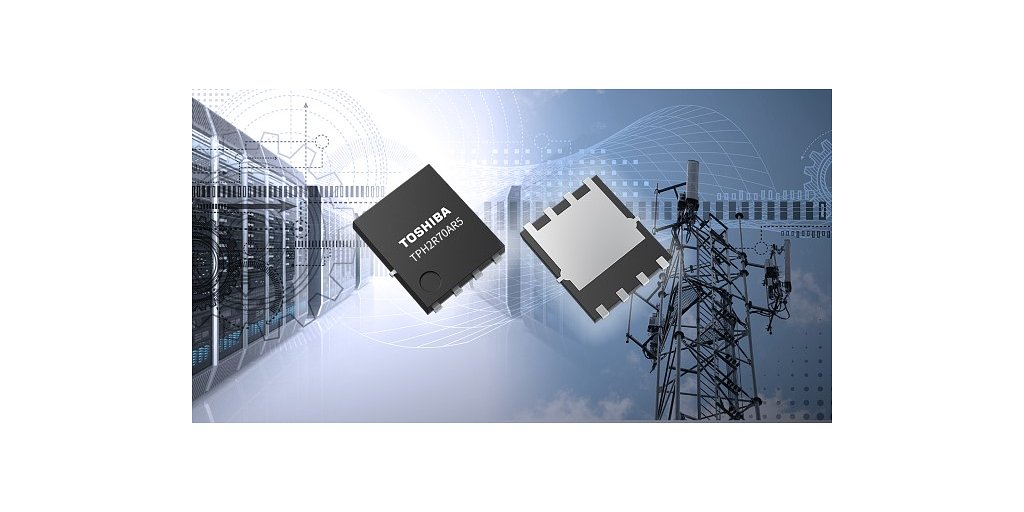
Toshiba's Strategic Power Play: New Chips for the AI and EV Era
SAN ANTONIO, TX – March 23, 2026 – As the power electronics industry converges on San Antonio for the Applied Power Electronics Conference (APEC) 2026, Toshiba America Electronic Components, Inc. is making a significant statement of intent. The company is showcasing a suite of advanced power semiconductor solutions designed to tackle the two most pressing challenges in modern technology: the insatiable energy appetite of artificial intelligence and the drive for greater efficiency in electric vehicles.
While product unveilings are standard fare at industry trade shows, Toshiba's announcements are part of a broader, high-stakes narrative unfolding across the semiconductor landscape. The company is highlighting new silicon carbide (SiC), gallium nitride (GaN), and advanced silicon (Si) devices, placing itself at the center of a technological arms race to build the foundational components for a more electrified and intelligent world. The demonstrations at its booth are less a simple product display and more a strategic vision for how it plans to power the next decade of growth in the automotive, data center, and industrial sectors.
The New Battleground: Powering AI and EVs
The semiconductor industry is grappling with a paradigm shift driven by immense power demands. In data centers, the rapid proliferation of AI and high-performance computing (HPC) has created what some analysts call the "AI power wall." The complex processors driving these systems require staggering amounts of electricity, creating a critical bottleneck where power delivery efficiency is paramount. The global Power Management IC market, valued at nearly $42 billion in 2025, is projected to surge past $72 billion by 2034, largely fueled by this demand.
Simultaneously, the automotive industry's transition to electric mobility hinges on maximizing vehicle range and minimizing charging times. Every percentage point of efficiency gained in an EV's drivetrain inverter or on-board charger translates directly to more miles on the road and a better user experience. This has created fervent demand for power semiconductors that can operate at higher voltages, temperatures, and switching speeds with minimal energy loss.
It is at this intersection of need and innovation that Toshiba is focusing its efforts. The company's latest portfolio is engineered to reduce power loss and simplify thermal management in these demanding environments. By leveraging wide-bandgap materials like SiC and GaN, which offer superior performance over traditional silicon, Toshiba aims to provide the building blocks for smaller, lighter, and vastly more efficient power systems. These are not incremental improvements; they are enabling technologies for next-generation system designs that were previously constrained by the limitations of older components.
Inside Toshiba's Next-Generation Arsenal
At the heart of Toshiba's APEC showcase are several key product families and technological advancements, each targeting specific pain points in high-growth markets.
For automotive applications, the company is featuring new 750V and 1200V SiC die and modules explicitly designed for EV drivetrain inverters. These components are critical for converting DC power from the battery to the AC power needed by the motor. By using SiC, these modules can handle the high power levels required for vehicle propulsion with significantly lower energy loss, directly contributing to extended range and improved performance. The company is also showcasing system reference designs for automotive ECU power architectures, providing a tangible blueprint for Tier 1 suppliers and automakers.
In the data center and industrial space, Toshiba is expanding its UMOS™ 11 MOSFETs. This new generation of silicon-based transistors features improved switching characteristics and reduced on-resistance, which translates to higher efficiency in power supply units (PSUs). A key innovation is the new top-side cooled TOGT package, an advanced packaging solution engineered for thermally demanding applications. By enabling heat to dissipate through the top of the package, it reduces thermal stress on the printed circuit board (PCB), allowing for greater power density—a critical factor in crowded server racks.
Beyond its immediate product launches, Toshiba is signaling its long-term commitment to wide-bandgap materials with ongoing development in low-voltage and high-voltage GaN technologies. While SiC excels in high-voltage applications like EV inverters, GaN's advantage lies in its ability to switch at extremely high frequencies, enabling more compact and efficient power supplies and chargers. With further GaN product updates planned for later this year, Toshiba is building a comprehensive portfolio that can address a wide spectrum of power conversion needs.
A Crowded Field of Innovators
Toshiba's strategic push does not exist in a vacuum. The APEC 2026 exhibition floor is a testament to an industry-wide pivot towards the same high-value markets. Competitors are showcasing their own powerful innovations, creating a fiercely competitive environment.
Wolfspeed, a leader in SiC, is promoting its development of 300mm SiC wafers, a move intended to scale production and lower costs for the material. Bosch is featuring its own robust portfolio of SiC trench MOSFETs aimed squarely at the EV market. Meanwhile, Renesas is highlighting its "SuperGaN" technology for AI data centers and solar inverters, and STMicroelectronics is also focusing on wide-bandgap solutions for AI power delivery.
This intense competition underscores the massive opportunity at stake. The company that can deliver the most reliable, efficient, and cost-effective power solutions for EVs and AI will secure a foundational role in the future economy. Toshiba's strategy appears to be leveraging its breadth, offering solutions across Si, SiC, and GaN to provide customers with optimized components for their specific application, rather than betting on a single material technology.
The Strategic Blueprint: Securing the Supply Chain
Perhaps one of the most critical elements of Toshiba's strategy, highlighted in its APEC messaging, is its commitment to a vertically integrated manufacturing model. In an era defined by supply chain volatility, controlling the production process from raw materials to finished devices offers a powerful competitive advantage.
By owning its manufacturing processes, Toshiba can ensure consistent quality, better manage production capacity, and provide its customers with the long-term supply stability that is essential for long-lifecycle products in the automotive and infrastructure sectors. This in-house control is particularly crucial for newer materials like SiC, where the manufacturing process is more complex than for traditional silicon.
This vertical integration, combined with a globally diversified supply chain, is designed to de-risk procurement for customers building out hyperscale data centers and EV production lines. As demand for these advanced power semiconductors is expected to outstrip supply in the coming years, the ability to guarantee a reliable and scalable source of components becomes a major selling point. It positions Toshiba not just as a technology provider, but as a strategic partner capable of supporting the exponential growth of its clients.