
- $51 billion: Insured losses from severe convective storms (including tornadoes) in 2025, marking the third consecutive year exceeding $50 billion. - 300 tornadoes: Record number reported in March 2025, resulting in $8.4 billion in insured losses. - Eastward shift: Peak tornado formation area moved from traditional 'Tornado Alley' (Great Plains) to 'Dixie Alley' (Mississippi, Alabama, Louisiana) between 1986-2020.
Experts agree that tornado activity is expanding beyond traditional regions, requiring urgent preparedness and proactive risk mitigation to address escalating economic and safety threats.
Tornado Threat Expands Beyond 'Alley,' Demanding New Preparedness
WOODLAND HILLS, Calif. – April 20, 2026 – The traditional map of "Tornado Alley" is being redrawn by a volatile climate, as severe weather and destructive tornadoes increasingly strike communities far beyond the Great Plains. In response to this shifting threat, insurers and safety experts are issuing urgent calls for a new level of preparedness, encouraging residents across a wider swath of the United States to review their safety plans and financial protections before the next siren sounds.
Reflecting this growing concern, Farmers Insurance recently issued a nationwide advisory, emphasizing that the risk of tornadoes is no longer a regional issue but a national concern. The insurer's guidance underscores a stark reality supported by a growing body of meteorological research: tornado activity is expanding, and preparation is no longer optional.
The New Geography of Severe Weather
For decades, the term "Tornado Alley" evoked images of the flat landscapes of Texas, Oklahoma, and Kansas. However, recent data paints a different picture. A significant body of research from institutions like the National Oceanic and Atmospheric Administration (NOAA) confirms a discernible eastward migration of tornado frequency and impact. This new hotspot, often dubbed "Dixie Alley," encompasses states like Mississippi, Alabama, Tennessee, and Kentucky, and the trend extends into the Midwest and even parts of the eastern seaboard.
A 2024 study published in the Journal of Applied Meteorology and Climatology highlighted this dramatic shift, finding that between 1986 and 2020, the peak area for tornado formation had moved to Mississippi, Louisiana, and Alabama. This contrasts sharply with the 1951-1985 period when the epicenter was firmly in the traditional plains states.
While the total number of tornadoes annually has remained relatively stable when accounting for improved detection methods, their behavior has changed. Experts point to an increase in tornado outbreaks—days with multiple twisters—and a concerning rise in cold-season tornadoes outside the typical spring and summer months. This evolving pattern means more communities are facing a threat they may not be historically accustomed to, often in more densely populated areas where the potential for devastation is greater.
"Tornadoes don't follow a calendar or respect state lines," said Greg Panhaussen, Head of Property Product at Farmers Insurance, in a statement. "Preparation and awareness can make a meaningful difference when severe weather occurs."
The Staggering Economic Toll
This geographic shift is coupled with a dramatic escalation in economic and insured losses. Severe convective storms (SCS)—the category that includes tornadoes, hail, and high winds—have become the costliest natural peril for the insurance industry. In 2025 alone, these storms generated a staggering $51 billion in U.S. insured losses, marking the third consecutive year that losses surpassed the $50 billion threshold.
The total economic damage from SCS in 2025 exceeded $68 billion. The financial pain is becoming more frequent and widespread. A single month, March 2025, saw a record 300 reported tornadoes that resulted in $8.4 billion in insured losses.
This surge in costs is not driven by weather alone. A combination of factors is creating a perfect storm for financial losses. Inflation has driven up the costs of labor and building materials, making post-disaster repairs more expensive than ever. Furthermore, population growth and development in the Southeast and other newly at-risk regions mean that more valuable property is in the path of these powerful storms. This increased exposure is forcing the insurance industry to recalibrate its risk models and, in turn, its approach to policyholders.
From Payouts to Proactive Protection
In response to these escalating risks, the insurance industry is undergoing a fundamental transformation. Companies are moving beyond their traditional role of simply paying claims after a disaster to becoming active partners in proactive risk mitigation and public education. The advisory from Farmers Insurance is a prime example of this industry-wide pivot toward resilience.
The core message is clear: an ounce of prevention is worth a pound of cure. Insurers are collaborating with organizations like the Insurance Institute for Business & Home Safety (IBHS) to promote stronger building codes and resilient construction methods. They are also investing heavily in consumer education, providing checklists, digital tools, and practical advice to empower homeowners and drivers to protect themselves and their property. This shift acknowledges that while weather cannot be controlled, its devastating impact can be lessened through preparation.
Your Ultimate Preparedness Checklist
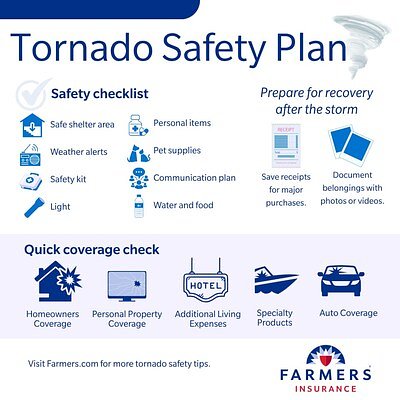
For individuals and families, this new reality demands concrete action. Based on guidance from insurers and federal safety agencies, a modern preparedness plan should be a priority for every household, regardless of location.
Before the Storm:
* Create a Safety Plan: Identify a safe shelter in your home, such as a basement, storm cellar, or an interior room on the lowest floor with no windows. Ensure every family member knows the plan and practice it regularly.
* Stay Informed: Sign up for local emergency alerts and invest in a NOAA Weather Radio, which provides direct warnings from the National Weather Service and can automatically activate when danger is imminent.
* Secure Your Property: Tie down or store outdoor furniture, grills, and trampolines. These items can become dangerous projectiles in high winds.
After the Storm:
* Document Everything: This is one of the most critical steps for a smooth recovery. Use your smartphone to take photos or videos of your belongings and the condition of your home before a storm hits. Store these files in the cloud.
* Keep Records: Save digital copies of important documents, insurance policies, and receipts for major purchases like appliances and electronics.
"After a storm, having records like photos, videos, and receipts readily available can make a real difference," noted Bobby Massey, Head of Catastrophe Claims at Farmers Insurance. "Those simple steps can help us verify what was damaged more quickly and focus on helping customers move forward with the recovery process."
Review Your Coverage:
An annual insurance review is essential. Do not assume you are covered. Speak with an agent to understand the specifics of your policies, including:
* Homeowners Insurance: Check your dwelling coverage to ensure it is sufficient to rebuild your home at current construction costs. Verify your personal property coverage for belongings and ask about additional living expenses (ALE) coverage, which helps pay for temporary housing if your home becomes uninhabitable.
* Vehicle Insurance: Only comprehensive coverage protects your car from non-collision damage, including hail, falling trees, and flying debris that often accompany tornadoes.
* Specialty Items: If you own a boat, motorcycle, or RV, ensure these have their own specific policies with adequate coverage.
"Understanding your coverage before a storm hits can help reduce stress and speed recovery afterward," Panhaussen added. "Preparedness and resilient construction can help homeowners better protect what matters most."
Topics & Related
Insurance
Climate Risk
Revenue
Net Income
Related Company Pulse