
- 95% reduction in VRAM usage with NeuroStream technology, enabling high-end AI models to run on mainstream consumer hardware.
- 6 new AI models released, including 4 for image enhancement and 2 for video processing.
- Subscription-only model introduced, discontinuing perpetual licenses, with annual costs reaching several hundred dollars.
Experts view Topaz Labs' shift to local AI processing as a bold and strategic move that addresses critical concerns like data privacy, internet dependency, and cloud costs, though the subscription model may alienate some users.
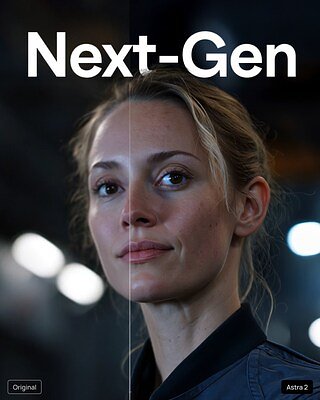
Topaz Labs Bets on Local AI with Major 'Next-Gen' Model Release
DALLAS, TX – April 29, 2026 – AI-powered software company Topaz Labs has announced its largest and most ambitious product launch to date, releasing a suite of six new “Next-Gen” AI models for image and video enhancement. The release, featuring four new image models and two for video, represents a significant leap in the company's technical capabilities. However, the true story lies not just in the improved output, but in the underlying technology that challenges the industry’s growing dependence on cloud computing.
At the heart of the launch is Topaz NeuroStream, a proprietary technology designed to allow incredibly complex and power-hungry AI models to run locally on consumer-grade computers. This move signals a bold strategic pivot, positioning Topaz Labs as a champion of user-controlled, on-device processing in an era dominated by cloud-based subscriptions and pay-per-use services.
The Local AI Revolution on Your Desktop
The key innovation enabling this launch is NeuroStream, a technology developed in collaboration with NVIDIA that dramatically reduces the hardware requirements for running advanced AI. According to the company, NeuroStream can cut the video memory (VRAM) usage of its models by up to 95%. This allows models that would otherwise require 30-56 GB of VRAM—a specification found only in expensive, professional-grade GPUs—to operate smoothly within the 3 GB VRAM range available on many mainstream laptops and desktops.
This optimization makes high-end AI enhancement accessible to a much broader audience of photographers, videographers, and hobbyists who do not own specialized hardware. The technology is optimized for NVIDIA RTX GPUs but also supports AMD cards and Apple Silicon M-series chips, covering a wide swath of the creative market.
“This is both the largest and most technically advanced set of models we've released in the company's history,” said Eric Yang, CEO of Topaz Labs, in a press statement. “Without such technology, the complex, heavyweight AI models in today's release would have been limited to cloud-only rendering, forcing users to pay per use and be reliant on internet connection. We believe local use is crucial to the future of AI in both professional and consumer use cases, and today’s release is a huge step.”
By prioritizing local processing, Topaz Labs addresses several key user concerns, including data privacy, the need for a constant internet connection, and the unpredictable recurring costs associated with cloud processing credits.
Next-Gen Models: Pushing the Boundaries of Quality
The new release spans the company’s entire product ecosystem, introducing powerful tools for sharpening, denoising, and upscaling visual media. All new image models are available in the Topaz Photo desktop application and are powered by the local-first NeuroStream technology.
The four new image models include:
* Wonder 3: A one-click solution for simultaneous sharpening, upscaling, and noise reduction.
* Denoise Max: A new benchmark model for eliminating noise and digital grain from photos.
* Super Focus 3: A sharpening tool designed to recover subjects from motion blur and poor focus.
* High Fidelity 3: An advanced upscaling model for high-resolution source files like RAW images, utilizing a two-part architecture to enhance detail while minimizing common AI artifacts.
On the video front, the company introduced two distinct models that highlight its hybrid local-and-cloud strategy:
Starlight Precise 2.5 (Local): This groundbreaking model, available for local processing in the Topaz Video application, is engineered to enhance natural details, excelling at cleaning up AI-generated video and improving the appearance of human faces and skin textures.
Astra 2 (Cloud): In contrast, Astra 2 is a creative upscaling model so computationally demanding that it runs exclusively on Topaz Labs’ cloud servers. It goes beyond simple enhancement, synthesizing new, convincing detail into footage. It is particularly effective on landscapes and nature scenes but is less suited for footage focused on people, where it can produce “uncanny” results. This model introduces prompt-based input and creativity sliders, pushing it closer to a generative tool.
A Strategic Shift in a Cloud-Dominated Market
Topaz Labs’ commitment to local processing is a direct challenge to the prevailing trends in the creative software industry. Major competitors like Adobe have heavily integrated cloud-dependent generative AI features like Generative Fill and Generative Expand into Photoshop, which rely on remote servers for processing. Other services, like Imagera AI, are entirely cloud-based, trading local control for hardware independence.
While rivals like Blackmagic Design’s DaVinci Resolve also offer powerful, locally processed AI features via its Neural Engine, Topaz's focus with NeuroStream is unique in its explicit goal of democratizing access to its most advanced models on consumer hardware. This local-first strategy offers a compelling alternative for professionals concerned with workflow speed, data security, and cost predictability, freeing them from the bottleneck of internet uploads and the meter of cloud credits.
However, the existence of the cloud-only Astra 2 model shows a pragmatic understanding of current limitations. Topaz appears to be pursuing a dual-track approach: bringing as much power as possible to local devices via NeuroStream while still pushing the absolute ceiling of quality with cloud solutions for tasks that remain beyond the reach of today's consumer hardware.
The Price of Innovation: New Models, New Pricing
This major technological leap arrives alongside a significant shift in the company’s business model that has been met with a mixed reception. In late 2025, Topaz Labs discontinued its popular perpetual licenses, moving its entire product line—including Topaz Photo and Topaz Video—to a subscription-only model. The days of a one-time purchase are over, a move that alienated some long-time users and hobbyists.
Access to the new Next-Gen models requires an active subscription, with options for individual applications or an all-access “Topaz Studio” bundle priced at several hundred dollars annually. Furthermore, using cloud-based models like Astra 2 or the company’s API requires purchasing cloud credits on top of the base subscription fee.
While professional users may see the subscription as a necessary cost for best-in-class tools, the transition has been a point of contention online. Some former customers have praised the software's quality but deemed the new pricing structure a “deal-breaker.” This places the company at a critical juncture, balancing the need to fund its intensive research and development against the risk of pricing out a segment of its user base. For creative professionals and enthusiasts alike, the decision now hinges on whether the promise of unparalleled local processing power justifies the commitment to Topaz Labs' new subscription-based ecosystem.