
- 15% market share: Toast holds a commanding 15% share of the U.S. restaurant industry.
- 83% of operators: Over 83% of food and beverage retail operators plan to increase AI tool usage in 2026.
- $100M ARR goal: Toast aims to generate $100 million in Annual Recurring Revenue (ARR) from new segments by 2025.
Experts view Toast's AI-driven expansion into retail as a strategic move to leverage its hospitality expertise while facing stiff competition from established players.
Toast's AI Overhaul Signals Bold Expansion into Retail Market
NEW YORK, NY – January 08, 2026 – Hospitality technology giant Toast, Inc. today signaled a major strategic expansion into the broader retail market, unveiling a suite of platform updates powered by artificial intelligence. The new capabilities, showcased at the 2026 National Retail Federation Show, are designed to arm retailers with sophisticated tools for inventory management, pricing intelligence, and advertising, positioning the company to challenge established players in the competitive retail tech space.
The announcement centers on significant enhancements to Toast IQ, the company's AI assistant, which now offers retail-specific functions. This move marks a deliberate pivot for Toast, a company that built its reputation and a commanding 15% market share in the U.S. restaurant industry, as it seeks new avenues for growth beyond the kitchen.
An AI Co-Pilot for the Modern Retailer
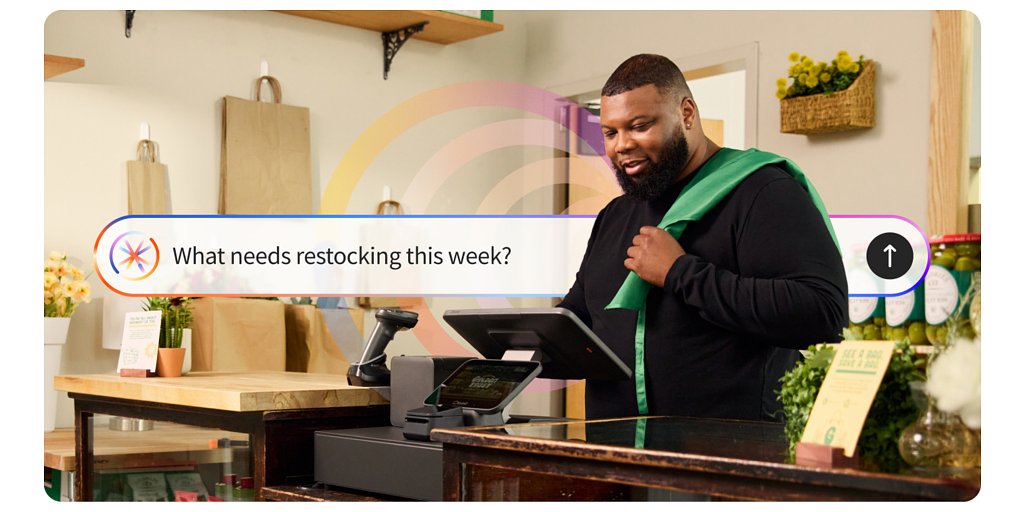
At the heart of Toast's retail offering is Toast IQ, an AI assistant now tailored to understand the complex rhythms of a retail environment. The system responds to natural language prompts, allowing store managers and owners to converse with their data. Instead of digging through spreadsheets, an operator can simply ask, “What needs restocking this week?” or “Which items that sold recently are low in stock?” to receive instant, actionable inventory reports.
This conversational approach extends to financial strategy. The AI can be prompted to suggest price changes to achieve specific revenue goals or maintain desired profit margins. For example, a user could ask, “What prices should I set for my items to maintain a 30% margin?” and receive data-driven recommendations. Crucially, the platform connects insight directly to action. An operator can tell the system, “Mark the California olive oil out of stock” or “Write an item description for the new peach salsa,” and Toast IQ executes the task within seconds, directly in the user interface.
For many retailers, managing inventory and margins is a constant, manual struggle. Kirsten Maitland, Co-Owner of Rebel Cheese in New York City, highlighted the value of such a system. “Margins and cash flow are things I’m constantly watching, and Toast makes that so much easier,” she stated. “Prices are always fluctuating, so I rely on Toast to monitor my margins and alert me when something drops below my threshold. If an item falls under 40%, I know right away and can either raise the price or stop carrying it. With hundreds of products, you can’t track every single item manually—Toast gives me the visibility to protect my margins and take action fast.”
This focus on AI aligns with a significant industry shift. Toast’s own research found that over 83% of food and beverage retail operators plan to increase their use of AI tools in 2026, a figure supported by broader market analyses showing a surge in demand for real-time analytics and intelligent automation.
Beyond the Restaurant: A Calculated Expansion
Toast's foray into retail is not a tentative step but a calculated strategic diversification. Having established a dominant position in the restaurant sector, the company is now leveraging its robust, all-in-one platform to capture a new total addressable market (TAM). This expansion targets the growing convergence between food service and retail, where grocery stores offer prepared foods and restaurants sell merchandise.
Company leadership has signaled this shift for some time, referring to 2024 as a "test and learn" year for its retail offerings. After seeing positive results, Toast is now investing in a dedicated retail sales team with ambitious goals. The company aims to secure over 10,000 customer locations across its new segments, including retail and international markets, by the end of 2025. These new ventures are projected to generate a collective $100 million in Annual Recurring Revenue (ARR) in 2025, with leadership suggesting each new TAM holds the potential to become a billion-dollar business over time.
"Retailers need new ways to unlock greater efficiency and growth—without adding time spent or operational complexity,” said Omri Traub, COO of Retail at Toast. “With Toast IQ, operators have an AI-powered ‘right hand’ partner that understands the flow of inventory and pricing as naturally as a store manager does, surfacing helpful, actionable insights at the right time."
An Integrated Arsenal for Independent Merchants
A key part of Toast's strategy appears to be democratizing advanced technology for small and medium-sized businesses (SMBs). By bundling a wide range of capabilities into a single platform, the company aims to provide independent merchants with tools that were once the exclusive domain of large enterprises.
Beyond the AI assistant, the platform updates include:
* AI Invoice Scanning: An upcoming feature that will allow users to scan invoices, with AI automatically extracting line-item details into Toast's inventory receiving workflows. This promises to eliminate hours of tedious manual data entry and improve inventory accuracy.
* Cloud-Enabled Scales and Labeling: New integrations with hardware partners DIGI America and Upshop 360 will connect weighing and labeling systems directly to the cloud. This enables retailers to instantly update prices on hundreds of weighted items, a process that is traditionally manual and error-prone for grocers and delis.
* Simplified Advertising: Toast Advertising is a new tool that uses AI suggestions to help retailers launch digital ad campaigns on Google and Meta in minutes, with no marketing expertise required. By connecting ad performance directly to in-store and online sales, it provides clear ROI. According to Toast, beta users have seen an average return on ad spend of over 8X.
* Mobile Operations: The Toast Go® 3 handheld device, already popular in restaurants, is being enhanced with barcode scanning capabilities. This will allow staff to process sales, check inventory, and perform stock-takes directly from the sales floor, reducing reliance on separate, clunky hardware.
This all-in-one approach is critical for SMBs, who often lack the resources to integrate and manage multiple software solutions for point of sale, inventory, and marketing.
Navigating a Crowded and Competitive Field
While Toast's technology is compelling, its expansion places it in direct competition with a host of established retail technology providers. Companies like Square, which has a strong foothold in retail, Lightspeed, known for its robust inventory management, and e-commerce giant Shopify with its growing POS presence, all offer competitive solutions for SMBs.
Toast's closed, all-in-one model—where it provides the software, hardware, and payment processing—can be a double-edged sword. While it offers simplicity and seamless integration, it can also limit flexibility for retailers who prefer to choose their own payment processor or integrate third-party apps not supported by the Toast ecosystem.
Furthermore, as Toast moves upmarket to serve larger retailers, it will face entrenched competition from enterprise-level providers like Oracle. Some industry analysts have expressed skepticism about its ability to displace these legacy players, who often have long-standing relationships and offer extensive local support.
However, Toast is betting that its modern, cloud-native, and AI-driven platform offers a superior user experience and a faster path to profitability. By focusing on the specific needs of food and beverage retailers—a segment it understands intimately from its restaurant business—the company is carving out a strategic niche. The success of this ambitious push will depend on its ability to convince retailers that its integrated ecosystem provides more value than the mix-and-match approach offered by its competitors.
Topics & Related
Artificial Intelligence
Generative AI
Software & SaaS
AI & Machine Learning
Fintech
Revenue
EBITDA
Related Company Pulse