
- $3 trillion: TMGM's record monthly trading volume in March 2026
- 80%: Gold CFDs (XAUUSD) dominated the trading activity
- 3.3%: U.S. inflation rate, a nearly two-year high
Experts would likely conclude that TMGM's record volume reflects a broader market shift toward safe-haven assets like gold amid heightened volatility and geopolitical uncertainty, though regulatory and operational challenges remain significant for brokers in this space.
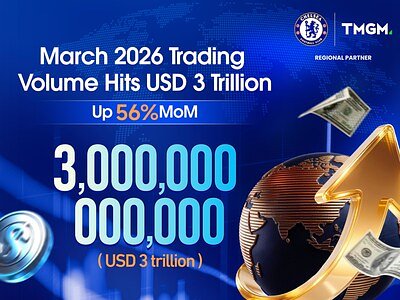
TMGM Hits $3 Trillion Volume as Gold Frenzy Grips Volatile Markets
SYDNEY, AU – April 23, 2026 – Australian-founded brokerage TMGM announced a historic milestone this week, reporting a total trading volume of approximately USD 3 trillion for March 2026. The figure marks the highest monthly volume in the company's history, a surge driven by what the firm described as a period of heightened market volatility. An analysis of the activity reveals a dramatic concentration in gold, pointing to a broader shift in investor strategy amid global uncertainty.
The Anatomy of a Trillion-Dollar Month
According to the company's announcement, the unprecedented volume was overwhelmingly powered by trading in Contracts for Difference (CFDs) on gold (XAUUSD). This single instrument accounted for approximately 80% of the total $3 trillion figure, firmly establishing the precious metal as the centerpiece of market activity on the platform.
While gold dominated the landscape, TMGM noted that other popular CFD instruments also saw sustained interest. These included major equity indices like the Nasdaq (NAS100) and leading digital assets such as Bitcoin (BTCUSD). However, their contribution paled in comparison to the sheer scale of gold-related trades, highlighting a clear preference among traders for the traditional safe-haven asset during the turbulent month.
The trading patterns reflect a market-wide focus on highly liquid instruments that react swiftly to short-term price movements. The intense volatility in March provided a fertile ground for such strategies, creating numerous entry and exit points for traders.
"This milestone reflects continued participation during a period of active market conditions," TMGM stated in its press release. "We observed strong trading activity throughout March, particularly in gold CFDs, as price movements created more opportunities for engagement."
A Market on Edge: Geopolitics and Gold's Volatile Allure
This record-breaking trading activity did not occur in a vacuum. March 2026 was a month fraught with global economic and geopolitical instability. Escalating tensions in the Middle East, particularly disruptions in the Strait of Hormuz, caused a sharp spike in crude oil prices. This, in turn, fueled widespread concerns about a new wave of inflation, with the U.S. inflation rate climbing to a nearly two-year high of 3.3%.
This environment sent ripples across global financial markets. Major stock indices, including the S&P 500 and the tech-heavy Nasdaq, posted declines as investors grew warier of risk assets. The prevailing sentiment among retail investors, once characterized by a "buy the dip" mentality, appeared to shift towards a more cautious "sell on rallies" approach, prioritizing capital preservation.
In this climate, gold's role as a safe haven became more pronounced. However, its performance was complex. While long-term demand for gold was supported by geopolitical risk, the month also saw a short-term drop in its price. This dip was attributed to a strengthening U.S. dollar, profit-taking, and institutional investors selling liquid assets like gold to cover margin calls in other-asset classes. Paradoxically, this price drop and subsequent choppiness created the very volatility that traders thrive on, generating the high volume of short-term trading opportunities reflected in TMGM's report.
The Retail Rush and Regulatory Realities
The massive concentration of volume in gold CFDs suggests a significant behavioral trend among retail investors. The data indicates a potential rotation of capital away from the high-growth technology stocks and volatile cryptocurrencies that captured headlines in previous years, and back towards traditional stores of value. The accessibility of CFDs, which allow traders to speculate on price movements without owning the underlying asset, has made it easier than ever for retail participants to engage with commodities like gold.
Handling such a monumental flow of trades, particularly in high-risk leveraged products, places immense pressure on a brokerage's operational and regulatory framework. TMGM operates under a multi-jurisdictional regulatory umbrella, with licenses from authorities in Australia (ASIC), Vanuatu (VFSC), Mauritius (FSC), and Seychelles (FSA). This global regulatory footprint is designed to provide clients with a degree of security, including measures like client fund segregation.
However, the path for brokers in this fast-growing industry is not without its challenges. In May 2024, TMGM's Australian entity, Trademax Australia Limited, faced interim stop orders from ASIC. The regulator raised concerns about the adequacy of the firm's client onboarding process, specifically its questionnaires for assessing whether the high-risk CFD products were suitable for potential clients. The company responded by halting the onboarding of new Australian clients and engaging compliance experts to address the regulator's concerns. This past scrutiny highlights the constant regulatory pressure and inherent risks associated with the CFD market, for both the provider and the client.
The Engine Room: Technology Behind the Volume
Successfully processing trillions of dollars in trading volume within a single month is a monumental technological challenge. A broker's ability to provide stable, low-latency execution is paramount, especially during periods of extreme volatility when a fraction of a second can significantly impact a trade's outcome.
TMGM's infrastructure relies on a combination of industry-standard and proprietary technologies. The firm offers its clients access to the widely-used MetaTrader 4 (MT4) and MetaTrader 5 (MT5) platforms, known for their robust charting tools and support for automated trading via Expert Advisors (EAs). For more sophisticated traders, it also provides the IRESS platform, which offers direct market access.
Behind the scenes, the company's operational stability is underpinned by its server infrastructure, which is co-located in major financial data centers like Equinix NY4 in New York and TY3 in Tokyo. This physical proximity to the core of the financial system is designed to minimize latency. Furthermore, by sourcing liquidity from over ten tier-one providers, the broker aims to ensure that there are always buyers and sellers available, allowing for fast and efficient trade execution even when volume surges, as it did in March.