
- 6 metres grading 4.1 g/t gold and 0.43% copper in drillhole TSDH-71
- 16.9-metre interval averaging 2.3 g/t gold and 0.25% copper within a 90-metre mineralized envelope
- 89.96-metre zone grading 0.9 g/t gold at a depth of 426 metres
Experts would likely conclude that the discovery of a high-grade feeder zone at the Quinchía Gold Project significantly enhances its economic potential, suggesting a deeper, more concentrated source of mineralization that could substantially increase the deposit's overall size and value.
Tiger Gold Hits High-Grade Feeder Zone at Colombian Gold Project
VANCOUVER, BC – February 24, 2026 – Tiger Gold Corp. (TSXV: TIGR) today announced drill results that could significantly expand the potential of its flagship Quinchía Gold Project in Colombia, after intersecting a high-grade gold-copper-molybdenum zone believed to be the feeder system for its Tesorito deposit.
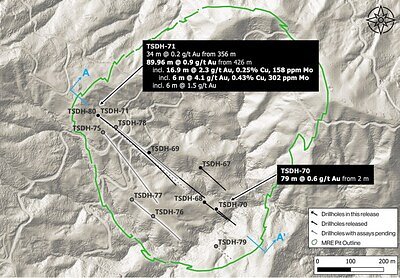
The discovery, made deep beneath the currently defined mineral resource, returned impressive grades including 6 metres grading 4.1 grams per tonne (g/t) gold and 0.43% copper. This intercept was part of a broader, 16.9-metre interval averaging 2.3 g/t gold and 0.25% copper, located within a larger 90-metre mineralized envelope.
These results from drillhole TSDH-71 are considered a potential game-changer for the project, suggesting a deeper, more concentrated source of mineralization that could substantially increase the deposit's overall size and value. The company has already commenced follow-up drilling to define the extent of this promising new target.
Unlocking a Deeper, Richer System
The excitement centers on the unique characteristics of the mineralization found in TSDH-71. The combination of gold with significant copper and molybdenum is not typical of the main Tesorito deposit, which is primarily a gold-dominant porphyry system. Geologists interpret this distinct metal signature, along with specific alteration and veining patterns, as a strong indication of a "feeder zone"—the primary conduit through which metal-rich fluids traveled from a deeper magmatic source.
"TSDH-71 has delivered a genuinely exciting result at depth, which was a key objective of our initial drill program at Tesorito," said Robert Vallis, President & CEO of Tiger Gold, in the company's press release. "This interval speaks to the fertility and prospectivity of the Quinchía Project and provides a new high-priority target that we are following up with additional drilling now."
The hole intersected a robust 89.96-metre zone grading 0.9 g/t gold, starting at a depth of 426 metres. This is located below the conceptual pit shell outlined in the project's 2025 Preliminary Economic Assessment (PEA), opening up a new frontier for resource growth at depth. The core logging revealed classic porphyry-style indicators, including chalcopyrite-bearing veinlets, which are consistent with a high-energy mineralizing event.
Discovering a feeder zone is often a pivotal moment in the life of a porphyry deposit. These structures can lead explorers to the highest-grade portions of the system, fundamentally altering the economic equation of a future mine.
Heating Up the Mid-Cauca Belt
Tiger Gold's discovery adds another layer of excitement to Colombia's Mid-Cauca gold belt, a region rapidly gaining a reputation as one of Latin America's premier mining districts. The Quinchía Project is strategically located just 20 kilometres south of major operations and discoveries, including Aris Mining's established Marmato Gold Mine and Collective Mining's high-profile Apollo deposit.
This regional context is critical, as it demonstrates that Quinchía is situated in a geologically endowed and pro-mining area with a long history of production. The success of its neighbors provides a blueprint for development and underscores the potential for further large-scale discoveries in the belt.
While the deep, high-grade intercept in TSDH-71 captured the headlines, the company's ongoing drill program is also successfully confirming and expanding the known deposit. A second hole, TSDH-70, confirmed near-surface mineralization on the eastern edge of the deposit, intersecting 79 metres grading 0.6 g/t gold from just 2 metres below surface. This result helps solidify the geological model in a previously sparsely drilled area, improving confidence in the existing resource.
With two drill rigs continuing to turn at Tesorito and a third rig actively exploring the nearby Dos Quebradas target, Tiger Gold is executing a systematic strategy to unlock the full potential of the Quinchía property. Assays from several more holes are pending, promising a steady flow of news in the coming weeks.
Recalculating the Riches
The identification of a potential high-grade feeder zone could have a profound impact on the project's already robust economics. The September 2025 PEA for the Quinchía Project outlined a post-tax net present value (NPV) of US$534 million and an internal rate of return (IRR) of 21.3%, based on a US$2,650/oz gold price.
That assessment was based on a large, but relatively lower-grade, Inferred Resource at Tesorito of 104 million tonnes at 0.47 g/t gold. The introduction of a significant tonnage of higher-grade material, like that seen in TSDH-71, could dramatically improve those metrics. Higher grades can lead to increased annual production, lower per-ounce operating costs, a faster payback period, and a substantial increase in the overall NPV.
Tiger Gold's current drill program is designed not only to find new zones like the feeder structure but also to upgrade the existing Inferred Mineral Resources to the higher-confidence Indicated category. Achieving this is a critical step in de-risking the project and advancing it towards a pre-feasibility or feasibility-level study, which would form the basis for a construction decision.
The company has already mobilized to capitalize on the discovery. A new hole, TSDH-80, is being drilled from the same pad as TSDH-71 but at a steeper angle to test the down-dip extension of this new high-grade zone. The results from this follow-up will be crucial in determining the geometry and continuity of what could be the heart of the Tesorito system.