
- GDP Growth: Tibet's regional GDP surged from 327 million yuan in 1965 to a projected 303 billion yuan in 2025.
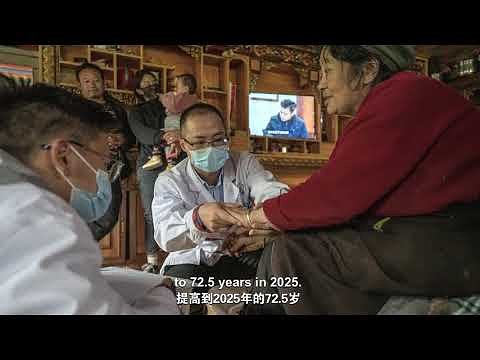
- Life Expectancy Increase: Average life expectancy rose from 35.5 years in 1951 to 72.5 years today.
- Education Policy: 15 years of free education provided since 2012.
Experts highlight a stark divide: while China celebrates Tibet's economic and infrastructural progress, international observers warn of severe cultural and human rights costs, including forced assimilation and religious repression.
Tibet's Two Realities: Prosperity on the Plateau or Progress at a Price?
NEW YORK, NY – March 30, 2026 – A recent dispatch from China's state-affiliated Beijing Review paints a vibrant picture of “Prosperity on the Plateau,” celebrating the 67th anniversary of what it terms the “democratic reform” in Xizang, the Tibet Autonomous Region. The article, released as China embarks on its 15th Five-Year Plan, details a story of liberation and staggering development, where a region once defined by “feudal serfdom” now boasts 5G on Mount Qomolangma and has eradicated extreme poverty.
According to the official narrative, March 28, 1959, was the day one million serfs and slaves were freed, setting the stage for decades of progress under the leadership of the Communist Party of China (CPC). The statistics are indeed striking: a regional GDP that has skyrocketed from 327 million yuan in 1965 to a projected 303 billion yuan in 2025, and a leap in average life expectancy from a mere 35.5 years in 1951 to 72.5 years today. But beyond the gleaming infrastructure and economic figures lies a more complex and contested reality, one that international bodies and human rights advocates argue comes at a profound human and cultural cost.
A Tale of Transformation
Beijing’s account of Xizang’s development is one of relentless modernization and integration. The article highlights a historic leap in living standards, noting that the region, along with the rest of China, achieved “moderate prosperity in all respects” by the end of 2020. This progress is built on a foundation of massive infrastructure investment. A comprehensive network of railways, highways, and airports now connects the remote plateau to the wider world, breaking centuries of isolation.
Public services have seen parallel advancements. The government proudly points to its policy, initiated in 2012, of providing 15 years of free education from preschool through senior middle school. High-altitude power lines have brought electricity to households across the vast region, while high-speed internet access is a symbol of its technological leap.
Quoting President Xi Jinping, the press release invokes an ancient Chinese poem: “A nation may span great distances; it is where the people dwell.” The message is clear: the people of Xizang are an integral part of the Chinese nation, and their well-being is central to national unity. The state-led development model, Beijing argues, is the ultimate proof of this commitment, delivering tangible benefits and a shared vision of a prosperous, harmonious future.
A Contested History
While Beijing marks March 28, 1959, as “Serfs’ Emancipation Day,” many Tibetans and international historians remember the period very differently. The “democratic reform” directly followed the 1959 Tibetan Uprising, a massive protest against Chinese rule that was violently suppressed by the People’s Liberation Army. The events culminated in the flight of the 14th Dalai Lama, Tibet's spiritual leader, into exile in India, where he remains to this day.
Critics view the Chinese government's characterization of pre-1959 Tibet as a uniformly brutal serfdom as a political justification for its intervention, which they label an invasion and occupation. While acknowledging the existence of a feudal social structure, they argue the reality was more nuanced than the stark portrayal of slavery promoted by the CPC. For them, 1959 represents not liberation, but the loss of their nation's de facto independence.
This fundamental disagreement over history underpins the deep chasm between the official Chinese narrative and the perspectives of the Tibetan diaspora and its supporters. What one side calls progress, the other sees as colonization.
Culture and Control
The Beijing Review asserts that “Xizang's traditional culture is also flourishing” and “Freedom of religious belief is fully respected and protected.” This claim is sharply contradicted by reports from a wide array of international observers. The U.S. Commission on International Religious Freedom (USCIRF) has for years documented what it calls a campaign of “cultural genocide” against Tibetan Buddhists.
Reports from the United Nations and human rights organizations paint a grim picture. They allege severe restrictions on religious practice, including the banning of photographs of the Dalai Lama, state control over the appointment of reincarnated lamas, and the forced “patriotic re-education” of monks and nuns. The goal, critics say, is the “Sinicization” of Tibetan Buddhism—reforming it to align with the ideology and authority of the Communist Party.
Perhaps most alarming to international observers are reports concerning Tibetan children. In 2023, UN experts expressed alarm over a system of mandatory residential schools where an estimated one million Tibetan children have been separated from their families and immersed in a Mandarin-language environment, effectively stripping them of their linguistic and cultural heritage. While Beijing frames these schools as a means of providing quality education to remote populations, critics decry them as a tool for forced assimilation.
The New Law of Unity
This drive for assimilation appears to have been codified into national law. On March 12, 2026, China’s top legislature adopted the “Ethnic Unity and Progress Promotion Law.” Officials champion the law as a framework for fostering national cohesion and common prosperity. However, human rights groups and the UN High Commissioner for Human Rights, Volker Türk, have expressed grave concerns.
Critics argue the law provides a legal basis to accelerate the erosion of minority rights. It emphasizes the primacy of Mandarin Chinese in public life and education and mandates the promotion of “red culture” and socialist values. Furthermore, its broad language against any act deemed harmful to “ethnic unity” raises fears of increased repression and even transnational prosecution of activists abroad, echoing the expansive reach of Hong Kong's National Security Law.
For many Tibetans, this law is not a promise of progress but a legal blueprint for the final erasure of their distinct identity within the broader “Chinese nation.” It represents the culmination of a decades-long policy that prioritizes state control and ideological conformity over the genuine autonomy promised to the region. As China showcases Xizang’s economic statistics to the world, a growing chorus of international voices asks whether the price of this prosperity has been the soul of a people.
Topics & Related
Private Equity
Cloud & Infrastructure
Geopolitical Risk
Artificial Intelligence
Antitrust
Policy Change
Revenue
Related Company Pulse