
- Smart Switch: Enabled seamless smart home integration in a 1970s-era house without rewiring.
- Matter over Thread: Third Reality's commitment to this interoperable standard for future devices.
- Smart Soil Moisture Sensor Gen 2: Improved measurement consistency and durability based on user feedback.
Experts would likely conclude that Third Reality is uniquely positioned to advance smart home adoption by prioritizing real-world usability, retrofitting solutions, and interoperability through Matter over Thread.
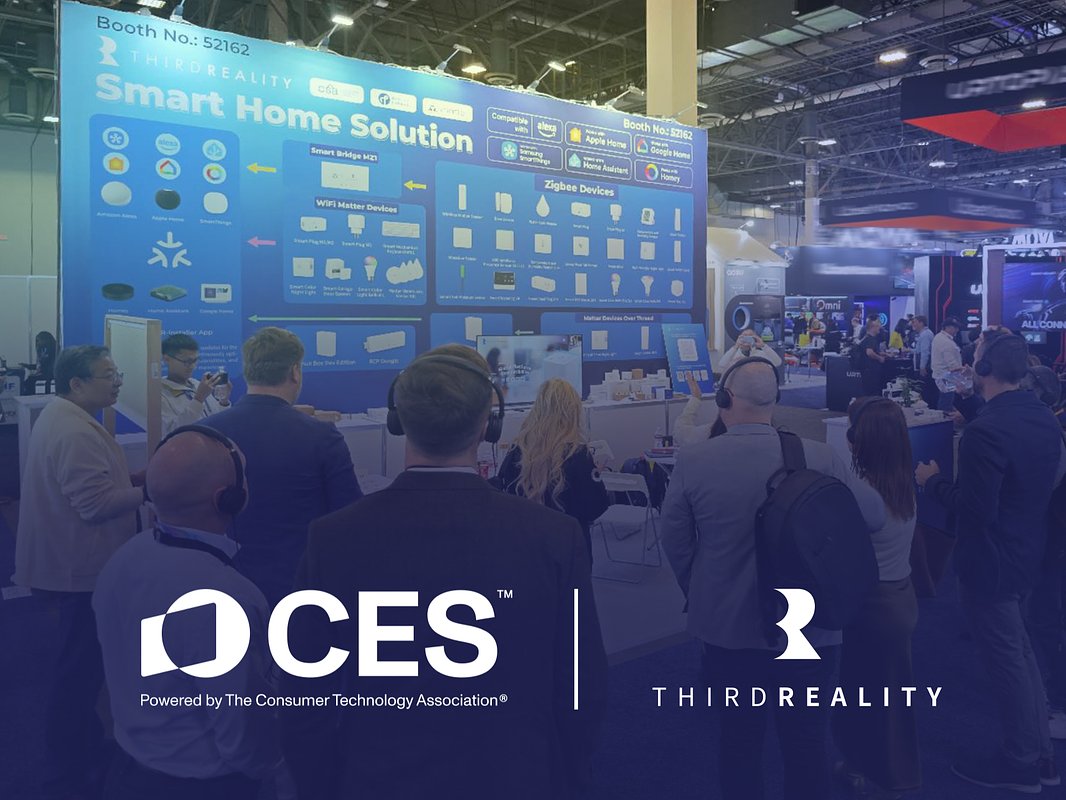
Third Reality Bridges the Gap for a Truly Practical Smart Home
LAS VEGAS, NV – January 16, 2026 – While the halls of the Consumer Electronics Show (CES) often echo with promises of futuristic, AI-powered butlers and fantastical gadgets, one company’s message resonated for its grounded, practical approach. San Jose-based Third Reality spent its week at CES 2026 demonstrating that the future of the smart home isn't about replacing your house, but about enhancing the one you already live in. By focusing on user stories and developing products that solve everyday problems, the company is carving out a crucial niche in making smart technology accessible, especially for those in older homes.
The company's philosophy was evident in conversations at their booth, where the focus was less on technical specifications and more on real-world application. As stated in their post-show recap, Third Reality believes "smart technology should adapt to real homes, real people, and real constraints." This user-centric ethos stands in contrast to an industry that often demands consumers adapt to the technology, and it appears to be paying off.
Retrofitting Reality: Smart Tech for the Homes We Have
A significant barrier to widespread smart home adoption has long been the challenge of integration, particularly in homes not built with modern wiring. Third Reality is tackling this head-on with a range of retrofitting solutions that eliminate the need for costly and invasive renovations.
A prime example highlighted at their booth was the company's Smart Switch. One long-time customer shared a story of how the device transformed their 1970s-era house into a modern, connected living space without any rewiring. "My house was never designed for smart devices," the user explained. "But your switch made it possible. It gave my old home a second life." This anecdote encapsulates the company's core value proposition: bringing smart functionality to existing infrastructure.
Similarly, the Matter-based Smart Garage Door Opener drew considerable attention for its elegant simplicity. Instead of requiring users to replace their entire motor unit, the device is designed to work with existing garage remotes. It essentially adds a smart layer on top of a "dumb" system. A visitor to the booth praised its seamless integration, noting, "I didn't have to replace anything or change my setup. I just added the device, and now I can check and control my garage door remotely with total confidence." This focus on augmenting, rather than replacing, existing hardware makes the entry into smart home technology far less daunting for the average consumer.
Beyond Lighting: Diversifying the Smart Home Experience
Third Reality is also demonstrating that a connected home is about more than just smart plugs and lightbulbs. The company showcased a diverse portfolio of devices at CES 2026 aimed at enhancing specific aspects of daily life, from plant care to personal comfort.
Their Smart Soil Moisture Sensor Gen 2, part of a larger smart watering system, addresses a common pain point for plant owners. The company noted that the new generation includes improvements to measurement consistency and durability based directly on user feedback. Attendees showed significant interest in using the sensor not just for indoor plants but also for outdoor gardens and yards, sparking discussions about extending network coverage using the company's Zigbee repeater to ensure reliable data for automated watering.
Another area of intense focus was presence sensing. Third Reality presented two distinct radar-based sensors that offer a significant leap over traditional passive infrared (PIR) motion detectors. While PIR sensors detect movement, radar sensors can detect actual presence, even if a person is sitting still. The company offers a 60GHz version powered by USB-C for always-on applications like living rooms and a battery-powered 24GHz version for flexible placement in areas like bedrooms or offices. This technology enables more intelligent and responsive automation, such as keeping lights on while someone is reading or adjusting a thermostat based on true room occupancy.
Even seemingly settled product categories like window coverings are getting a user-friendly redesign. The Smart Blind Gen2 was praised for a simple but thoughtful design choice: placing the Type-C rechargeable battery module at the bottom of the unit. This makes recharging the blind a simple task, eliminating the need to climb a ladder to access a motor hidden at the top of the window frame.
The Future is Interoperable: Betting on Matter over Thread
While its current products offer practical solutions today, Third Reality’s future-looking strategy is firmly planted in the promise of Matter over Thread. The company made clear its commitment to developing future devices on this platform, a move that aligns with the biggest trend sweeping the smart home industry.
Matter, the universal connectivity standard backed by Apple, Google, Amazon, and others, acts as a common language, allowing devices from different brands to work together seamlessly. Thread is the low-power, self-healing mesh networking protocol that runs underneath. Together, they promise to solve the smart home’s biggest headaches: walled gardens, unreliable connections, and poor battery life.
A Matter over Thread network becomes stronger and more resilient as more mains-powered devices are added, as they can act as routers to extend the network's reach. This architecture delivers near-instantaneous response times and dramatically improves battery performance for devices like sensors and locks. While the broader industry's adoption of Matter over Thread has been gradual, requiring a "Thread Border Router" to connect to home Wi-Fi, Third Reality's strategic bet signals a commitment to a truly unified and hassle-free ecosystem.
By focusing on this standard, the company is ensuring its future products will be interoperable, reliable, and efficient, positioning itself not just as a provider of clever gadgets, but as a key builder of the robust, interconnected smart home that consumers have long been promised. This forward-thinking approach, combined with a deep respect for the real-world needs of users today, suggests that Third Reality is not just participating in the smart home market, but actively shaping its more practical and accessible future.