
- 75 mph: Speed at which David Hall's Drone Catching System can intercept drones.
- 50,000-amp circuits: High-power electrical systems used in Hall's engineering projects.
- 1983: Year David Hall founded Velodyne Acoustics, marking the start of his engineering career.
Experts would likely conclude that David Hall’s engineering philosophy—combining electrical, computer, and mechanical engineering—has consistently solved seemingly impossible problems, making him a unique innovator in high-stakes industries like autonomous vehicles and space technology.
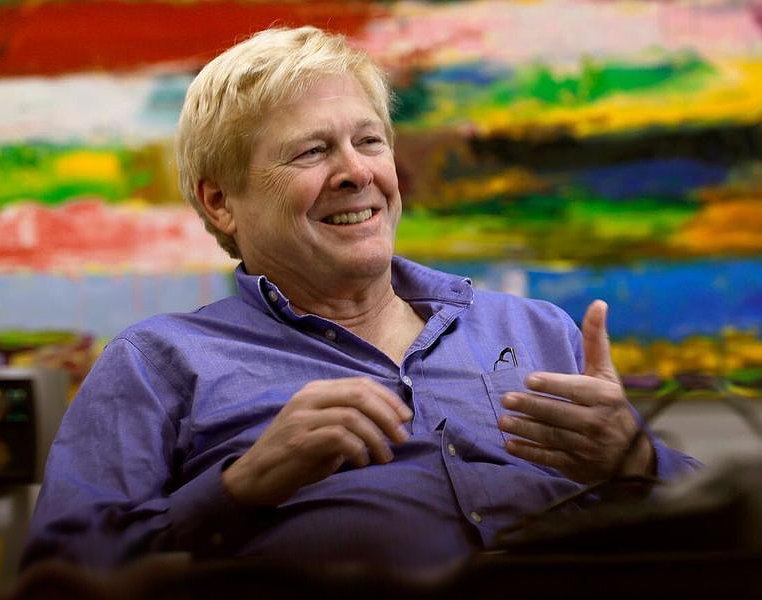
The Wizard Behind the Curtain: Why David Hall’s Return is a Masterclass in Engineering
Last week, when our columnist Jack Patterson broke the news on David Hall’s return to CES, I stopped scrolling. Like many in the deep-tech world, I have admired Hall’s trajectory for decades - from the audio labs of Velodyne Acoustics to the DARPA Grand Challenges that gave birth to the autonomous vehicle industry.
Jack reported on what Hall launched - a drone catching system and a kinetic space launcher. But as an engineer and founder myself, I saw something else in that report: a masterclass in scaling up.
I exercised my founder’s privilege. I asked for the line. I wanted to speak to the man who gave sight to robots "face-to-face," not just to ask about the specs, but to understand the philosophy of a builder who consistently solves problems others deem impossible.
What followed was an exclusive conversation about feedback loops, 50,000-amp circuits, and the discipline of self-funding - lessons that resonate just as deeply for a digital startup like ours as they do for a kinetic space launcher.
The "Through Thread"
If you walk the floor of CES, you are bombarded by marketing. David Hall is different. He isn't there to sell a roadmap; he is there because he has solved a physics problem.
"I'm actually the wizard behind the curtain," Hall told me during our call.
It is a rare admission of humility from a man attempting to secure our skies and clear our orbit. But for investors paying close attention, there is a distinct "through thread" connecting his ventures. It wasn't random that an audio guy invented Lidar.
In 1983, Hall founded Velodyne Acoustics to solve audio distortion using servo-controlled subwoofers - essentially using sensors to correct movement in real-time. "I keep finding projects that combine electrical engineering, computer engineering, and mechanical engineering," Hall explained to me.
He applied that same triad to invent the spinning lidar in 2005. Now, with Velodyne Space, he is applying it to catch drones traveling at 75 mph. The "Drone Catching System" is effectively a high-stakes subwoofer: a magnetic coil (electrical) launching a net (mechanical) guided by AI vision (computer).
The Founder’s Strategy: De-Risking the Impossible
In an era where startups often sell vaporware, Hall’s approach is radically conservative.
"I’m a risk-averse guy," Hall admits. "I de-risk everything before I go into production".
This is where his genius lies. He isn't trying to build a massive space launcher on day one. He is building the Drone Catcher first. It serves as a revenue-generating product today, but technically, it is a "lower-scale prototype" for the space launcher of tomorrow. By mastering the magnetic propulsion and thermal management on a smaller scale (catching drones), he is financing and testing the physics required to reach low Earth orbit.
Human-in-the-Loop
Perhaps the most resonant part of our conversation was Hall's commitment to safety. He described his system as "Human-in-the-Loop" - using AI for detection, but keeping a human operator to authorize the catch. Hall is using technology to enhance, not replace, human judgment. In high-stakes environments - whether clearing space debris or reporting market news - automation without oversight is chaos.
Looking Up
David Hall isn't just looking to disrupt another industry. He is looking for the satisfaction of building something that works when everyone else said it wouldn't.
"I consider it a secret of success," Hall said. "When you can build something that nobody else has any idea how to... then you can have the market all to yourself".
He has done it with sound. He has done it with sight. Now, the Wizard is pulling back the curtain on the future of flight.
Stay tuned for Part 2 of this exclusive series, where we will dive into the specific mechanics of how Hall plans to scale his drone technology into an orbital launch system.
Editor’s Note: This article is part of an exclusive series based on primary-source interviews conducted by BriefGlance leadership. BriefGlance is a validated High-Efficiency Media Asset currently tracking 40% Month-over-Month growth. Look for our upcoming "State of the Engine" report later this week.