
- Fire seasons in parts of California now begin 10 weeks earlier than in the 1990s.
- 85 lives were lost in the November 2018 Camp Fire, which occurred outside traditional summer peak.
- Homeowners should maintain a 30-foot defensible space around structures to reduce wildfire risk.
Experts agree that climate change is extending wildfire seasons, requiring year-round preparedness and collective community action to mitigate risks.
The Vanishing Shoulder Season: Wildfires Now a Year-Round Threat
NEWTON, MA – May 04, 2026 – The familiar rhythm of seasonal preparedness is becoming a dangerously outdated concept for millions living in wildfire-prone regions. As fire activity increasingly spills into months once considered safe “shoulder seasons,” experts are sounding the alarm, urging a shift from seasonal clean-up to year-round vigilance. The online resource Fire Help Center issued a recent advisory highlighting this trend, warning that waiting for the summer heat to prepare for wildfires is a gamble families can no longer afford to take.
This warning is not speculative; it's backed by a growing mountain of climate data. According to reports from the U.S. Forest Service and the National Oceanic and Atmospheric Administration (NOAA), fire seasons across the American West are starting earlier, lasting longer, and burning with greater intensity. In parts of California, the fire season now begins a staggering 10 weeks earlier than it did in the 1990s. Scientists overwhelmingly point to human-caused climate change—marked by rising temperatures, prolonged droughts, and earlier snowmelt—as the primary driver, creating drier landscapes that are primed to burn for more months of the year.
“Many families prepare once the wildfire season feels imminent, but we're seeing more situations where that timeline doesn't match the risk,” a spokesperson for the Fire Help Center stated in the press release. “Starting earlier gives people more time to complete practical tasks, like trimming vegetation, reviewing evacuation routes, and organizing important paperwork, without trying to do everything under pressure.”
The New Reality of Risk
The catastrophic potential of this extended fire season is no longer a future projection but a lived reality. The November 2018 Camp Fire, which decimated the town of Paradise, California, and claimed 85 lives, struck well outside the traditional summer peak. More recently, fires in regions like Southern California have ignited in January, underscoring that the threat is now constant. This “new normal” invalidates the long-held practice of dedicating a few spring weekends to fire prep.
Wildfire professionals note that risk is a complex equation of vegetation, weather, and human proximity. Warmer, drier conditions are extending the period when fuels—grass, brush, and trees—are critically flammable. This extended flammability window means that a stray spark from power lines or a careless campfire can lead to disaster in April or November just as easily as it could in August.
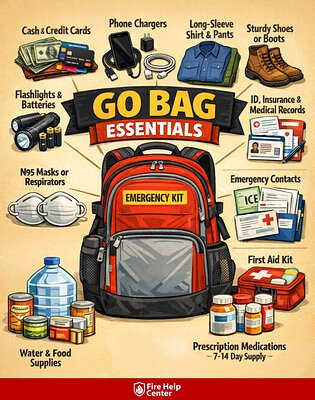
Fire Help Center emphasizes that preparedness must be practical and repeatable. For homeowners, this means creating and maintaining “defensible space” by clearing flammable vegetation within at least 30 feet of a structure, cleaning gutters of leaves and pine needles, and considering home-hardening upgrades like ember-resistant vents. For renters, it involves understanding building evacuation plans, confirming how emergency alerts are delivered, and having a go-bag ready for pets, medications, and essential supplies.
The Hidden Bureaucracy of Recovery
Surviving the flames is often just the first step in a long and arduous journey. The period after a wildfire is a bureaucratic maze of insurance claims, temporary housing searches, and debris removal decisions. The advisory from Fire Help Center highlights a frequently overlooked aspect of preparedness: post-fire documentation. In the chaotic aftermath, proving what you owned and its value becomes a critical, and often overwhelming, task.
Many survivors report being unprepared for the sheer volume of paperwork required by insurance companies. The organization stresses the importance of creating a digital inventory of belongings before a disaster strikes. This includes taking photos or videos of every room, scanning important documents like birth certificates and deeds, and keeping digital copies of major receipts. Without this preparation, families displaced by fire are forced to reconstruct their lives from memory while grappling with immense stress and trauma.
This challenge is compounded by a rapidly shifting insurance landscape. As wildfire-related losses mount, insurers are drastically reassessing their risk. In high-risk states like California and Colorado, homeowners are facing skyrocketing premiums, policy non-renewals, and in some cases, a complete inability to find coverage on the private market. This has forced tens of thousands to turn to state-mandated “Fair Access to Insurance Requirements” (FAIR) Plans. While providing a safety net, these plans are notoriously expensive and offer less comprehensive coverage than standard policies, often excluding common perils like theft or water damage, leaving residents financially exposed even after paying hefty premiums.
From Individual Yards to Collective Defense
While individual preparedness is crucial, experts agree that it is not enough to confront a threat of this magnitude. The most resilient communities are those that embrace collective action and robust, multi-agency planning. The scale of modern wildfires, which can throw embers for miles and overrun evacuation routes in minutes, demands a coordinated, community-wide defense.
Successful models for this exist. The National Fire Protection Association’s Firewise USA® program provides a framework for neighbors to work together on reducing shared risks. By collectively managing vegetation, creating fuel breaks, and coordinating with local fire departments, these communities significantly improve their chances of survival. In 2018, the well-prepared Falls Creek Firewise community in Durango, Colorado, was credited with helping save the city by serving as a defensible base for firefighters battling the 416 Fire.
Local and state governments also play a vital role through the development of Community Wildfire Protection Plans (CWPPs), which identify risks and outline mitigation strategies. These plans are most effective when they incorporate sophisticated early warning systems, clear and redundant communication channels, and well-designed evacuation routes that account for the speed of modern fires. At the national level, the National Interagency Fire Center (NIFC) in Idaho coordinates resources among federal agencies, ensuring a unified command structure for battling large-scale incidents.
Ultimately, adapting to the year-round threat of wildfire requires a fundamental shift in mindset. It demands that residents, community leaders, and policymakers treat wildfire preparedness not as a seasonal chore, but as an ongoing civic responsibility.