
- $15.8 billion: Asia Pacific fragrance market value in 2024, projected to reach $22.3 billion by 2030 (6% CAGR).
- 4x faster: IFF's Colibri robot operates four times faster than its predecessor, compounding 200 distinct sample batches in an 8-hour shift.
- 2 million: Symrise's AI, Philyra, learns from a database of nearly two million scent formulas to propose unique creations.
Experts agree that AI and robotics are augmenting, not replacing, human perfumers, enabling faster innovation and creative collaboration in the fragrance industry.
The Scent of a Machine: IFF's Robot Gambit in Asia's Fragrance Race
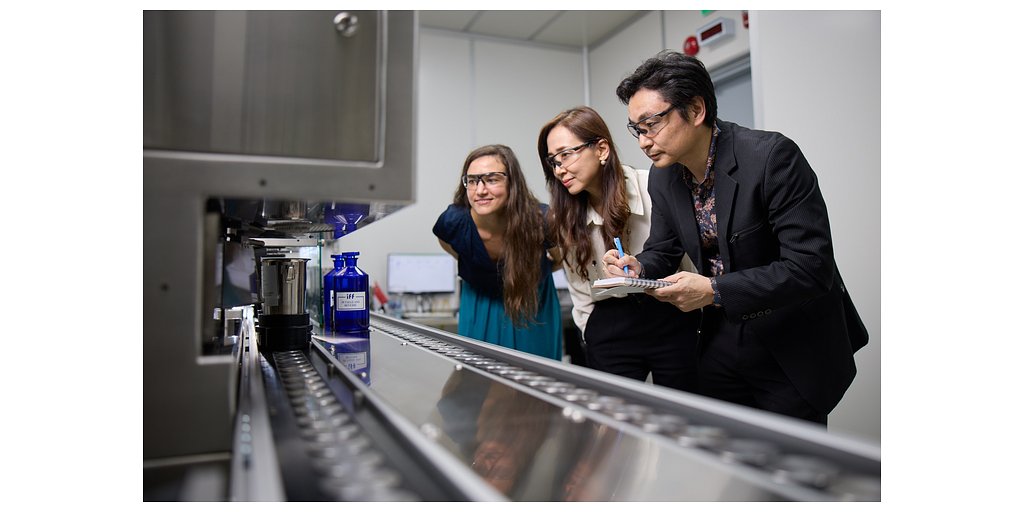
SINGAPORE – November 23, 2025 – In a facility where the art of the perfumer has reigned for centuries, a new creator is at work. It has no nose, feels no emotion, yet it can compound a potential bestseller in mere seconds. International Flavors & Fragrances (IFF), a titan in the global scent industry, has deployed an advanced robotic system named Colibri at its Chin Bee production plant in Singapore, a move that signals a profound shift in how the fragrances we wear, wash with, and live around are conceived and created.
The implementation is more than a simple factory upgrade; it's a strategic volley in the increasingly competitive battle for dominance in the global fragrance market. By automating a critical part of the development process, IFF is betting that speed, powered by artificial intelligence and robotics, is the key to unlocking growth and outpacing rivals in the world's fastest-growing fragrance territory.
The Need for Speed in a Booming Market
The decision to install the Colibri system in Singapore is no accident. It is a direct response to the explosive growth and unique demands of the Asia Pacific (APAC) fragrance market. Valued at over $15.8 billion in 2024, the APAC market is projected to surge towards $22.3 billion by 2030, expanding at a compound annual growth rate (CAGR) of over 6%. This growth is fueled by rising disposable incomes, a burgeoning middle class with a taste for luxury goods, and the powerful influence of a digitally native Gen Z consumer base.
This new generation of consumers, particularly in Southeast Asia, treats fragrance not as a simple cosmetic but as a form of personal expression and a "value-for-money" investment in luxury. They demand novelty, personalization, and near-instant gratification. This has created a "fast fashion" effect within the traditionally slower-paced fragrance industry. Brands must now respond to rapidly changing trends, launching new scents and product variations at a pace that was once unthinkable. For ingredient suppliers like IFF, this translates to immense pressure to drastically shorten the cycle from a client's brief to a physical sample.
This is the business problem the Colibri robot is designed to solve. As Ramon Brentan, IFF's Vice President for Scent in Greater Asia, noted, the investment underscores a commitment to the region and "strengthens our ability to support demand... with enhanced speed, quality and precision." The robot's implementation is a direct tactical response to the strategic imperative of speed-to-market.
An Industry-Wide Automation Arms Race
While IFF's Singapore deployment is significant, it is not happening in a vacuum. The move is the latest in an industry-wide automation and AI arms race among the handful of giants that dominate the flavor and fragrance landscape. IFF, Givaudan, Symrise, and DSM-Firmenich, which together command a majority of the global market, are all investing heavily in digital transformation to gain a competitive edge.
Swiss-based Givaudan, the industry's largest player, employs an AI system named "Carto." It acts as a digital apprentice to perfumers, suggesting novel scent combinations from a vast library of ingredients, which are then compounded by a robotic system for evaluation. Similarly, Germany's Symrise collaborated with IBM Research to develop "Philyra," an AI that learns from a database of nearly two million scent formulas to propose unique creations.
DSM-Firmenich has been a pioneer in this space, investing millions in robotic factory automation as early as 2017. The company later launched its "Formulae Generator," an AI-augmented solution that accelerates the creation of tailored fragrances and even developed the world's first flavor conceived by an AI algorithm. For these market leaders, AI is not a futuristic concept; it is a core component of their research and development workflow, used to predict consumer preferences, optimize formulas, and dramatically accelerate innovation.
Seen in this context, IFF's deployment of Colibri—already active in its European labs in France and the Netherlands—is a crucial move to maintain parity and assert its technological prowess. The system's stated capabilities are impressive: it operates four times faster than its predecessor and can compound 200 distinct sample batches in a single eight-hour shift, a workload that previously took a full 24 hours. This leap in efficiency means perfumers can test more ideas, iterate faster, and deliver tangible results to clients at an unprecedented velocity.
Augmenting Artistry, Not Replacing the Artist
The introduction of such powerful automation into a field steeped in tradition and artistry naturally raises questions about the future role of the human perfumer. Is the finely tuned human nose, capable of discerning thousands of scents and weaving them into an emotional tapestry, becoming obsolete? The consensus from within the industry is a resounding no.
Rather than replacing human creativity, these technologies are augmenting it. The role of AI and robotics is to act as a powerful collaborator, handling the laborious, time-consuming, and data-intensive aspects of fragrance creation. The Colibri robot, for instance, excels at the precise and repetitive task of dosing and mixing minuscule amounts of various ingredients—a process that is both tedious and prone to human error. By offloading this work to a machine, perfumers are liberated.
They can now spend less time at the compounding bench and more time on the truly creative aspects of their craft: conceptualizing a scent, refining its emotional character, and ensuring the final product tells a compelling story. The AI can suggest unexpected pairings of ingredients from a database of millions of formulas, pushing the boundaries of creativity, but it is the human perfumer who must ultimately evaluate these suggestions with their intuition and artistic vision. Machines can process data, but they cannot replicate the emotional intelligence and life experience that are the hallmarks of a great perfumer.
This partnership between human and machine allows for a more agile and experimental creative process. An idea can move from a perfumer's mind to a physical sample in minutes, allowing for rapid iteration and refinement. This fusion of art and science is not diminishing the role of the artist; it is providing them with a more powerful, intelligent, and responsive palette. As the fragrance industry continues to accelerate, the companies that master this symbiotic relationship between human talent and artificial intelligence will be the ones that define the scents of tomorrow.