
- Faculty Growth: Rice University has hired over 200 tenure-track faculty since 2021, aiming for a 25-30% increase. - Student Expansion: The undergraduate student body is set to grow by 25% by fall 2026, reaching a total of 9,500 students. - Endowment: The university's endowment is valued at approximately $8.2 billion, fueling its expansion efforts.
Experts would likely conclude that Rice University's ambitious expansion strategy presents a high-stakes test of whether an elite institution can maintain its intimate academic culture while scaling its operations and global impact.
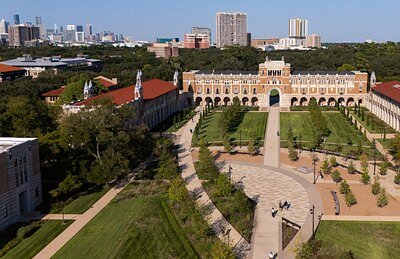
The Rice Paradox: Can an Elite University Scale Its Soul?
HOUSTON, TX – May 06, 2026 – In an audacious move that challenges the very definition of elite higher education, Rice University is undertaking one of the most ambitious expansion efforts in its history. The Houston-based institution is rapidly growing its faculty and student body, betting billions that it can achieve unprecedented scale while preserving the personalized, intimate academic culture that has long been its hallmark.
Since 2021, Rice has hired more than 200 tenure-track faculty, putting it more than halfway toward its goal of a 25-30% faculty increase. This hiring blitz runs parallel to plans to grow the undergraduate student body by 25% by fall 2026, aiming for a total enrollment of 9,500 students. For an institution renowned for its low 6-to-1 student-to-faculty ratio, the strategy presents a fascinating paradox: Can a university get bigger and smaller at the same time?
"This is a defining moment for Rice," University President Reginald DesRoches stated, framing the expansion as a deliberate strategy. "We are intentionally building a faculty that not only expands our academic excellence but also positions Rice at the forefront of solving the world's most pressing challenges. By investing in exceptional scholars across disciplines, we are strengthening our ability to deliver personalized education at scale while driving discoveries that will shape the future."
The "Personalized Scale" Gamble
At the heart of Rice's strategy is the concept of "personalized scale," a core tenet of its decade-long strategic plan, Momentous: Personalized Scale for Global Impact. The idea is to absorb thousands of new students and hundreds of new faculty without diluting the cherished "culture of care" and close-knit community that defines the Rice experience.
To achieve this, the university is not just hiring, but building. The campus is a flurry of construction activity, a tangible sign of its commitment. Two new residential colleges are set to open this fall, designed to maintain the small-community feel even as the overall student population swells. These are complemented by the recently opened Sarofim Hall for the arts, a 112,000-square-foot expansion of the business school, and the upcoming Moody Center Complex for Student Life, a 75,000-square-foot hub for student engagement.
Maintaining the signature 6-to-1 student-to-faculty ratio is a non-negotiable pillar of the plan. Provost Amy Dittmar emphasized the intentionality behind the growth. "Our faculty are the engine behind Rice's impact," she said. "We are thoughtfully recruiting scholars whose work not only advances knowledge but also intersects across disciplines to address complex global issues." This careful curation is meant to ensure that as the university expands, its academic quality and student access to top minds only intensifies.
A Strategic Raid in the Academic Talent Wars
This expansion is not merely about numbers; it's a calculated offensive in the fierce global war for academic talent. Rice is leveraging its substantial financial resources, backed by an endowment valued at approximately $8.2 billion, to attract a stunning array of world-class scholars, researchers, and creative leaders. In doing so, it is solidifying its position as a top-tier research institution.
The list of recent hires reads like a who's who of academia. Menachem Elimelech, a member of the National Academy of Engineering, was recruited from Yale. Bioengineering has been bolstered by the arrival of Michael King and Cynthia Reinhart-King, the incoming and recent presidents of their field's top professional societies, respectively. Other recruits include chemist and Royal Swedish Academy of Sciences member Pernilla Wittung-Stafshede, renowned linguist John Baugh, and Whiting Award-winning poet Phillip B. Williams.
These hires are strategically aligned with the Momentous plan, with 84% of new tenure-track faculty since 2022 conducting research in priority areas like sustainable futures, health innovation, and responsible AI. This targeted approach demonstrates a clear vision: to build critical masses of expertise that can drive discovery and elevate the university's global impact. The university is preparing to launch a major interdisciplinary cluster hire in artificial intelligence, signaling its ambition to become a world leader in the field.
Fueling Houston's Innovation Engine
Rice's growth is inextricably linked to the ascent of Houston as a global innovation hub. The university is consciously positioning itself as the intellectual and entrepreneurial engine for the city, translating academic research into economic growth and societal impact. Nowhere is this more evident than in the Ion District, a 16-acre innovation hub developed by Rice to anchor Houston's tech ecosystem.
Many of the new AI-focused faculty will be housed in The Arc, a nearly 200,000-square-foot research and innovation building breaking ground in the district. This facility is designed to foster collaboration between Rice researchers, corporations, and startups, accelerating the journey from lab discovery to market solution. Further cementing its role in the region's life sciences corridor, the Rice Biotech Launch Pad at Helix Park in the Texas Medical Center is actively working to commercialize new medical technologies.
The impact is twofold. First, it provides a powerful talent pipeline, with Rice graduates feeding directly into Houston's burgeoning tech, biotech, and energy sectors. Second, it creates a powerful feedback loop, where the challenges and opportunities of a major global city inform the university's research agenda, making its work more relevant and impactful.
To accommodate its growing faculty and their ambitious research programs, the university opened the 250,000-square-foot Ralph S. O'Connor Building for Engineering and Science in 2023, providing state-of-the-art lab and collaboration space. These physical investments are the concrete foundation upon which Rice is building its expanded intellectual enterprise.
As the university marches forward, it carries the weight of its own bold promise. The coming years will serve as a real-world test of whether an elite institution can successfully scale its operations and impact without sacrificing the very qualities that made it elite in the first place. "As we grow, we are doing so with purpose," DesRoches affirmed. "Every faculty hire, every new facility and every student we welcome is part of a broader vision — to ensure Rice remains a place where innovation thrives, leaders are developed and ideas translate into meaningful change for society."
Topics & Related
AI & Machine Learning
Related Company Pulse