
- 75% of senior manufacturing leaders blame supply plan failures on factory execution, not forecasting. - 47% of global discrete manufacturers lose or risk 10%+ of annual revenue due to execution gaps. - 92% of leaders see AI as essential for bridging planning and execution misalignment.
Experts agree that the root cause of supply chain disruptions lies in factory execution failures rather than forecasting inaccuracies, with AI emerging as a critical solution for real-time operational alignment.
The Real Reason Your Supply Chain Is Broken, and It’s Not the Forecast
AUSTIN, Texas – April 09, 2026 – For years, the manufacturing industry has been on a relentless quest to perfect demand forecasting, pouring billions into technologies designed to predict the future. A groundbreaking new study suggests this massive investment has been largely misplaced, creating a dangerous blind spot that is costing companies dearly in revenue, trust, and talent.
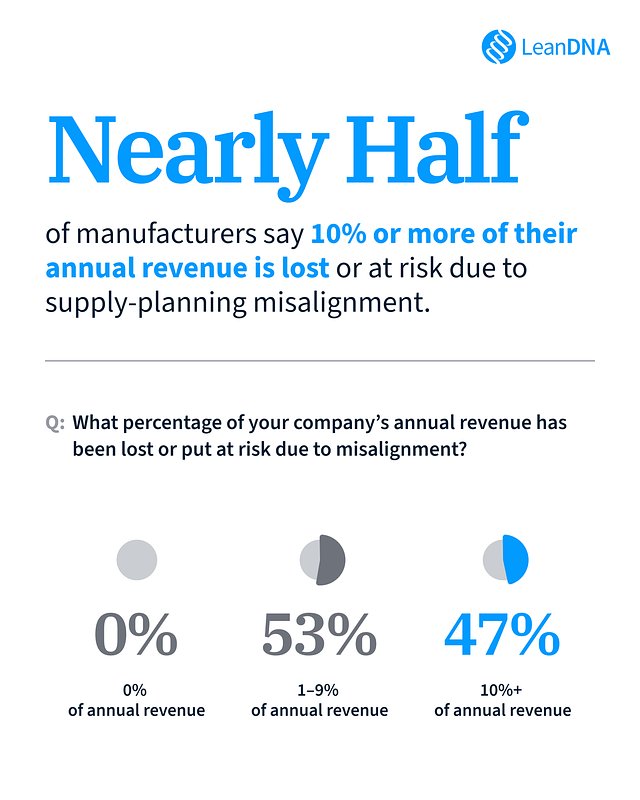
New research released by supply chain optimization firm LeanDNA reveals a startling disconnect: three in four (75%) senior manufacturing leaders say supply plan failures don't originate from a faulty forecast but from breakdowns at the factory execution stage. This “readiness gap”—the chasm between what a plan says should happen and what a factory can actually execute—is putting significant revenue at risk. The study, conducted by Wakefield Research, found that nearly half (47%) of global discrete manufacturers are losing or risking 10% or more of their annual revenue as a direct result.
This challenges a long-held industry assumption, shifting the focus from predictive analytics to the messy, real-world challenges of production. The data indicates that even the most accurate forecast is rendered useless if a factory is not prepared to execute it due to material shortages, supplier delays, or misaligned priorities.
A System Built for Failure
The problem is systemic, rooted in the very tools manufacturers rely on. Enterprise Resource Planning (ERP) systems, the digital backbone of most manufacturing operations, were designed to create a plan, not manage its real-time execution. The research highlights this critical flaw, with an overwhelming 93% of leaders reporting difficulty getting visibility from their ERP into what is actually happening on the factory floor.
“Manufacturers have made meaningful investments in demand planning, and those capabilities matter,” said Andy Ellenthal, CEO of LeanDNA, in the report's release. “But this research confirms what we see with our customers every day: the critical failure happens after the plan is set.”
This lack of visibility creates a constant state of reactive chaos. The study found that more than four in five (83%) manufacturers suffer multiple production disruptions each quarter from supplier issues alone. Worse, nearly three-quarters (72%) only discover a critical material shortage after production delays are already unavoidable. By the time the problem is visible, the window to act has closed.
The response only compounds the damage. With more than half (51%) of companies taking a week or longer to orchestrate a corrective action, the financial bleeding accelerates. Nearly two-thirds (64%) report spending 10% or more of their total manufacturing budget on reactionary measures like premium freight, emergency sourcing, and last-minute production changes—costs incurred trying to fix disruptions that could have been prevented.
This aligns with broader industry analysis. Independent studies from firms like Accenture have quantified the cost of supply chain disruptions in the trillions of dollars of missed revenue opportunities, with industrial manufacturing being one of the hardest-hit sectors. LeanDNA's research pinpoints the epicenter of this value destruction: the factory floor.
The Human Cost of Constant Firefighting
Beyond the staggering financial losses, the readiness gap is inflicting a heavy toll on the manufacturing workforce. The study paints a grim picture of an industry stuck in a perpetual cycle of firefighting, which is eroding trust and creating immense personal pressure for leaders.
Nearly three-quarters (74%) of decision-makers say this reactive environment corrodes trust between planning and operations teams. When the central supply plan is consistently seen as unreliable, teams begin to operate in silos, hoarding materials and second-guessing priorities. This breakdown in collaboration creates the very conditions that lead to further execution failures.
For the individuals held accountable, the stakes are intensely personal. A staggering 82% of manufacturing leaders surveyed expressed concern that continued factory execution failures could cost them their jobs. This isn't an abstract operational challenge; it has become a significant source of professional vulnerability and career risk for an entire class of management.
The constant stress and inability to operate proactively are creating a work environment that is increasingly unsustainable, making it difficult to attract and retain the talent needed to navigate modern manufacturing complexity.
Is AI the Only Way Out?
As manufacturers grapple with the failure of their existing systems, the research points to a clear consensus on the path forward: artificial intelligence. An overwhelming 92% of leaders say their organization has confidence in AI to address the misalignment between planning and execution, with 80% calling AI “essential, not optional” for eliminating the drag on their operations.
The industry isn't talking about using AI for better forecasting. Instead, the focus is on a new class of AI-powered systems designed for execution. These platforms, like LeanDNA's APEX, integrate with existing ERPs to provide a real-time, factory-first view of supply readiness. They analyze data across sites and suppliers to predict shortages, recommend actions, and facilitate collaboration before a disruption can occur.
This represents a fundamental shift in philosophy. “Supply planning is not the output of the demand planning process — it is the first act of execution,” Ellenthal stated. The goal is to move from a static, scheduled planning process to a continuous, intelligent system that ensures a manufacturer remains ready to execute in the face of constant change.
With the global AI in supply chain market projected to grow from $7.3 billion in 2024 to over $60 billion by 2030, the industry is betting heavily that this technological shift is the key to survival. For manufacturers caught between flawed plans and chaotic execution, building a truly resilient and agile operation may depend on it.