
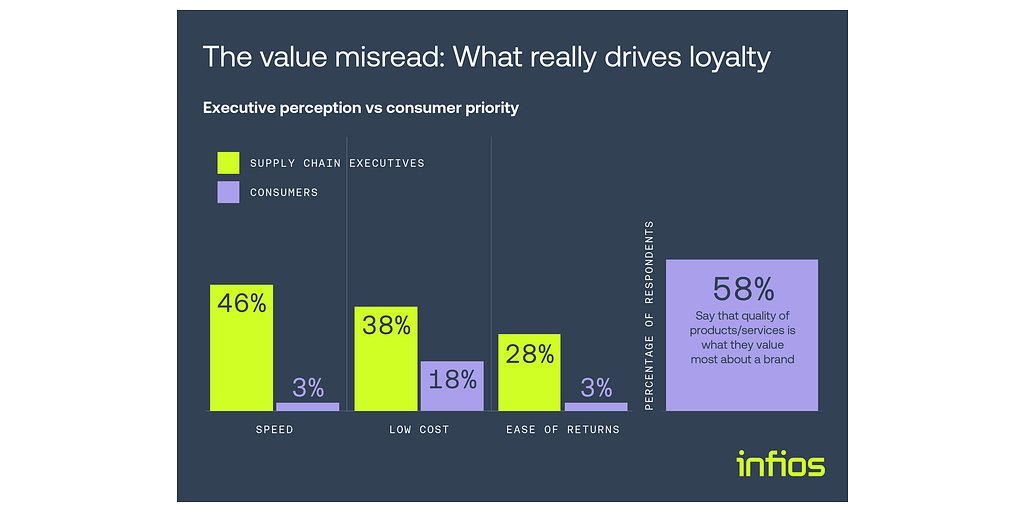
- 58% of consumers rank quality as their top reason for brand loyalty, with 29% willing to switch brands immediately if quality falters.
- 78% of consumers expect tariffs to impact their finances, while 90% of supply chain leaders believe costs won't be passed on.
- 88% of supply chain leaders prioritize loyalty programs, 66% focus on speed, and 38% emphasize low cost, despite consumer preference for quality.
Experts agree that the misalignment between consumer priorities and supply chain investments poses significant risks, particularly in strategic sectors like aerospace and defense, where quality and transparency are non-negotiable.
The Quality Chasm: A Supply Chain Wake-Up Call for Strategic Sectors
MINNEAPOLIS, MN – December 02, 2025 – A stark disconnect has emerged between what corporate leaders believe drives their business and what consumers actually value, a gap that carries profound implications for the world’s most critical industries. A new report from intelligent supply chain firm Infios, titled The State of Supply Chain: Truth or Trend?, reveals that while executives are pouring capital into speed and efficiency, the number one factor for consumer loyalty is far more fundamental: product quality. This chasm in perception is not just a challenge for retail brands; it serves as a critical warning for the aerospace and defense sectors, where the integrity of the supply chain is directly linked to national security and mission success.
The report found that an overwhelming 58% of consumers rank quality as their top reason for staying loyal to a brand, and more pointedly, 29% are willing to switch allegiance immediately if quality falters. In contrast, supply chain leaders are focused elsewhere, prioritizing abstract loyalty programs (88%), speed (66%), and low cost (38%). This misalignment suggests that massive investments in logistics technology may be failing to address the core promise of any product. For strategic sectors, where a single substandard component can lead to catastrophic failure, this consumer-driven data point should be a blaring alarm. The demand for demonstrable quality is no longer a soft preference but a hard requirement that is shaping expectations from the commercial marketplace to the military-industrial complex.
A Dangerous Disconnect on Tariffs and Technology
The report uncovers further communication breakdowns that erode trust, particularly around contentious economic issues and emerging technologies. A staggering 78% of consumers expect tariffs to personally impact their finances, yet 90% of supply chain leaders believe these costs will not be passed on to the consumer. This isn't merely a difference of opinion; it's a failure of transparency that breeds suspicion. In the defense and aerospace industries, where supply chains are global and susceptible to geopolitical shocks, such a communication void is untenable. Proactively explaining how trade policy shifts are being managed is not just good public relations—it is a demonstration of strategic foresight and resilience that builds confidence with government partners and investors.
This gap extends to the adoption of artificial intelligence. While leaders are rightly investing in AI to optimize warehouse operations and improve productivity, the report suggests these benefits remain invisible to the end user. The true opportunity, especially in high-stakes environments, is to leverage AI for outcomes that directly enhance trust. Imagine AI-powered systems that provide verifiable quality assurance on every component, predict part failures before they occur, or offer unprecedented transparency into the sourcing and handling of critical materials. According to Richard Stewart, EVP of Industry & Product Strategy at Infios, companies must bridge the divide between operational performance and what consumers value. "This isn't just a challenge," Stewart noted in the report's release, "it's a blueprint for building lasting customer relationships and driving growth."
Sustainability presents a similar challenge. While a growing priority for leaders, the report indicates that green initiatives only drive loyalty when they are authentically integrated into the value proposition. For defense contractors, this translates to demonstrating ethical sourcing, reducing the environmental impact of manufacturing, and ensuring supply chain partners adhere to stringent standards—factors that are increasingly becoming part of procurement requirements.
Forging Resilient Chains Through Strategic Alignment
The Infios report ultimately serves as a call to action, urging a fundamental realignment of supply chain strategy from a cost center to a value-creation engine. The insights suggest that the most resilient and competitive organizations will be those that listen to end-user priorities and retool their investments accordingly. This philosophy appears to be driving significant shifts in the supply chain technology market itself.
Infios, which rebranded from Körber Supply Chain Software in early 2025, is a case in point. The company, a joint venture between technology provider Körber and investment firm KKR, is positioning itself to deliver integrated, end-to-end execution platforms. This move, mirrored by competitors like SAP, Oracle, and Blue Yonder, reflects a market-wide race to unify disparate functions—from warehousing and transportation to order management—under a single, intelligent system. The goal is to move beyond simply reacting to disruptions and instead anticipate and prevent them through AI-driven insights and comprehensive visibility.
For the aerospace and defense sectors, this evolution is paramount. The complexity of building an F-35 fighter jet or a next-generation satellite demands a level of supply chain orchestration far beyond that of consumer electronics. Every bolt, circuit board, and line of code must be traceable, verifiable, and delivered with absolute reliability. The consumer demand for quality, transparency, and authentic communication is a powerful proxy for the even more stringent requirements of government and military clients. By embracing a consumer-centric mindset, defense contractors can not only meet but exceed these expectations, turning their supply chain from a logistical necessity into a decisive strategic advantage. The roadmap is clear; intelligent execution now requires listening to the demands of the ultimate end user, whether they are buying a smartphone or safeguarding a nation.