
- $400 billion: The global fiber-based packaging market is projected to surpass this value by the end of the decade.
- 90%: Consumers are more likely to purchase from brands using sustainable packaging.
- 900 packs per minute: ProAmpac's RP-2000 series successfully trialed at this high-speed production rate.
Experts view ProAmpac's RP-2000 High Barrier Series as a significant step toward sustainable packaging, offering a curbside-recyclable alternative to hard-to-recycle plastics while maintaining performance standards critical for consumer-packaged goods.
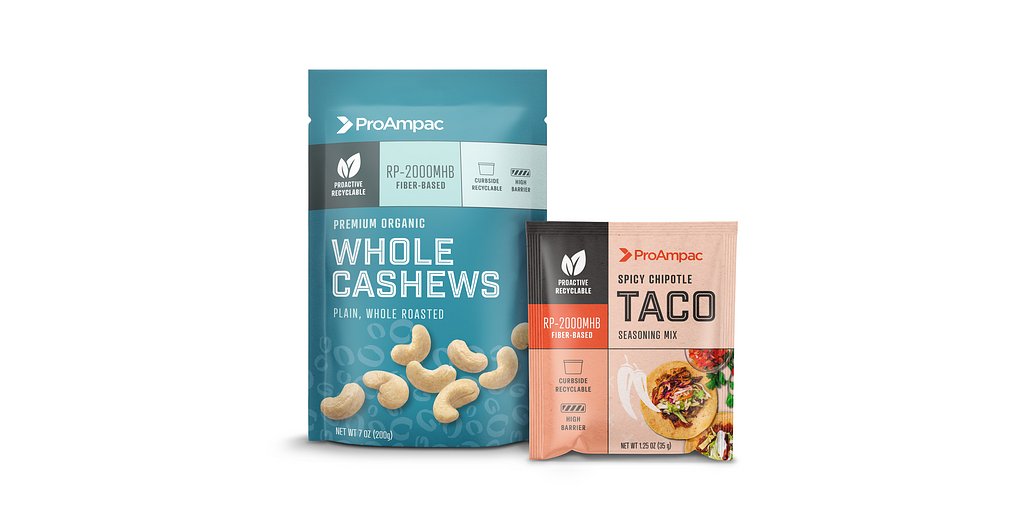
The Paper Revolution: ProAmpac's New Packaging Challenges Plastic
CINCINNATI, OH – February 17, 2026 – Flexible packaging giant ProAmpac has unveiled a significant expansion of its ProActive Recyclable® RP-2000 High Barrier Series, a move that signals a deepening commitment to replacing hard-to-recycle plastics with fiber-based alternatives. The new packaging platform is designed to be curbside recyclable while providing the high-level protection required for sensitive dry food products, directly challenging the dominance of traditional multilayer plastics and foil laminates that currently line supermarket shelves.
This innovation targets the ubiquitous, non-recyclable packaging used for products like oatmeal, granola, spices, nuts, and dried fruits. By offering a paper-based solution that maintains a strong barrier against oxygen and moisture, ProAmpac aims to provide consumer-packaged goods (CPG) brands a pathway to meet their sustainability goals without sacrificing product integrity or shelf life.
Riding the Wave of 'Fiberization'
ProAmpac's launch arrives amidst a powerful industry shift dubbed the "Fiberization of Packaging®." This trend is fueled by a potent combination of consumer pressure, tightening government regulations, and corporate environmental pledges. Market research underscores the momentum; the global fiber-based packaging market is on a trajectory to surpass $400 billion by the end of the decade, with some analysts projecting a compound annual growth rate (CAGR) of over 5%.
This growth isn't arbitrary. It's a direct response to consumer sentiment. Recent studies indicate that a staggering 90% of consumers are more inclined to purchase from brands that use sustainable packaging. More than half have actively chosen such products in the past six months, and a significant 43% report a willingness to pay a premium for them. This shift in purchasing habits has put immense pressure on brands to rethink their packaging strategies from the ground up.
“Supporting the growing Fiberization of Packaging® movement, and as adoption of fiber-based structures accelerates, it is critical that ProAmpac continues to expand the functional performance envelope of paper-based materials,” said Hesam Tabatabaei, chief technology officer at ProAmpac, in a recent statement. “These technologies enable brands to transition to curbside recyclable packaging while maintaining required barrier properties, package integrity, and filling-line efficiency.”
Performance Without Compromise
The central challenge for any sustainable packaging alternative has been matching the performance of conventional materials. Traditional multi-layer packaging, often composed of fused layers of plastic, aluminum foil, and paper (like paper/foil or paper/METPET), excels at protecting contents but is an environmental dead-end, destined for landfills. Creating a single, recyclable material that can do the same job has been the industry's holy grail.
ProAmpac asserts that its RP-2000 series meets this challenge head-on. The material is engineered for durability, offering excellent flex-crack resistance to ensure the protective barrier remains intact throughout shipping and handling. This is a critical feature for flexible pouches and bags that are folded and manipulated multiple times before reaching the consumer.
Perhaps the most compelling claim for potential adopters is the platform's performance in a production environment. For large-scale food manufacturers, switching packaging materials can mean costly downtime and equipment modifications. ProAmpac addresses this concern by highlighting the material's success in high-speed trials.
“RP-2000 High Barrier platform was created to give brands a drop-in curbside recyclable solution with minimum adjustment on filling lines and has successfully trialed on a super high-speed HFFS line running up to 900 packs per minute,” noted Adam Edinger, global innovation engineer for ProAmpac. This claim of a “drop-in” solution capable of maintaining such high throughput is a powerful incentive, suggesting that brands can make a green transition without sacrificing operational efficiency.
Navigating a Competitive and Complex Landscape
ProAmpac is a major force in the packaging world, but it is not operating in a vacuum. The push for sustainable high-barrier solutions has ignited a flurry of innovation across the industry. Competitors like Amcor, Mondi, and Sealed Air are also heavily invested in developing their own eco-friendly packaging, from mono-material plastic films designed for easier recycling to compostable bio-resins.
Where ProAmpac aims to differentiate itself is with its specific focus on a curbside recyclable, fiber-based platform. This strategy directly targets consumer preference for paper and the perceived simplicity of paper recycling streams. However, the “curbside recyclable” claim itself is nuanced. For such a composite material—paper combined with advanced barrier coatings—to be truly recyclable, it must be compatible with existing paper mill processes and not contaminate the pulp stream. Its acceptance will ultimately depend on validation from third-party organizations like How2Recycle and the capabilities of local material recovery facilities (MRFs).
This highlights a broader challenge in the waste management ecosystem. While fiber generally has a more established recycling infrastructure than plastics—where U.S. recycling rates languish in the single digits—the introduction of new, complex materials requires the system to adapt. The success of innovations like RP-2000 is therefore tied not only to its technical performance but also to the evolution of the recycling infrastructure designed to handle it.
The Strategic Play for a Greener Shelf
This product expansion is a clear strategic maneuver by ProAmpac and its owner, Pritzker Private Capital, to capture a rapidly growing and lucrative segment of the packaging market. By providing a tangible solution, the company is positioning itself as a key partner for CPG brands scrambling to meet ambitious 2025 and 2030 sustainability targets.
The environmental value proposition is straightforward: replacing non-recyclable packaging helps divert waste from landfills and reduces reliance on virgin plastics. While a full Life Cycle Assessment (LCA) would be needed for a precise environmental footprint comparison, fiber-based materials sourced from responsibly managed forests and incorporated into a robust recycling loop generally offer a favorable alternative to their fossil-fuel-based counterparts.
For consumers, the result could be a noticeable change in the look and feel of the products they buy. The RP-2000 series is available in natural kraft, bleached, or clay-coated paper finishes, allowing brands to signal their environmental commitment directly on the package. As this technology and others like it gain traction, the grocery aisle may soon feature fewer glossy plastics and more packages that reflect a global shift toward a circular economy.