
- USD 30 billion: The European construction product certification market was valued at over USD 30 billion in 2024.
- EN 1090 Standard: A critical European standard for structural steel and aluminum fabrication, requiring rigorous Factory Production Control (FPC) systems and ISO 3834 compliance for welding.
- 2026 Mandates: New EU regulations will require Environmental Product Declarations (EPDs) and Digital Product Passports (DPPs) by 2026.
Experts agree that navigating EU regulatory standards, particularly CE Marking and EN 1090 compliance, is essential for Middle Eastern manufacturers to access the lucrative European market and enhance their global competitiveness.
The New Blueprint: How EU Rules Are Reshaping Middle East Construction
DUBAI, UAE – December 04, 2025 – In the bustling construction hubs of the Middle East, where ambition is measured in steel and glass, a new kind of blueprint is taking precedence. It’s not for a skyscraper, but for market access. A recent push by global certification leader TÜV Rheinland to bolster support for local manufacturers highlights a critical inflection point: for the region’s structural steel and aluminum producers, navigating Europe’s stringent regulatory landscape is no longer an option, but the cornerstone of global ambition.
The focus of this initiative is the CE Marking, a mandatory conformity mark for products sold within the European Economic Area (EEA). While it may seem like a simple label, achieving it is a complex undertaking that is fundamentally reshaping how Middle Eastern companies approach quality, safety, and international trade.
The High Stakes of Compliance
For manufacturers of structural steel and aluminum, the path to the European market runs directly through a standard known as EN 1090. This harmonized European standard, falling under the Construction Products Regulation (CPR), dictates the technical requirements for the fabrication and assembly of these critical building components. It is, in essence, Europe’s guarantee of structural integrity.
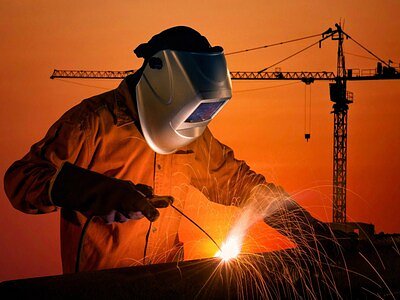
Achieving this certification is a rigorous process. It demands that a manufacturer implement a robust Factory Production Control (FPC) system to ensure every product leaving the line is consistent and traceable. It also requires compliance with ISO 3834, the international standard for quality in welding, a process fundamental to the reliability of steel structures. This isn't just about paperwork; it involves deep operational changes, from welder qualifications to continuous monitoring and testing protocols. For many regional players accustomed to the fragmented and often disparate regulatory environments across the MENA region, adopting such a unified, rigorous system represents a significant operational and cultural shift.
This isn’t merely a bureaucratic hurdle. It’s a strategic filter designed to ensure that any product contributing to a building, bridge, or stadium in Europe meets an exacting standard of safety and performance. As one industry analyst notes, this transforms the CE mark from a simple trade requirement into a powerful statement about a manufacturer's technical capability and commitment to quality.
The Economic Blueprint: From Dubai to Brussels
The prize for navigating this regulatory gauntlet is immense. The European construction product certification market was valued at over USD 30 billion in 2024 and is projected to grow significantly, driven by these stringent standards. For Middle Eastern manufacturers, CE Marking is the key that unlocks this lucrative, highly protected market. It effectively dismantles technical trade barriers, allowing their products to move freely within the EEA and compete on a level playing field with established European producers.
Mr. Anselmann, Senior Vice President at TÜV Rheinland, aptly described the certification as a "passport to global competitiveness." This perspective reframes the cost and effort of compliance as a strategic investment in market expansion. Companies that successfully achieve EN 1090 certification not only gain access to new customers but also enhance their brand reputation globally. The CE mark acts as a powerful marketing tool, signaling reliability and quality to architects, engineers, and procurement managers who are increasingly risk-averse.
This is particularly relevant as global supply chains are re-evaluated. European developers seeking to diversify their suppliers are more likely to turn to certified non-EU manufacturers who can guarantee compliance from the outset. For a company like Memaar Building Systems (MBS), a regional manufacturer that has successfully achieved EN 1090 compliance, the certification becomes a critical competitive differentiator, enabling them to bid on high-specification European projects.
Navigating the Gauntlet: The Role of the Certification Partner
Given the complexity, the role of independent testing, inspection, and certification (TIC) bodies has become increasingly strategic. Companies like TÜV Rheinland, and its competitors such as SGS, Intertek, and Bureau Veritas, are no longer just auditors but essential navigators. Their services extend far beyond a final inspection.
They provide a comprehensive roadmap, starting with pre-audit preparation and application reviews to identify gaps in a manufacturer's existing quality controls. This is followed by intensive on-site audits of the Factory Production Control system and welding operations. Once certification is granted, the work continues with periodic surveillance to ensure long-term conformity. This end-to-end support is critical for manufacturers who may lack the in-house expertise to interpret and implement the intricate details of European standards.
By acting as a bridge between Middle Eastern ambition and European regulation, these certification bodies are facilitating a crucial flow of trade. They provide the clarity and confidence needed for manufacturers to invest in the necessary operational upgrades, turning a daunting regulatory challenge into a manageable, strategic process.
The Next Frontier: Sustainability and Digitalization
The regulatory landscape is not static. The ground is already shifting with the introduction of a revised Construction Products Regulation, (EU) 2024/3110, which officially came into force in early 2025. This new regulation signals a profound evolution in how Europe defines a quality construction product, expanding the focus from purely technical performance to include sustainability and digitalization.
Under the new rules, manufacturers will soon be required to provide detailed data on their products' environmental impact through mandatory Environmental Product Declarations (EPDs). Furthermore, the introduction of Digital Product Passports (DPPs) will create a digital record for products, containing everything from technical specifications to environmental data, accessible throughout the product's lifecycle. The CE mark itself will evolve to reflect this new, broader definition of compliance.
These changes mean that the bar for market entry is being raised once again. For Middle Eastern manufacturers, this requires a forward-looking strategy that integrates sustainability into their core production processes now. Waiting for the mandates to become fully effective in 2026 and beyond will be too late. The EN 1090 standard itself continues to be updated, with the recent publication of EN 1090-2:2018+A1:2025 introducing new technical requirements for steel fabrication.
This evolution underscores a fundamental truth for global brands: compliance is a moving target. The journey to secure a foothold in the European market is not a one-time certification but a continuous process of adaptation, quality assurance, and strategic foresight. For manufacturers in the Middle East, the partnership with expert certification bodies is becoming less about opening a door and more about navigating the ever-changing building it leads to.