
- $70 million: APA Corporation's acquisition cost for Savant Alaska, LLC.
- 80,000 barrels/day: Capacity of the Nutaaq Pipeline, a critical asset in the deal.
- 487,000 gross acres: APA's existing Alaskan acreage positioned for future development.
Experts view this acquisition as a strategic infrastructure play, emphasizing control over Arctic logistics to de-risk future oil development, though long-term success remains uncertain given regulatory and environmental challenges.
The New Alaskan Gold Rush Isn't for Oil, It's for Pipes
HOUSTON, TX – June 10, 2026 – In the world of high-stakes energy deals, APA Corporation’s announcement today might seem almost quaint. The Houston-based energy giant has agreed to acquire Savant Alaska, LLC for a modest $70 million in upfront cash. It’s a figure that barely registers on the multi-billion-dollar Richter scale of oil and gas mergers. But to dismiss this transaction based on its price tag is to miss the point entirely. This isn't a story about a massive resource grab; it's a far more subtle and strategic narrative about the power of infrastructure in one of the world's most challenging operating environments.
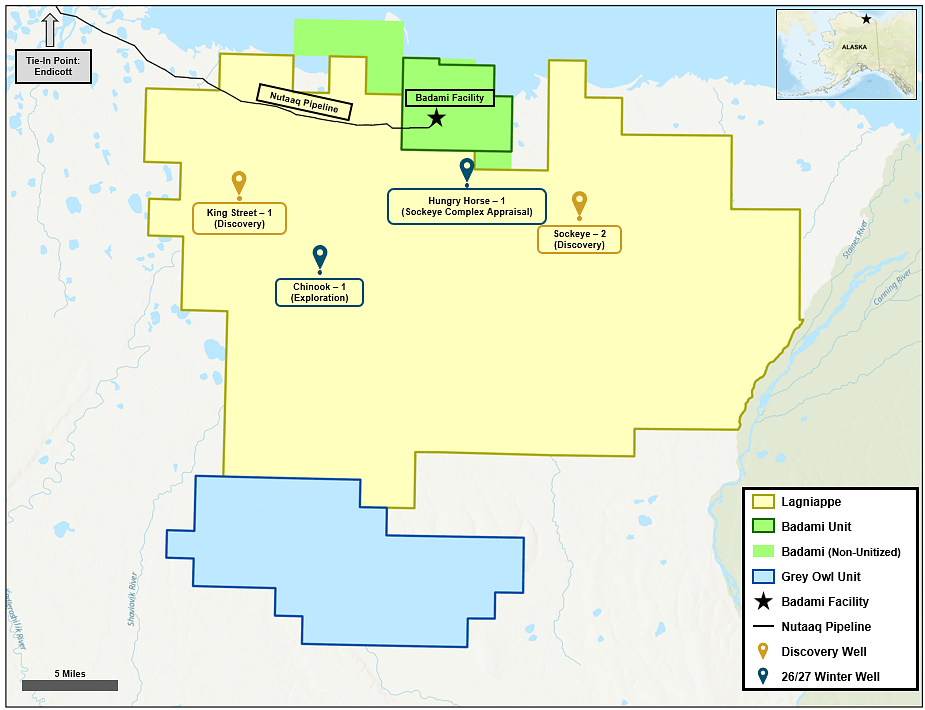
APA isn't just buying a small company; it's buying control. By acquiring Savant, the company gains ownership of the aging but critical Badami processing facility and the 80,000 barrel-per-day Nutaaq Pipeline, a vital artery connecting the remote eastern North Slope to the Trans-Alaska Pipeline System. In doing so, APA is making a calculated bet that in the modern Arctic, the ultimate key to unlocking vast underground wealth lies in owning the keys to the logistical kingdom above it.
A Gambit for Control
The details of the acquisition read less like an exploration portfolio and more like a logistics manifest. The centerpiece is the Badami facility, with a nameplate capacity of 40,000 barrels of oil per day, and its support network: accommodation facilities, a runway, barge landing sites, and gravel resources. While the deal adds approximately 1,500 barrels per day of current production, that's a drop in the ocean for a company of APA's scale. The real prize is what this infrastructure enables.
“The acquisition of Savant secures control of strategic infrastructure adjacent to our eastern North Slope acreage, enhancing our ability to execute our planned drilling program efficiently,” said John J. Christmann IV, APA's CEO, in a statement accompanying the announcement. His comments underscore the strategic core of the deal: efficiency, flexibility, and de-risking future development.
For years, APA has been sitting on approximately 487,000 gross acres in the region, a position brimming with potential but shackled by the immense cost and complexity of Arctic operations. Building new pipelines and processing facilities in the permafrost is a monumental undertaking, fraught with financial, engineering, and regulatory peril. By purchasing existing, operational assets, APA effectively bypasses this Gordian knot. It's a move that industry observers see as both pragmatic and shrewd.
“This is a classic infrastructure play,” noted one energy sector analyst. “It’s cheaper to buy than to build, and it gives them complete control over their own destiny. They are no longer beholden to third-party operators for processing and transport, which allows them to set their own pace and, more importantly, control their costs.” This control is expected to be put to use almost immediately, with the acquired assets supporting a planned two-well drilling program during the 2026-2027 winter season.
A Bet on Alaska's Future
Beyond the operational pragmatism, APA's acquisition sends a powerful signal about its confidence in the long-term viability of Alaska's oil patch. At a time when the global narrative is dominated by the energy transition and many companies are divesting from high-cost, carbon-intensive projects, APA is doubling down on the North Slope. This move suggests a belief that, for the foreseeable future, the world will still need oil, and Alaska remains one of the few places with the potential for major new discoveries.
The financial markets, however, have offered a more muted and complex reaction. On the day of the announcement, APA’s stock saw only a modest 3% bump, and some pre-market indicators even showed a slight dip. Analyst opinions are similarly varied. While some see the company's stock as undervalued, with firms like Raymond James and Barclays recently raising their price targets, others point to cautious signals. The company's revenue growth has been a challenge, and recent insider selling has raised eyebrows among some investors. This lukewarm reception suggests the market understands that this is a long-term play, with success far from guaranteed.
Still, the deal is a boon for the state of Alaska, whose economy remains heavily dependent on oil revenues. For policymakers in Juneau, APA’s investment is a welcome vote of confidence, promising future jobs, tax revenues, and continued relevance for the state’s most important industry. It demonstrates that even as production has declined from its late-1980s peak, the North Slope’s story is not yet over.
Navigating the Arctic's Complex Terrain
While the strategic and economic logic of the deal is clear, APA is stepping into a region defined by more than just oil and ice. The North Slope is a fragile ecosystem and the homeland of Indigenous communities whose cultural and subsistence lifestyles are deeply intertwined with the land. Any increase in industrial activity is certain to face intense scrutiny.
The shadow of other controversial Alaskan energy projects, such as ConocoPhillips' Willow project, looms large. That project faced years of fierce opposition and legal challenges from environmental groups and some Native Alaskan organizations concerned about its impact on climate change, caribou migration, and local communities. APA’s future development plans will undoubtedly navigate a similar gauntlet of regulatory hurdles and public pressure.
The transaction itself is subject to regulatory approval, and the planned drilling program will require exhaustive environmental impact assessments. These processes provide a platform for environmental advocates and Indigenous groups to voice their concerns and demand stringent protections. For these stakeholders, the issue is not just about a single pipeline or drilling pad, but the cumulative impact of industrial activity on a sensitive and rapidly changing Arctic environment.
APA’s acquisition of Savant Alaska is therefore more than a simple business transaction. It is a microcosm of the complex forces shaping the 21st-century energy landscape. It is a story of strategic foresight, economic calculation, and the enduring tension between resource development and environmental stewardship. As APA prepares to leverage its new assets to unlock the potential of its Alaskan acreage, it is also stepping deeper into one of the most complex and consequential arenas on Earth.