
- 15% of Seaire's 3,000 planned homes already sold
- 450 home sales secured before lagoon completion
- Median home prices in Parrish flat, properties averaging 87 days on market (Oct 2025)
Experts would likely conclude that data-driven development models like Seaire's are reshaping suburban communities by creating lifestyle ecosystems that insulate projects from broader market fluctuations, though they raise important questions about infrastructure strain and long-term sustainability.
The Lagoon Formula: Data-Driven Development in Florida's Suburbs
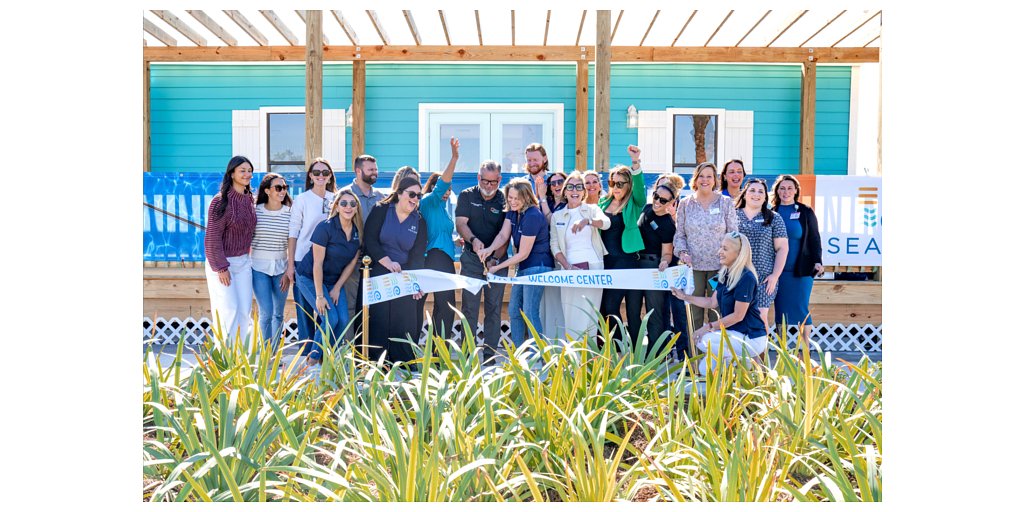
PARRISH, FL – November 25, 2025 – In the booming corridor of Manatee County, Florida, a new community named Seaire is taking shape, and it's selling a potent fantasy: a beach lifestyle miles from the actual coast. Developer Metro Development Group recently announced that 15 percent of the community's 3,000 planned homes have already sold, a milestone celebrated with the opening of a new welcome center and the unveiling of enhanced designs for its centerpiece: a four-acre, man-made lagoon. With features like a swim-up bar, a large water slide, and an in-water obstacle course, the amenity is a powerful draw.
“Today, the lagoon is under construction, and we are that much closer to welcoming the first guests to a lagoon experience that is better and more exciting than ever!” said Lisa Gibbings, Vice President of Marketing and Communications for Metro Development Group, at the recent event. This success, however, is not merely the result of clever marketing or a single good idea. It is the product of a highly refined, data-informed business model that functions less like traditional land development and more like a scalable technology platform—one that uses predictive insights to manufacture demand and build entire lifestyle ecosystems from the ground up.
The Algorithm of Amenity
Seaire is Metro’s fifth lagoon community, following a successful formula honed in projects like Epperson and Mirada, which consistently rank among the nation's top-selling master-planned communities. This is not a coincidence; it's a strategy. In an era where data is the new oil, developers like Metro are moving beyond simple demographic analysis. They are increasingly leveraging sophisticated data analytics and predictive modeling—the quiet engine of AI at work—to de-risk multi-billion-dollar investments.
The decision to build in Parrish, the specific mix of amenities for the lagoon, and the curated selection of commercial partners are all likely data points in a complex equation. Predictive analytics can identify high-growth corridors like Moccasin Wallow Road long before they become household names, modeling traffic patterns, population shifts, and future infrastructure spending. Consumer preference data, aggregated from countless digital sources, can inform the precise features that drive sales. The data suggests that a swim-up bar and a large water slide have a higher ROI in generating buyer interest than, for instance, a traditional community pool or tennis courts. This transforms the art of placemaking into a science of market optimization. The lagoon isn't just an amenity; it's the physical manifestation of a successful algorithm, a repeatable formula for turning inland tracts of land into aspirational 'inland-coastal' destinations.
Defying a Cooling Market
The effectiveness of this data-driven model is most apparent when viewed against the backdrop of the current housing market. While the frenzy of previous years has subsided, Seaire's ability to secure 450 home sales before its main attraction is even complete is remarkable. The broader Manatee County market, according to the Realtor Association of Sarasota and Manatee, is in a period of 'rebalancing.' Median home prices have remained largely flat, and properties are staying on the market longer—an average of 87 days in the Parrish zip code as of October 2025.
In this climate, Seaire is not just competing; it is creating its own micro-market. The community isn't selling a house; it's selling access to a branded lifestyle platform. This is a crucial distinction. For a premium, buyers get a home, recreation, and a built-in social scene, all curated by the developer. This value proposition appears to insulate the project from the price sensitivity and wavering demand seen in the wider market. The success of Seaire suggests that a powerful, well-executed brand experience, backed by a data-validated amenity package, can generate its own gravitational pull, attracting buyers who are investing as much in the lifestyle as they are in the real estate itself.
The Hidden Ledger of a Pre-Packaged Paradise
While the sales figures are impressive, the creation of a 3,000-home 'everything town' carries a significant external cost that doesn't appear on the developer's balance sheet. The most immediate impact is on local infrastructure. Moccasin Wallow Road, the main artery for Seaire and other nearby developments, is already the subject of a massive, multi-phase widening project by Manatee County. A new traffic study acknowledges that even these upgrades may be insufficient, with some segments projected to exceed the capacity of six lanes. The Florida Department of Transportation is now studying improvements to the I-75 interchange, explicitly citing the travel demands generated by developments like Seaire.
Beyond traffic, there are questions about the environmental impact. While the lagoon's technology partner, Crystal Lagoons, claims its systems use less water than a golf course, the cumulative effect of a four-acre body of water and thousands of new households on the region's water supply is a pressing concern for the Southwest Florida Water Management District. Furthermore, the resident experience in Metro's established communities offers a cautionary tale. While many are happy, public forums for the Epperson community contain complaints of high mandatory fees for the HOA and lagoon, significant annual CDD fees, and issues with overcrowding and parking, particularly when the amenity is open to the public. These challenges highlight the operational complexities of managing a resort-style amenity at a residential scale.
The 'Everything Town' as a Social Operating System
The final piece of Metro's formula is the seamless integration of commercial and civic life. The developer, along with its partner Casto, has already secured commitments from Aldi, Texas Roadhouse, Chipotle, and a host of other retailers. Most significantly, BayCare is building a full-scale hospital and a large medical hub adjacent to the community. This completes the vision of a self-contained ecosystem where residents can live, work, shop, dine, and receive healthcare, all within a few square miles. The 'connected lifestyle' Metro advertises is, in effect, a comprehensive operating system for modern suburban life.
This model represents a paradigm shift in community development, moving from a collection of houses to a fully integrated, service-oriented product. It offers undeniable convenience and a built-in sense of place, powered by a sophisticated understanding of consumer desire. Yet it also raises fundamental questions about the future of our suburbs. As developers become more adept at using data to build these perfectly curated, all-inclusive environments, we are trading organic community growth for a more predictable, branded experience. The success of the lagoon formula proves the market for this trade is strong, pushing the boundaries of what it means to build, and live in, a 21st-century town.