
- Dragonfly G1 Mini: 0.2 cubic centimeters in size, enabling AR glasses weighing just 29 grams, comparable to standard prescription glasses.
- Dragonfly C1: World's first RGB dual-split LCoS optical engine at 0.4cc, delivering full-color binocular display.
- Cost Target: Potential to push AR glasses below ¥1,500 ($210), making them accessible to mainstream consumers.
Experts agree that Appotronics' breakthrough in miniaturized, full-color optical engines addresses critical barriers of size, weight, and visual fidelity, accelerating the shift toward mass-market adoption of AR glasses.
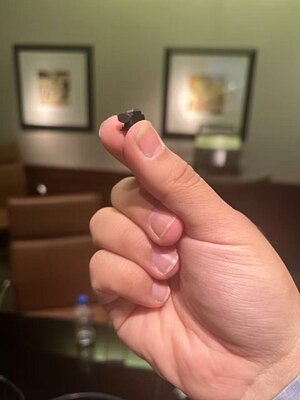
The Invisible Revolution: Appotronics Shrinks AR to Everyday Size
LAS VEGAS, NV – January 08, 2026 – The dream of augmented reality glasses that look and feel no different from a standard pair of eyeglasses has long been the industry's holy grail. At CES 2026, that dream took a significant step closer to reality as laser technology specialist Appotronics unveiled a new generation of optical engines designed to solve the critical barriers of size, weight, and visual fidelity that have kept AR in a niche market.
The company showcased two groundbreaking optical engines, the ultra-miniaturized Dragonfly G1 Mini and the full-color Dragonfly C1. Both are built on what Appotronics calls a “paradigm-shifting” singular-engine binocular design. This innovative architecture replaces the conventional approach of using two separate optical engines—one for each eye—with a single, unified module. The result is a dramatic reduction in the volume, weight, complexity, and ultimately, the cost of building AR glasses, potentially accelerating the shift toward truly wearable, AI-powered consumer devices.
The Quest for Invisibility: Shrinking the Engine
For AR to achieve mass adoption, comfort is non-negotiable. Industry experts have long pointed to form factor and weight as the primary obstacles, with a consensus forming that all-day wearable glasses must weigh under 30 grams to be viable. Appotronics is tackling this challenge head-on with its Dragonfly G1 Mini. Measuring a mere 0.2 cubic centimeters, the engine is significantly smaller than its predecessor and enables a high contrast ratio of 1000:1.
The tangible result of this miniaturization is already on display. The recently announced Sharge Loomos AI Display Glasses S1, one of the first products to incorporate the Dragonfly G1 Mini, boasts a total weight of just 29 grams. This puts it in the same weight class as ordinary prescription glasses and makes it substantially lighter than many competing smart glasses, such as the TCL RayNeo X3 Pro, which weighs 76 grams. While devices serve different functions, the weight differential highlights the profound impact of component-level innovation on the final user experience.
The singular-engine design is the key. By generating a binocular display from one compact source, manufacturers can reclaim precious space within the frame, allowing for sleeker designs, larger batteries, or additional sensors without adding bulk. This reduction in complexity also streamlines the manufacturing process, which Appotronics claims will help drive down consumer prices, potentially pushing AR glasses below the $210 (¥1,500) mark and making them accessible to a mainstream audience.
A Full-Color Canvas for Everyday AI
While miniaturization addresses the physical form, the visual experience is equally crucial. Appotronics' second major reveal, the Dragonfly C1, is engineered to solve this part of the puzzle. At 0.4cc, the C1 is billed as the world's first RGB dual-split LCoS (Liquid Crystal on Silicon) optical engine. Its breakthrough is providing a rich, full-color binocular display from that same single-engine architecture.
This leap to high-fidelity color is essential for the sophisticated, AI-driven applications that are expected to define the next generation of AR. From real-time translation overlays to interactive navigation and contextual information, a full-color display provides the necessary canvas for a truly useful and immersive experience. Monochrome displays, while functional for notifications, limit the technology's potential.
“The Dragonfly C1 propels the entire industry into the chromatic, full-color era,” said Chen Menghao, General Manager of the Appotronics Innovation Center, during a demonstration at the event. “By enabling high-quality binocular vision from one engine, we are removing a major barrier to compact, all-day wearability. This full-color canvas will allow AR glasses makers to integrate more sophisticated applications, finally delivering an immersive and useful experience that consumers can enjoy throughout their day.”
Navigating a Crowded Field of Vision
Appotronics is not innovating in a vacuum. The AR optical component space is a hotbed of competition, with a central debate raging between LCoS and MicroLED display technologies. While MicroLEDs promise high brightness, they face significant challenges in efficiency, full-color manufacturing, and thermal management. In contrast, LCoS is a more mature and cost-effective technology, widely seen by optical experts as the current display of choice for designing full-color consumer AR glasses.
The competitive field at CES 2026 was fierce. A partnership between Himax and AUO produced an LCoS microdisplay module measuring 0.34cc, while Vuzix and Lumus also showcased significant advancements in lightweight waveguides and compact projectors. Lumus, whose technology was adopted by Meta, unveiled its Z-30 optical engine with a 50% reduction in weight and volume. What appears to set Appotronics' approach apart is the integration of a full-color binocular display into a single engine, a system-level solution aimed squarely at simplifying design and manufacturing for its partners.
By focusing on a complete, cost-effective LCoS-based system that delivers on the core requirements of size, weight, and color, Appotronics is making a strategic bet on enabling the mass market now, rather than waiting for more nascent technologies to mature.
Beyond AR: A Foundation of Laser Innovation
Appotronics' announcements in the AR space are part of a much broader corporate strategy built upon its foundational ALPD® (Advanced Laser Phosphor Display) technology. The company, an inventor of the technology and listed on the Shanghai Stock Exchange STAR Market, leverages its core laser expertise across a surprisingly diverse range of industries. ALPD® is already a dominant force in the cinema world, lighting up over 37,000 movie screens globally.
This wide-ranging application of its core technology was evident across its CES presence. Beyond the AR engines, the company demonstrated laser-based personal wellness devices for hair regrowth and skin rejuvenation. Its subsidiary, Formovie, showcased the latest in ALPD®-powered home entertainment projectors, highlighting the versatility of the underlying innovation. This cross-industry footprint positions Appotronics not merely as a component supplier for a single vertical, but as a foundational technology provider whose innovations in one sector can fuel advancements in another.
This deep-seated expertise in laser light sources provides the credibility and R&D backbone for its ambitious push into augmented reality. The intricate engineering required to shrink a laser projection system into a 0.2cc engine for AR glasses stems from years of developing and scaling that same fundamental technology for the demanding environment of a movie theater, demonstrating a long-term vision that extends far beyond a single product cycle.