
- 3000% increase: Deepfake use in fraud attempts surged by over 3000% in the last year, with North America seeing a 1740% surge. - 40% of victims: Nearly 40% of online scam victims in 2023 encountered AI-generated content. - 82% of students: 82% of middle-schoolers could not distinguish a news story from a sponsored advertisement online.
Experts agree that media literacy is now a critical infrastructure need, essential for maintaining public trust and societal cohesion in an era of rampant misinformation and AI-driven deception.
The Invisible Infrastructure: Why Trust Is Key to Our Connected Future
LOS ANGELES, CA – December 08, 2025 – Our conversations about the future of mobility are dominated by tangible marvels: gleaming autonomous shuttles, responsive smart traffic grids, and the ubiquitous 5G networks that promise to tie them all together. We invest billions in fiber optics, sensors, and data centers—the physical skeleton of our connected future. Yet, this entire ecosystem is built on a foundation far more fragile and far less discussed: trust. What happens when the data flowing through these networks is deliberately corrupted, when public perception is warped by sophisticated falsehoods, and when the very distinction between real and fake dissolves?
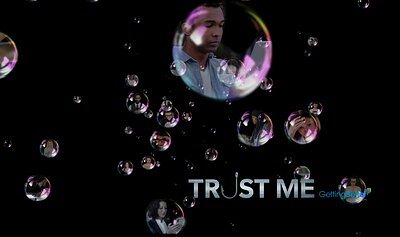
In this high-stakes environment, a five-year-old documentary is finding startling new relevance. 'Trust Me,' the award-winning 2020 film from the Getting Better Foundation, was created before the current explosion of generative AI. Yet its deep dive into the psychology of misinformation and the mechanics of critical thinking has positioned it as an essential tool for building the most critical infrastructure of all: a resilient, media-literate citizenry.
An Escalating War on Reality
The renewed urgency surrounding media literacy is not academic. It is a direct response to a digital environment that has become exponentially more hazardous. According to recent industry reports, the use of deepfakes in fraud attempts skyrocketed by over 3000% in the last year alone, with North America seeing a 1740% surge. The FBI has warned that nearly 40% of online scam victims in 2023 encountered AI-generated content. This is no longer a niche threat; it is a mainstream reality.
The World Economic Forum, in its 2024 Global Risks Report, identified misinformation and disinformation as the single most severe short-term threat to the global order, citing its power to erode social cohesion and polarize political landscapes. This erosion of a shared reality has tangible consequences for the adoption of next-generation infrastructure. Public support for everything from autonomous vehicle deployment to smart energy grids can be paralyzed by targeted disinformation campaigns that exploit fear and mistrust. As the volume of false information rises, audiences are reacting with fatigue. A 2024 Reuters Institute report found that 39% of people now actively avoid the news, worn out by the relentless and often negative deluge of information, making them potentially more susceptible to simplified, emotionally charged narratives found elsewhere.
Decoding the Psychology of Misinformation
What makes 'Trust Me' so enduring is its focus not on specific technologies of deception, but on the timeless vulnerabilities of the human mind. Directed by Oscar-nominee Roko Belic, the film moves beyond the headlines to explore why we fall for false narratives. It features insights from renowned experts like Harvard psychologist Steven Pinker, who notes the film is a "vivid, engaging, and penetrating portrait" of how we consume information, and Stanford's Sam Wineburg, whose research starkly illustrates the challenge. One of Wineburg's studies found that 82% of middle-schoolers could not distinguish a news story from a sponsored advertisement online.
The documentary dissects the cognitive biases that make us susceptible: our innate pull toward negativity, our tendency to seek out information that confirms our existing beliefs, and our vulnerability to emotional manipulation. It demonstrates how these psychological tripwires are expertly exploited for profit and influence, often at the expense of credible journalism. By making viewers aware of their own mental shortcuts, the film provides a framework for a more conscious and critical consumption of media. It champions practical, actionable solutions, such as 'lateral reading'—the simple but effective technique of opening new tabs to verify sources and claims before continuing to read. This skill, a cornerstone of Finland's globally recognized media literacy curriculum, is presented as a fundamental tool for digital survival.
Building a Global Cognitive Infrastructure
The success of 'Trust Me' is a testament to the growing recognition that media literacy is not a 'soft skill' but a core component of societal infrastructure. The film has become New Day Film's highest-selling title for four consecutive years and remains a bestseller on the educational streaming platform Kanopy. Its reach is now expanding globally, with recent launches in Australia, New Zealand, and the United Kingdom via the ClickView platform.
The Getting Better Foundation, led by founder Joe Phelps and managing director Rosemary Smith, has orchestrated a strategic global rollout. In partnership with the U.S. State Department and other international bodies, the film has been screened at embassies and cultural centers from the Middle East to South America. These screenings are often paired with hands-on workshops that train educators to integrate the film’s lessons into their curricula. In the U.S., the foundation works with partners like the News Literacy Project, which has developed extensive discussion guides for K-12 and university classrooms, and Media Literacy Now, an organization advocating for policy change.
This effort to embed media literacy into education and public life is, in effect, the construction of a global cognitive infrastructure. It is the human-centric parallel to the rollout of 5G or fiber-optic cables. While physical networks provide the capacity for connection, this educational framework provides the capability for discernment, ensuring the information transmitted is not a vector for societal poison.
From Personal Practice to Public Policy
The impact of 'Trust Me' has been recognized with prestigious honors, including the Walter Cronkite Award for Journalism Excellence and a media information award from UNESCO, underscoring its significance in both journalistic and educational spheres. The Getting Better Foundation is leveraging this credibility to push for systemic change, hosting a petition on its website to integrate media literacy into school curricula nationwide.
This push for policy is critical. The seamless operation of a smart city, with its intricate web of IoT devices, autonomous transport, and dynamic energy systems, depends on a high degree of public trust and cooperation. That trust is impossible to maintain in an information ecosystem rife with manipulation. If a significant portion of the population can be convinced that 5G towers cause illness or that traffic sensor data is being used for nefarious surveillance, the multi-billion-dollar investments in our connected future are put at risk.
The ultimate lesson of 'Trust Me' for those of us building the next wave of mobility is that the network is only as strong as its most vulnerable node—and often, that node is the human user. Before we can have fully autonomous vehicles, we must have citizens who can autonomously and critically assess information. The road to a smarter, more efficient, and sustainable future is paved not only with asphalt and fiber, but with the hard-won resilience of a public educated to distinguish truth from fiction.