
- 80% of female firefighters struggle with ill-fitting gear, increasing their injury risk by 33% compared to male counterparts. - 85% of female police officers reported at least one health condition worsened by their uniform, with 38% citing crushed breasts from body armor.
Experts agree that ill-fitting protective gear for women in public safety roles poses serious health risks and operational inefficiencies, necessitating urgent industry-wide reform through anatomically correct design.
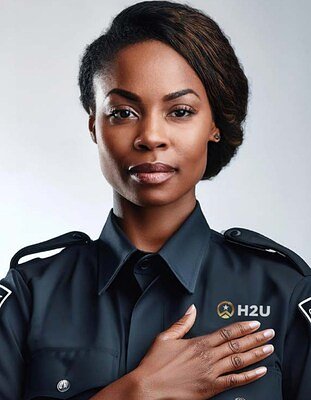
The Fight for Fit: How Better Gear is Redefining Public Safety
MIAMI, March 27, 2026 -- The uniform of a first responder is meant to be a symbol of trust and a tool for survival. But for countless women in law enforcement, firefighting, and emergency services, it has long been a source of pain, a safety risk, and a daily reminder of an industry built for men. Now, a growing movement to design gear specifically for the female form is gaining momentum, promising to transform not just comfort, but safety, morale, and equity on the front lines.
This week, American apparel brand HONOR2U announced its “Honor 2 Her” (H2HER) initiative, a program dedicated to creating anatomically correct gear by working directly with female professionals. The company joins a rising tide of manufacturers finally acknowledging a long-ignored reality: a “one-size-fits-all” approach to protective equipment doesn’t fit, and the consequences are severe.
The High Cost of Ill-Fitting Gear
For decades, the default for public safety gear has been the male anatomy. Women have been issued smaller versions of men's uniforms, a practice that ignores fundamental differences in body shape and leads to a cascade of problems. The issue goes far beyond simple discomfort.
In firefighting, where Personal Protective Equipment (PPE) is a lifeline, studies have shown that up to 80% of female firefighters struggle with ill-fitting gear. This can create dangerous gaps in thermal protection, increase exposure to carcinogenic chemicals, and restrict the mobility needed to navigate a fire scene, resulting in a 33% greater risk of injury compared to their male counterparts.
In law enforcement, the stories are just as alarming. Body armor designed for a flat torso can cause severe pain, difficulty breathing, and what many officers describe as “crushed breasts.” Ill-fitting cargo pants have been linked to chronic health issues, including chafing, swelling, and even cuts. One female officer from a recent survey went so far as to state, “Honestly, if I left my job, these (trousers) would be the number one reason.”
Beyond the physical toll, the psychological impact is profound. Wearing a uniform that is ill-fitting and unprofessional erodes confidence and a sense of belonging. In professions where mental readiness is paramount, feeling that your own equipment is working against you can be a significant and demoralizing burden.
A Problem Confirmed by Data
What was once a collection of individual complaints has now been validated by large-scale data. The first-ever National Police Uniform and Equipment Survey in England and Wales, whose findings were published in 2025, painted a stark picture of the crisis. The survey, which gathered responses from over 20,000 officers and was led by researchers from Lancaster University Law School, laid bare the systemic failures of standard-issue gear.
A staggering 64% of all respondents reported that their uniform restricted movement and reduced their effectiveness on the job. For women, the findings were even more damning. Overall, 85% of female respondents reported at least one physical health condition they believed was caused or worsened by their uniform. General-purpose body armor was a primary culprit, with 38% of women reporting it “crushed their breasts.”
The research confirmed that police uniforms, historically designed by men for male bodies, were failing a significant portion of the workforce. The findings provided undeniable evidence that this was not a matter of preference, but a critical issue of occupational health, safety, and operational readiness.
A Shift Towards Equity Through Design
Initiatives like HONOR2U’s H2HER program represent a direct response to this data. The program is built on a philosophy of co-creation, building gear with female professionals rather than simply for them. The company’s approach is centered on four key pillars: Anatomically Correct Design, Safety as a Priority, Psychological Impact, and Equity Through Design.
The goal is to engineer gear that fits the female form, allowing for proper mobility and reducing the risk of musculoskeletal injury. Properly fitted body armor provides the intended ballistic protection without creating dangerous gaps. Uniforms that reduce heat stress and allow for a full range of motion improve response times and endurance. As HONOR2U states in its mission, this focus sends a powerful message of belonging and allows professionals to focus entirely on mission-critical decisions, free from the distraction and danger of their own equipment.
This movement is about more than just a better fit; it’s about acknowledging the diversity of the workforce and providing every individual with the tools they need to succeed and survive. True equality, advocates argue, begins with the fundamental equipment provided to those who serve.
An Industry Awakens to Opportunity
The push for gender-specific gear is not solely a matter of social responsibility; it is also a reflection of a significant market shift. The global tactical and outdoor clothing market was valued at approximately $15 billion in 2025 and is projected to surge to nearly $27 billion by 2033. While the men’s segment remains the largest, the women’s segment is experiencing faster growth.
This acceleration is fueled by the increasing participation of women in law enforcement, military, and firefighting roles. As a result, the demand for ergonomic, adjustable, and high-performance tactical gear designed for women has never been higher. Companies across the industry, from established leaders like 5.11 Tactical to specialists like Fire-Dex, are now actively developing and marketing women's lines, recognizing both the ethical imperative and the clear business opportunity.
The philosophy is simple: if it goes on like armor, it should protect like armor—physically, emotionally, and professionally. By empowering the women who serve our communities with gear made for their reality, the public safety industry is taking a critical step toward building a stronger, more effective, and more equitable force. When uniforms are tailored to the demands of the job and the diversity of those who serve, they finally become what they were always meant to be: tools for safety, not obstacles to it.