
- Market Growth: Singapore's home remodeling market projected to rise from USD 1.95 billion (2024) to USD 3.13 billion (2033).
- Consumer Demand: 72% of homeowners prioritize space optimization.
- Service Expansion: Star Living now offers end-to-end solutions, including appliances from brands like Daikin and Panasonic.
Experts would likely conclude that Star Living's 'One-Stop Home & Living' concept addresses critical pain points in Singapore's fragmented renovation market, though its success will depend on flawless execution and maintaining quality across diverse services.
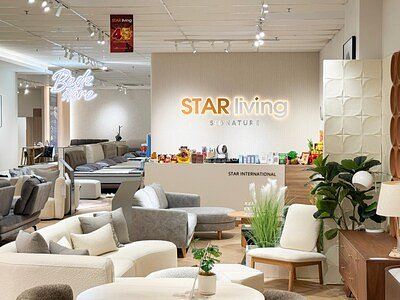
The End of Renovation Hell? Star Living Bets on a One-Stop Solution
SINGAPORE – June 03, 2026 – For any Singaporean homeowner, the word “renovation” often conjures a familiar anxiety: a chaotic ballet of coordinating contractors, chasing suppliers, and navigating a maze of conflicting timelines and invoices. It’s a process so notoriously stressful that it has become a rite of passage. Now, legacy brand Star Living is making a bold claim: that it can tame this chaos. The company has launched an integrated 'One-Stop Home & Living' concept, a strategic gambit that promises to consolidate everything from masonry and carpentry to furniture and home appliances under a single, streamlined service. It’s an ambitious move aimed directly at the heart of a market defined by fragmentation and consumer frustration.
A Market Ripe for Disruption
Star Living’s play is not happening in a vacuum. It is a calculated response to the realities of Singapore's home improvement sector—a thriving, yet notoriously difficult landscape for consumers to navigate. The market, with over 6,000 firms in the renovation and interior design sector alone, is a patchwork of specialized contractors and designers. This forces homeowners into the unwanted role of project manager, a significant burden for those juggling careers and family life. The financial stakes are also rising, with the home remodeling market projected to climb from USD 1.95 billion in 2024 to over USD 3.13 billion by 2033.
While integrated service providers like Weiken.com and Ciseern have long offered 'design and build' solutions, Star Living’s model pushes the boundary further. By explicitly incorporating major home appliances and partnering with established brands like Daikin, Panasonic, and Mitsubishi Electric for air-conditioning, the company is attempting to close the final gaps in the consumer journey. This comprehensive approach differentiates it in a crowded field, transforming the brand from a furniture retailer with design services into a potential end-to-end home creation partner. The goal, as stated by Group Retail Manager Koh Hong Jie, is to make the process “more manageable” and “seamless.”
The Homeowner’s Burden
The demand for such a solution is palpable. The psychic toll of renovation is a well-documented pain point on homeowner forums and social media groups across the island. Star Living's new model is a direct answer to a collective groan from a populace that increasingly values time and convenience. Research validates this shift: a recent survey found that 72% of homeowners prioritize space optimization, a clear reflection of the constraints of urban living. The post-pandemic era has only amplified this, with a surge in remote work driving a 15-20% increase in renovation budgets as families seek to create more functional, multi-purpose living environments.
This isn't just about avoiding stress; it's about achieving a cohesive vision without the logistical nightmare. The traditional, piecemeal approach often leads to design compromises and coordination failures—the flooring that clashes with the carpentry, the appliance that doesn't quite fit the custom cabinet. By centralizing decision-making and execution, the 'one-stop' model promises a more holistic outcome, where every element is considered from the outset. It’s a compelling proposition for first-time homeowners and busy professionals who are willing to pay a premium for peace of mind and a predictable result.
Beyond Furniture: A Pivot to Holistic Living
This initiative also marks a significant evolution for Star Living itself. Established in 1981, the firm is moving far beyond its roots as a traditional furniture seller to become a lifestyle architect, responding adeptly to the nuanced demands of the modern consumer. This is most evident in its expanded focus on sustainability and wellness. The company’s commitment to using low-formaldehyde materials, including E1-grade MDF and CARB P2-certified boards, addresses growing concerns about indoor air quality. Its SFIC Sustainability Furniture Mark serves as third-party validation of a broader commitment to environmentally responsible practices, from material sourcing to production.
This evolution is also apparent in its product innovation. The 2025 launch of OPU Door, a collection of slim-frame, concealed, and synchronised sliding door systems, is a direct nod to the space-saving obsession of city dwellers. These are not just doors; they are architectural solutions designed to create minimalist aesthetics and maximize functionality in compact HDB flats and condominiums. Paired with offerings like scratch-resistant and stain-resistant upholstery for pet owners, Star Living is demonstrating an acute awareness of the real-world needs of its customers, positioning itself as a brand that understands how Singaporeans actually live in their homes.
The Challenge of the 'One-Stop' Promise
The ambition of the 'One-Stop Home & Living' concept is undeniable, but so are the operational hurdles. The promise of a single, seamless touchpoint is seductive, but its success hinges on flawless execution behind the scenes. Managing quality control across such disparate trades—from the precision of a carpenter to the technical expertise of an air-conditioning installer—is a monumental challenge. One weak link in the chain could undermine the entire value proposition. The industry is littered with cautionary tales of renovation firms that over-promised and under-delivered, leaving homeowners in a worse position than if they had managed the project themselves.
To build trust, the company will need to demonstrate unwavering reliability and transparency, qualities often benchmarked by accreditations like CaseTrust. The firm's new showroom at Serangoon North is its primary stage for making this case. Designed to present coordinated home settings, it is more than a retail space; it is a proof of concept. Here, customers are invited to visualize the integrated promise, to see how sanitary fittings, custom carpentry, and furniture can coexist harmoniously. It is here that Star Living must convince a skeptical public that it has not just created a clever marketing concept, but a truly viable solution to one of modern life’s most persistent headaches.