
- Over 50% of first-time C-suite executives fail within their first 18 months
- A single failed C-suite hire can cost companies 5 to 10 times the executive’s total compensation
- Executive turnover costs shareholders an estimated 38% in additional value
Experts agree that the high failure rate among new C-suite executives stems from a systemic preparation gap, where leaders lack the necessary skills and mindset to transition successfully into senior leadership roles.
The C-Suite’s Hidden Crisis: Why Over Half of New Executives Fail
AUSTIN, TX – May 12, 2026 – A quiet but costly crisis is unfolding in the highest echelons of the corporate world. More than half of all first-time C-suite executives fail within their first 18 months. This staggering statistic, supported by a wealth of industry research, points not to a lack of talent or ambition, but to a profound and systemic “preparation gap” that costs organizations billions annually in lost value, strategic drift, and plunging morale.
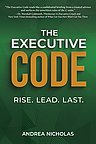
Now, a veteran executive advisor is aiming to close that gap. Andrea Nicholas, who has spent decades both occupying and advising the C-suite, is releasing “The Executive Code: Rise. Lead. Last.” on June 2, 2026. The book is being positioned as a definitive field guide for navigating the treacherous transition into senior leadership, a journey for which many are surprisingly ill-equipped.
“The C-suite is not the next rung on the ladder,” Nicholas writes in a statement that encapsulates the book's core premise. “It is a different job entirely — where judgment, accountability, visibility, and consequence amplify overnight.”
The Billion-Dollar Preparation Gap
The 50% failure rate is not a new phenomenon, but its financial and organizational consequences are becoming too large to ignore. Studies from numerous respected sources, including the Corporate Executive Board (CEB) and reports citing the Harvard Business Review, corroborate this high rate of derailment, with some estimates placing the failure figure as high as 70%. The problem persists whether the executive is an external hire or an internal promotion.
The costs are immense. According to leadership consulting firms, the total economic impact of a single failed C-suite hire can be five to ten times their total compensation package. For an executive earning a mid-six-figure salary, this translates into a multi-million dollar loss encompassing direct replacement fees, recruiting costs, strategic delays, and the cascading effect of talent attrition on the executive’s former team. One report estimates that executive turnover costs shareholders a staggering 38% in additional value.
Beyond the balance sheet, the impact reverberates through the organization. A leadership vacuum stifles innovation, stalls critical projects, and erodes team morale. The constant churn prevents the formation of long-term vision and consistent execution, leaving companies in a perpetual state of transition.
A Different Job Entirely: Decoding the C-Suite
Experts agree that the root cause of this widespread failure is a fundamental misunderstanding of the role itself. Leaders are promoted based on their functional expertise and past performance, yet the skills that get them to the C-suite are often insufficient for success once they arrive. The transition requires a profound identity shift from being a hands-on expert to becoming an enterprise-wide leader who operates through influence, judgment, and political acumen.
Common pitfalls identified by researchers align perfectly with the challenges Nicholas seeks to address. These include a failure to adapt to the complex and often unwritten rules of corporate politics, a cultural misfit, an inability to build crucial partnerships with peers and board members, and misaligned expectations with stakeholders. Some fall prey to “arrival syndrome,” an overconfidence that shuts down learning and feedback, while others simply cannot handle the relentless pace and intense pressure.
“There is an entire industry built around helping leaders get to the C-suite,” Nicholas notes. “Almost nothing exists for what happens after they arrive — the identity shift, the political complexity, the loneliness, the relentless pace.”
An Insider's Playbook for Lasting Leadership
Nicholas’s credentials lend significant weight to her proposed solution. She speaks from a rare position of dual experience, having spent nearly 15 years in C-suite roles herself before founding a management consulting firm she scaled for 14 years. That journey included a bet-the-company pivot from financial services to healthcare during the 2008-2009 financial crisis, culminating in a successful SaaS exit. As an advisor, she has since guided more than 100 senior executives, a body of work that repeatedly revealed the same critical preparation gap.
Her forthcoming book has already garnered a powerful endorsement from Dr. Marshall Goldsmith, the Thinkers50 #1 Executive Coach and bestselling author of What Got You Here Won't Get You There. “The Executive Code reads like a confidential briefing from a trusted advisor,” Goldsmith states. “It surfaces the unwritten rules of the C-suite and gives you language to navigate them without losing your edge.”
This praise highlights the book's promise: to move beyond theoretical leadership models and provide a practical, battle-tested playbook derived from decades of real-world experience.
Charting the Full Arc of Executive Life
Unlike resources focused solely on the first 90 days, “The Executive Code” is designed to cover the entire lifecycle of a C-suite career. Its chapters address everything from assessing one’s own readiness before taking the seat to managing an intentional exit and legacy. It dedicates significant space to the critical first 18 months, the politics of power, navigating board dynamics, and expanding influence both internally and externally.
Crucially, the book also frames wellbeing and longevity not as afterthoughts but as core strategic priorities for sustained high performance. This holistic approach is rooted in Nicholas’s proprietary Coachsulting® advisory method, a hybrid model that combines the strategic direction of consulting with the personal development of coaching.
As the corporate landscape continues to evolve, with new pressures from technological disruption and shifting stakeholder expectations, the need for adaptable and resilient leadership has never been greater. Nicholas’s work argues that building such leaders is not a matter of chance, but of deliberate and focused preparation.
“I wrote the book I wish had existed when I was in those seats,” Nicholas says. “The failure rate is not inevitable. It is a preparation problem. And preparation problems have solutions.”
The Executive Code: Rise. Lead. Last. is scheduled for publication on June 2, 2026, and is currently available for pre-order.