
- 65% of Camden County residents believe local substance use disorder services are insufficient
- 58% of residents find existing services poorly advertised and difficult to access
- 39% drop in fatal overdoses in Camden County in the first half of 2024
Experts would likely conclude that the boutique model of Steps to Health and Wellness offers a promising, patient-centered approach to behavioral health care, particularly in underserved areas, but its long-term success will depend on execution and differentiation in a competitive market.
The Business of Healing: A New NJ Clinic Bets on the Boutique Model
CHERRY HILL, NJ – December 01, 2025 – The recent opening of Steps to Health and Wellness, a specialized addiction and mental health treatment center in Cherry Hill, New Jersey, might appear on the surface as a local healthcare story. However, peeling back the layers reveals a case study in modern healthcare entrepreneurship and a significant trend in the new economy: the rise of the practitioner-led, boutique service model in the highly competitive, multi-billion-dollar behavioral health market.
While large, private equity-backed healthcare systems often dominate the headlines with acquisitions and scale, the launch of smaller, specialized clinics like this one signals a strategic bet on a different value proposition: intimacy, personalization, and deep clinical expertise as a primary business driver.
Tapping a Persistent Market Need
The strategic rationale for opening a new facility in South Jersey is underscored by stark data. Camden County, where Cherry Hill is a major hub, has long been identified as an area with a critical shortage of accessible mental health and substance use services. A 2020 community health assessment found that a staggering 65% of residents believed local substance use disorder services were insufficient. Furthermore, 58% felt that the services that did exist were poorly advertised and difficult to find, pointing to a clear market gap not just in supply, but in accessible, on-demand care outside of acute crisis situations.
Interestingly, this persistent need coexists with recent public health successes. In the first half of 2024, Camden County saw a remarkable 39% drop in fatal overdoses, a trend that continued into early 2025. While this points to the effectiveness of harm reduction and emergency interventions, it also signals a market shift. As the immediate crisis of overdose deaths is better managed, the focus pivots to the next, more complex phase: providing the long-term, sustainable treatment required to prevent relapse and address the co-occurring mental health disorders that fuel addiction. This is precisely the market segment Steps to Health and Wellness aims to capture, moving beyond crisis management to offer ongoing partial care, intensive outpatient (IOP), and outpatient programs.
The 'Boutique' Strategy in Behavioral Health
Steps to Health and Wellness is entering a crowded field where competitors include established names like The Recovery Village Cherry Hill at Cooper and other recent entrants. In this environment, its core differentiator appears to be its deliberate business model: a “small, intimate setting.” This is the boutique strategy, a conscious move away from the high-volume, institutional feel of larger facilities. The implicit promise is that a smaller scale allows for a higher degree of personalization and direct access to senior clinical staff, a premium offering in a field where a patient’s connection with their therapist is a key predictor of success.
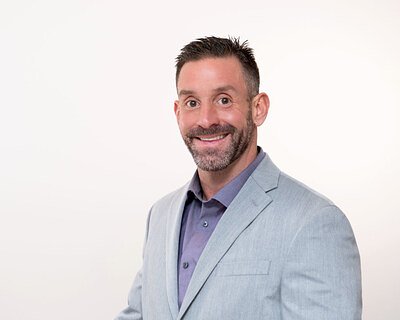
This model is embodied by the venture's apparent leader, Matthew Scarduzio. His profile is not that of a typical corporate executive, but of a deeply experienced practitioner-entrepreneur. With over 15 years in the field, Scarduzio holds a formidable array of credentials, including licenses as a Professional Counselor (LPC) and a Clinical Alcohol/Drug Counselor (LCADC), alongside being an Approved Clinical Supervisor (ACS). His background, which includes another practice, Holistic Healing & Wellness LLC, demonstrates a track record of building a business around his own clinical expertise. This practitioner-led approach builds inherent credibility and suggests that the company’s mission, which emphasizes “compassion, integrity, and a genuine commitment,” is baked into its operational DNA rather than just being marketing copy.
Navigating a Landscape of Look-Alikes
The primary challenge for any new entrant is differentiation. Keywords like “personalized,” “evidence-based,” and “holistic” have become table stakes in the addiction treatment industry, used by nearly every provider to attract clients. The success of Steps to Health and Wellness will therefore depend not on its claims, but on its execution. The center’s stated focus on integrating individual, group, and family counseling is a notable strategic choice. Addiction is often called a “family disease,” and by offering services that treat the entire family unit, the clinic expands its service footprint and creates a more comprehensive, defensible market position.
Furthermore, the inclusion of health education and psychoeducation is a savvy move. These programs serve a dual purpose: they empower clients with tools for long-term recovery, improving outcomes, and they also function as a valuable, lower-intensity service that can attract a wider range of clients and build community trust. In a market built on referrals and reputation, providing tangible value to the client's entire support system is a powerful business development tool.
The Economics of Evidence-Based Care
From a business perspective, the commitment to “science-based and evidence-based programs” is about more than just clinical efficacy; it's a fundamental pillar of the economic model. In today’s healthcare economy, reimbursement from insurance payors is contingent on the use of approved, research-backed therapeutic modalities. Scarduzio’s extensive training in methods like Cognitive Behavioral Therapy (CBT), Motivational Interviewing, and Trauma-Focused Therapy directly aligns the clinic’s services with what payors are willing to cover.
This clinical foundation enables a flexible and resilient revenue model. By offering a spectrum of care levels—from more intensive partial care and IOP programs to standard outpatient sessions—the clinic can cater to clients with varying clinical needs and insurance benefits. This allows for a smoother client journey, enabling them to “step down” to less intensive care as they progress, while keeping them within the clinic’s ecosystem. This continuity of care is not only good for the client but is also a sound strategy for maximizing client lifetime value and ensuring financial sustainability.
The launch of Steps to Health and Wellness is a microcosm of a larger evolution in specialized healthcare. It exemplifies a move toward decentralized, expert-led models that compete not on scale, but on quality, personalization, and a deep understanding of a specific market's needs. How this boutique approach fares against larger, more capitalized competitors will be a telling indicator of the future of service-based healthcare ventures.