
- 53.6%: The rate of proper car seat use in Illinois, despite 87% overall usage.
- 71%: Reduction in fatal injury risk for infants with correct car seat use.
- $250,000: Hyundai's investment in Lurie Children's Buckle Up Program since 2022, aiding 2,000+ families annually.
Experts would likely conclude that Hyundai's targeted, community-based intervention model effectively addresses critical gaps in child car seat safety, demonstrating how corporate responsibility can align with public health needs to prevent avoidable tragedies.
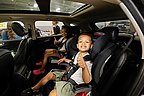
The Buckle Up Mandate: Inside Hyundai’s Fight Against a Silent Killer
ELMHURST, IL – June 09, 2026 – On a Saturday at a suburban car dealership, the usual business of sales targets and financing deals was replaced by a quieter, more urgent transaction. At Wilkins Hyundai, parents and caregivers pulled up, not to buy a new car, but to ensure the one they owned wouldn't fail their most precious cargo. Certified technicians swarmed the vehicles, adjusting straps, checking angles, and patiently explaining the nuances of buckles and LATCH systems. This was the fifth such event hosted by Hyundai Motor America and Ann & Robert H. Lurie Children's Hospital of Chicago, a ground-level intervention in a national public health crisis that unfolds quietly on our nation’s roads every day.
Beneath the surface of this community event lies a stark reality. According to the National Highway Traffic Safety Administration (NHTSA), nearly half of all child car seats are installed or used incorrectly. It’s a staggering statistic for a device designed with a single purpose: to save a child’s life. This partnership, backed by a recent $50,000 donation from the automaker, isn't just a feel-good photo opportunity; it is a targeted deployment of resources against a problem that is as complex as it is deadly.
The Anatomy of a Preventable Tragedy
The physics of a car crash are unforgiving, and for a small child, the difference between a correctly installed car seat and an incorrectly installed one is the difference between walking away and a life-altering injury or death. The data is unequivocal. NHTSA reports that proper car seat use reduces the risk of fatal injury by 71 percent for infants and 54 percent for toddlers. Yet, the gap between knowledge and practice remains dangerously wide.
In Illinois, motor vehicle injuries are a leading cause of death for children. State law mandates specific restraints—from rear-facing seats for toddlers to booster seats for school-aged children—but compliance is a persistent challenge. A 2007 Illinois Department of Transportation study revealed a telling discrepancy: while overall safety seat usage appeared high at 87%, the rate of proper use plummeted to just 53.6%. In Cook County, home to Chicago, the numbers were even lower. This isn't a failure of caring, but a failure of systems. A 2021 study co-authored by a Lurie Children’s specialist found that parents who reported more “hassles” with car seats—such as child discomfort or the difficulty of moving them between vehicles—were less likely to adhere to safety recommendations. The problem isn't a lack of love; it's a lack of accessible expertise and support in navigating a surprisingly complex task.
This is the hidden cost of modern convenience. Vehicles are safer than ever, but the safety equipment designed for our smallest passengers requires a level of diligence that many busy parents struggle to achieve without help. The result is a silent epidemic of preventable tragedies, where a small error in installation can have catastrophic consequences.
A Blueprint for Intervention
The collaboration between Hyundai and Lurie Children's offers a compelling model for closing this dangerous gap. By bringing certified Child Passenger Safety Technicians (CPSTs) directly to communities, the program dismantles the barriers of cost, time, and confusion. At the Elmhurst event, families received more than a simple inspection; they received personalized, hands-on education. Technicians didn't just fix mistakes—they taught parents how to identify and correct them on their own, a transfer of knowledge that provides a long-term safety dividend.
Since 2022, Hyundai has funneled $250,000 into Lurie Children's Buckle Up Program. This capital is translating into measurable action: the distribution of over 1,000 car seats annually to families in need and safety education for more than 2,000 families each year. For a family facing financial hardship, a free, correctly installed car seat is not a small thing; it is a fundamental tool for their child’s well-being.
"Every journey deserves to be a safe one—and that begins with equipping families with the knowledge and support they need," said Cole Stutz, Hyundai Motor North America's chief safety officer. His statement reflects an understanding that an automaker's responsibility doesn't end when a car leaves the lot. Amy Hill, who directs injury prevention programs at Lurie Children's, echoed the sentiment, calling Hyundai an "invaluable partner" in preventing child injuries. "Their support has helped us expand access to car seats, provide education to thousands of families, and ensure children have the protection they need every time they travel," she noted. The program's effectiveness is rooted in this fusion of corporate funding and on-the-ground medical and safety expertise.
A New Model for Corporate Responsibility
In an era where Corporate Social Responsibility (CSR) can often feel like a branding exercise, the Hyundai Hope initiative stands out for its strategic focus and measurable impact. This isn't philanthropy at a distance; it's a direct investment in the safety ecosystem surrounding their products. For an automotive company whose brand is built on safety and reliability, addressing the leading cause of vehicle-related death for children is not just good citizenship—it's a strategic imperative.
The partnership with Lurie Children's is not an isolated act. It is part of a national strategy, with similar programs established with top-tier institutions like Children’s Hospital of Philadelphia (CHOP), Texas Children's, and Children's Hospital Los Angeles. This network approach suggests a deep, long-term commitment to the principle Hyundai calls "Progress for Humanity." It demonstrates a sophisticated understanding that true progress isn't just about technological innovation in the vehicle itself, but also about ensuring the safety of the people inside it.
This model provides actionable intelligence for other industries. It shows that the most effective CSR initiatives are those that align a company’s core business with a pressing societal need, leveraging corporate resources to create tangible, life-saving outcomes. The hidden cost of inaction—in terms of both human lives and brand integrity—is far greater than the investment required to fund these community-level interventions.
The work in Chicagoland is set to continue, with the latest donation earmarked to expand the Buckle Up Program into more underserved neighborhoods. For the families who attend these events, the impact is immediate and profound. They leave not just with a safer car seat, but with the confidence and knowledge to protect their children on every future journey. It is here, in the parking lot of a local dealership, that a global corporation's vision of progress becomes a simple, powerful, and life-saving reality.