
- $5B to $40B: The global AI in education sector is projected to grow from $5 billion in 2024 to nearly $40 billion by 2030.
- 57% increase in efficiency: Companies using AI in L&D programs report an average 57% boost in efficiency.
- 52% boost in productivity: The same programs see a 52% increase in productivity.
Experts view AI Self-Training as a promising but complex shift in corporate learning, emphasizing its potential to boost efficiency and productivity while cautioning against over-reliance on AI without human oversight.
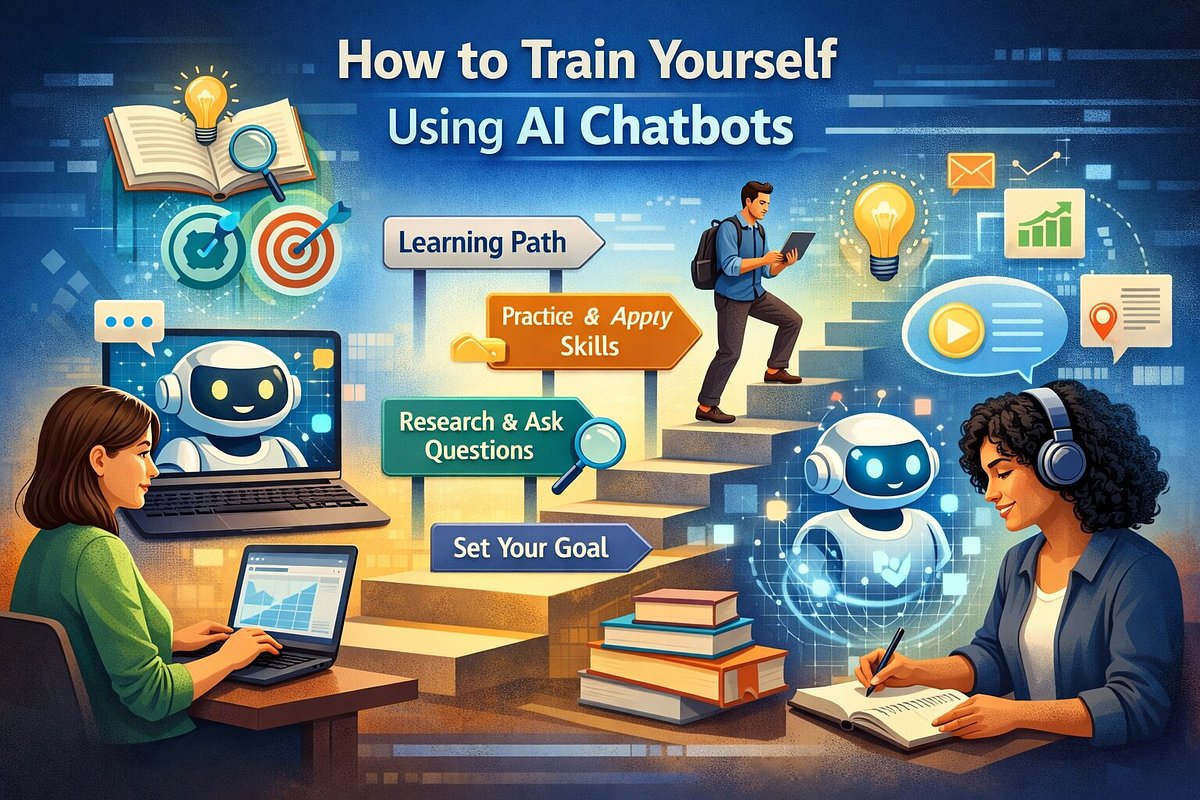
The AI Tutor: A New Bid to Revolutionize Corporate Training
CINCINNATI, OH – January 13, 2026 – In a move that could reshape corporate learning and development, Cincinnati-based research firm Screen Education today unveiled a new training methodology called AI Self-Training. The structured process is designed to empower employees to teach themselves critical job skills by leveraging the power of AI chatbots as on-demand research assistants, subject matter experts, and personalized tutors.
This method positions employees as “autonomous directors of their own skill development,” allowing them to identify and acquire necessary skills in real time, tailored precisely to their immediate needs. The company claims this transforms training from a scheduled, one-size-fits-all event into a dynamic, on-demand performance enhancement tool. The goal is to move beyond passive learning and enable active, self-directed upskilling across all levels of an organization.
According to Michael Mercier, President of Screen Education, the ubiquity and power of AI chatbots are the keys to unlocking this new paradigm. "We've all been amazed by the incredible power of AI chatbots," Mercier stated in the press release. "By leveraging this power, employees can take granular control of their training --- addressing the specific skills they need in the moment. Empowerment of this magnitude will facilitate learning that boosts productivity across the company."
The Promise of Personalized Upskilling
The core appeal of AI Self-Training lies in its hyper-personalized approach, a stark contrast to traditional corporate training programs. Instead of sitting through generalized modules, employees can pursue specific, practical learning projects. For instance, a marketing assistant could use the method to learn survey design, master the relevant software, and analyze the resulting data to produce actionable insights. Similarly, an in-house attorney could rapidly get up to speed on a new regulation and determine necessary compliance actions, while a new manager could learn and refine conflict resolution strategies to improve team dynamics.
This model taps into a significant and growing market demand. The global AI in education sector, valued at over $5 billion in 2024, is projected by industry analysts to surge to nearly $40 billion by 2030. This explosive growth is fueled by a corporate imperative to continuously upskill and reskill a workforce facing rapid technological disruption. Companies are increasingly seeking learning solutions that are adaptable, efficient, and capable of closing skill gaps as they emerge.
AI-driven methods promise to deliver this by shifting the focus to the individual learner. The ability to customize the scope and depth of training addresses a common criticism of legacy e-learning systems, where content is often too broad or irrelevant to an employee's specific role. By putting the employee in control, with an AI partner to guide them, the learning process becomes directly tied to performance outcomes.
Challenging the Traditional L&D Model
Screen Education’s announcement enters a competitive landscape already buzzing with AI-powered solutions. Major players like Skillsoft and Docebo have integrated AI into their Learning Management Systems (LMS) to recommend content and create adaptive learning paths. AI coaching platforms such as CoachHub have also gained traction. However, Screen Education's approach is distinct; rather than selling a specific software platform, it offers to teach a repeatable method through a seminar, effectively training employees on how to use widely available AI chatbots for their own professional development.
This strategy could disrupt the conventional corporate training market, which is projected to reach over $44 billion by 2028. By democratizing the tools for skill acquisition, it challenges the model of relying solely on externally or internally developed course catalogs. Research suggests companies adopting AI in their L&D programs see significant benefits, with one study reporting an average 57% increase in efficiency and a 52% boost in productivity.
The pedagogical framework for this approach is grounded in established adult learning theories. It aligns with the principles of andragogy, which posits that adults learn best when they are self-directed and can immediately apply new knowledge to solve real-world problems. Furthermore, it supports self-regulated learning (SRL), where AI chatbots can act as a scaffold, helping employees set goals, self-assess, and find resources. Studies on AI tutoring have shown it can be highly effective, sometimes enabling students to learn material faster and more thoroughly than through other active learning methods.
Navigating Practical and Ethical Hurdles
Despite its compelling promise, the widespread implementation of AI-driven self-training is not without significant challenges. On a practical level, while AI tools are highly scalable, their effectiveness hinges on сотрудника's ability to craft effective prompts and critically evaluate the AI's output. The seminar offered by Screen Education, which covers learning theory and advanced chatbot techniques, aims to address this very skill gap.
More pressing, however, are the ethical considerations. The use of AI in training raises immediate concerns about data privacy and security. As employees interact with chatbots, they generate vast amounts of data on their learning habits, knowledge gaps, and even their mistakes. Organizations must establish robust protocols to protect this sensitive information and be transparent with employees about how it is collected and used.
Another major ethical minefield is the potential for algorithmic bias. AI models are trained on vast datasets from the internet, which can contain inherent biases and inaccuracies. If an employee is learning about a complex topic like new regulations or leadership strategies, a biased or incorrect AI response could lead to significant errors in judgment and practice. This risk underscores the necessity of maintaining human oversight and not treating the AI chatbot as an infallible source of truth.
Experts caution that AI should be viewed as a powerful supplement to, not a replacement for, human instruction and mentorship. While an AI can provide instant information and feedback, it lacks the emotional intelligence, nuanced understanding, and real-world wisdom of a human expert. Over-reliance on AI-only training could risk creating a workforce that is proficient in technical tasks but deficient in the critical thinking, creativity, and interpersonal skills that are cultivated through dialogue and human connection. The ultimate success of methods like AI Self-Training will likely depend on a hybrid approach, where technology empowers employees while human experts provide essential guidance, context, and validation.