
- 25 billion data points analyzed by Kalicube Pro™ to track AI perception of brands
- 53% of consumers distrust AI-generated search summaries (Gartner 2025)
- 18-month window to act before AI perception gaps become entrenched
Experts agree that businesses must proactively manage their digital identity across AI systems to prevent misrepresentation and lost revenue, marking a shift from SEO to Answer Engine Optimization (AEO).
The AI Assistants Deciding Your Brand’s Fate—And How to Fight Back
PARIS, France – January 15, 2026 – As artificial intelligence becomes the new front door for customer inquiries, a digital intelligence firm has unveiled a massive dataset that maps how AI assistants perceive the world's brands, revealing a critical and costly blind spot for most businesses.
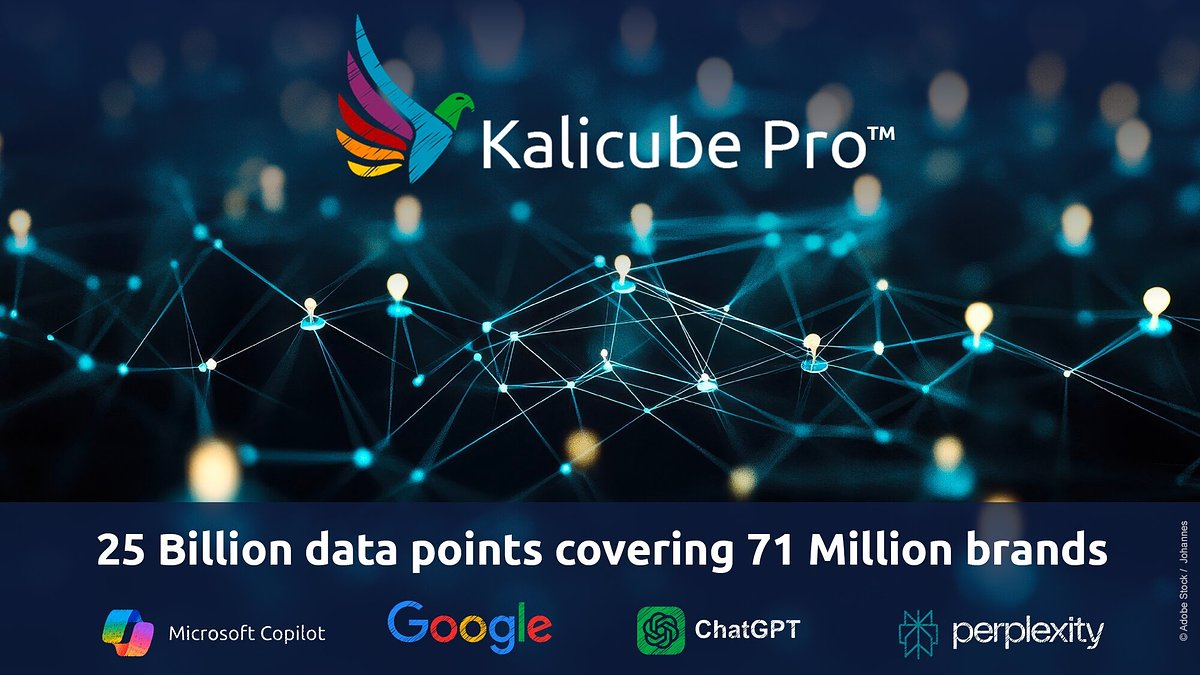
Digital Brand Intelligence™ firm Kalicube® announced today that its platform, Kalicube Pro™, is now actively analyzing 25 billion data points to track the algorithmic "understanding" of 71 million brands and a million entrepreneurs. The announcement coincides with the launch of new services designed to help businesses manage and correct their representation within AI systems like ChatGPT, Google's Gemini, and Perplexity.
The core of the problem, according to Kalicube, is that businesses are no longer in full control of their own narrative. AI assistants have become a pervasive, autonomous layer between companies and their potential customers.
"Every business now has seven employees they didn't hire," said Jason Barnard, CEO of Kalicube, in a statement. "Google, ChatGPT, Perplexity, Claude, Gemini, Copilot, and Siri are talking to your customers 24 hours a day. The question is: are they trained to represent you accurately, or are they sending customers to your competitors?"
Kalicube's data suggests the latter is overwhelmingly the case. Most companies, the firm argues, are losing this invisible battle by default, as their new AI "employees" misrepresent their credentials, omit key strengths, or actively recommend rivals.
The AI Credibility Gap and the Revenue 'Leak'
This phenomenon creates what Kalicube has termed the "AI credibility gap." A business may have a stellar reputation, years of expertise, and glowing customer reviews, but if that information isn't structured and presented in a way that machine learning models can understand and verify, it effectively doesn't exist for the AI. To the algorithm, the brand is an unknown quantity and therefore not a credible recommendation.
This gap is not just a theoretical problem. Recent industry reports echo these concerns, highlighting a growing wave of consumer skepticism. A Gartner survey conducted in mid-2025 revealed that 53% of consumers distrust or lack confidence in the reliability and impartiality of AI-generated search summaries. Furthermore, 41% reported that these AI overviews actually make finding information more frustrating.
This consumer distrust directly fuels what Kalicube describes as "the leak": potential customers who receive incomplete, inaccurate, or unconvincing AI-generated answers and subsequently take their business elsewhere. For many mid-market companies, this leak represents a silent drain on the bottom line, amounting to potentially millions in untraceable lost revenue.
Beyond SEO: The Rise of Answer Engine Optimization
The challenge of managing AI perception marks a fundamental evolution in digital strategy, pushing the industry beyond traditional Search Engine Optimization (SEO). The new frontier is being defined as Answer Engine Optimization (AEO) or, more broadly, Assistive Engine Optimization (AsEO). The goal is no longer just to rank on a results page, but to be the source of the answer itself.
Jason Barnard, a recognized industry figure known as "The Brand SERP Guy," is credited with coining the term "Answer Engine Optimization" as far back as 2017. His early work anticipated a future dominated by "zero-click searches," where users get their questions answered directly by the engine without needing to click on a link. With the explosion of large language models (LLMs), that future has unequivocally arrived.
Kalicube is not alone in identifying this shift. A new ecosystem of agencies and platforms is emerging to tackle the AEO challenge. These firms offer services ranging from LLM visibility audits and targeted citation engineering to schema implementation and AI-ready content strategies. The market is rapidly professionalizing around the core idea that brands must proactively manage their digital identity across the knowledge graphs and datasets that power modern AI.
Educating the Algorithm: A New Approach to Brand Management
To address this, Kalicube is promoting a methodology it calls The Kalicube Process™, which frames AI optimization not as technical manipulation, but as a form of employee training. The approach centers on systematically educating AI systems about a brand's identity, credibility, and offerings.
"Most businesses try to trick AI," Barnard stated. "We educate it. When you give these systems the right information in the right format, they become your most effective sales force."
The process works in three phases: first, ensuring AI models accurately know who the brand is; second, building a verifiable structure of proof to make AI confident in recommending the brand; and third, positioning the brand to be proactively suggested for relevant customer queries.
To achieve this, Kalicube Pro™ analyzes data from the very sources that AIs use for their training, including Google's Knowledge Graph API, Wikidata, and the vast web archive of Common Crawl, alongside real-time tracking of AI outputs. "We're not guessing how AI sees brands," Barnard explained. "We have the actual map."
An 18-Month Window to Act
The pace of change is creating a sense of urgency. Kalicube projects its dataset will quadruple to 100 billion data points by 2027, a testament to the exponential growth of the information ecosystem that underpins AI. This rapid expansion suggests that the foundational perceptions AI models are forming today will soon become deeply entrenched and difficult to change.
Barnard offers a stark warning for businesses that are slow to adapt. "The companies that understand this shift have maybe an 18-month window," he cautioned. "After that, the AI perception gap becomes nearly impossible to close."
For business leaders, the message is clear: the passive approach to digital presence is no longer viable. The battle for brand relevance is now being fought within the neural networks of AI, and the window to establish a strong, accurate, and defensible position is rapidly closing.