
- $99 price point: The W1 REGEN wearable laser therapy device is offered at an early-bird price of $99, making advanced photobiomodulation (PBM) technology accessible to consumers.
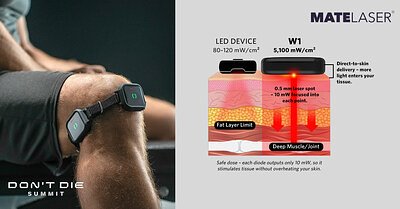
- 5,100 mW/cm² irradiance: The device delivers an exceptionally high power density, significantly surpassing typical consumer-grade LED panels (100-200 mW/cm²).
- 24-gram form factor: The device is ultra-portable, weighing just 24 grams, comparable to a smartwatch.
Experts would likely conclude that while the W1 REGEN's high-power laser technology and affordability could democratize advanced recovery tools, its long-term impact will depend on rigorous validation, regulatory compliance, and real-world performance.
The $99 Clinic: Wearable Laser Therapy Aims for Mass Adoption
MIAMI, FL – December 11, 2025 – The landscape of personal health technology is once again being reshaped, this time by a device smaller than a smartwatch but with ambitions far larger. Miami-based MATELASER, INC. has launched a Kickstarter campaign for its W1 REGEN, a 24-gram wearable device that it claims delivers “clinic-grade” laser therapy. With an aggressive early-bird price of $99, the company is making a bold play to move a technology typically found in physical therapy clinics and high-end wellness centers into the hands of everyday consumers.
The announcement signals a potential inflection point for photobiomodulation (PBM), or red light therapy. While LED panels and consumer gadgets have flooded the wellness market, MATELASER asserts its device is in a different category altogether, promising deep-tissue penetration for therapeutic outcomes, not just a cosmetic glow. This move raises critical questions for healthcare providers and patients alike: Can true medical-grade therapy be miniaturized and sold for under $100? And what are the implementation challenges when such powerful technology becomes widely accessible?
The Science of Deep-Tissue Penetration
At the heart of the W1 REGEN’s claims is its use of a patent-pending Vertical-Cavity Surface-Emitting Laser (VCSEL) architecture to deliver an exceptionally high irradiance, or power density, of 5,100 mW/cm². For context, many popular consumer-grade LED panels operate in the 100-200 mW/cm² range. MATELASER argues this high power is essential for driving photons deep into tissue to achieve therapeutic effects in muscles, tendons, and even bone.
The device utilizes two specific wavelengths, a strategy well-supported by PBM research. The 660nm red light wavelength is intended for superficial tissues like the skin and capillary beds to improve microcirculation. The 810nm near-infrared (NIR) wavelength, often considered a gold standard in the field, is designed to penetrate deeper, reaching muscle and fascia where it can stimulate cellular repair and reduce inflammation. PBM works by being absorbed by mitochondria, the powerhouses of our cells, which boosts energy (ATP) production. This cellular-level enhancement can accelerate tissue healing, reduce pain, and mitigate inflammation.
While the science of PBM is established, the W1 REGEN's high irradiance pushes the boundaries of consumer devices. Such power levels raise questions about safety, particularly regarding heat. Excessive power can lead to photothermal effects, potentially damaging tissue rather than healing it. MATELASER states its engineering includes advanced thermal management to ensure stable output without overheating, a critical feature if the device is to be used safely. The ultimate efficacy will depend on whether this miniaturized VCSEL system can deliver its powerful dose in a controlled, safe, and effective manner, a feat that has traditionally required larger, more expensive equipment.
A New Player in a Crowded Wellness Market
The W1 REGEN enters a global photobiomodulation market projected to exceed $1 billion by 2033. However, it aims to create its own niche. The current market is largely bifurcated. On one end are expensive, high-performance systems like full-body panels from Joovv or clinical beds from TheraLight, which can cost thousands of dollars and are stationary. On the other end are countless low-cost, low-irradiance handheld LED devices and wraps with questionable therapeutic depth.
MATELASER is positioning the W1 REGEN to shatter this dichotomy. By combining a high-power laser, an ultra-portable 24g form factor, and a $99 price tag, it directly challenges the notion that effective PBM must be either prohibitively expensive or inconvenient. This strategy of radical accessibility could democratize advanced recovery tools, making them available not just to elite athletes and wealthy biohackers, but also to office workers with chronic neck tension, runners managing tendinitis, and individuals recovering from surgery at home.
This potential market disruption hinges on execution. Established competitors have built strong brands and often have extensive libraries of user testimonials and, in some cases, clearer regulatory footing. For the W1 REGEN to succeed beyond its initial crowdfunding buzz, it must prove its performance and reliability match its ambitious specifications.
The FDA Question: Certified vs. Cleared
For any device making therapeutic claims, the regulatory pathway is paramount. MATELASER's press release describes the company as an “FDA-certified manufacturer,” a statement that requires careful interpretation. This certification means its manufacturing facilities and processes comply with the FDA’s Quality System Regulation, a prerequisite for producing medical devices. However, this is distinct from the device itself having received FDA 510(k) clearance or Premarket Approval (PMA) for specific medical uses.
The company markets the W1 REGEN for conditions like post-surgical healing, tendinitis, and chronic pain—all of which are medical claims. Without explicit FDA clearance for these indications, the device would likely be considered a general wellness product, and its marketing claims could attract regulatory scrutiny. The device is also described as a Class 3B laser, a category that carries specific safety requirements due to its potential to cause eye damage if used improperly.
This distinction is critical for both consumers and clinicians. While a device can be innovative and based on sound scientific principles, its standing as a recognized medical tool depends on rigorous validation through established regulatory channels. Prospective users should be aware of this difference when evaluating the W1 REGEN for therapeutic purposes versus general wellness applications.
From Longevity Summits to Mainstream Tech
MATELASER’s market entry strategy is as modern as its technology. The device debuted not at a traditional medical conference, but at Bryan Johnson's “Don't Die Summit,” a gathering of longevity researchers, bio-optimization leaders, and elite recovery specialists. This move strategically targets early adopters within the influential biohacking community, who are often eager to experiment with cutting-edge technologies that promise enhanced performance and healthspan.
The reported “immediate purchasing intent” from summit attendees provides powerful social proof that can fuel a successful crowdfunding campaign. This approach leverages influencer culture to build credibility and momentum before a broader public launch. Following its Kickstarter, the company plans to showcase the W1 REGEN at CES 2026, signaling its intent to cross over from a niche wellness gadget to a mainstream consumer technology product.
This journey—from a biohacker summit to the world's largest consumer electronics show—illustrates a larger trend in healthcare innovation. Increasingly, new technologies are being driven by consumer demand for personal health optimization. The W1 REGEN’s story is a compelling case study in this movement, but its long-term impact will be determined not by the hype generated at tech events, but by its real-world performance and ability to deliver safe, consistent, and verifiable results for the millions of people it aims to reach.