
- 11-gigawatt capacity: Project Matador aims to become one of the largest clean energy and computing developments in the world.
- $36.8 billion cost overrun: Georgia Power's Plant Vogtle took 15 years to complete at more than double the original budget.
- $850 million in financing: Fermi America secured funding from major institutional players to support the project.
Experts view Project Matador as a high-stakes endeavor to revive U.S. nuclear power, with potential to meet AI's energy demands but facing significant technical, environmental, and financial hurdles.
Texas Nuclear Megaproject Aims to Power AI, Faces Old Hurdles
AMARILLO, TX – February 12, 2026 – On the vast plains of the Texas Panhandle, an audacious plan is taking shape to resurrect America's dormant large-scale nuclear power industry. Energy developer Fermi America is pushing forward with "Project Matador," an 11-gigawatt private energy campus outside Amarillo that aims to become one of the largest clean energy and computing developments in the world. Backed by international construction giant Hyundai E&C, the project intends to build four advanced nuclear reactors specifically to quench the insatiable energy thirst of the artificial intelligence boom.
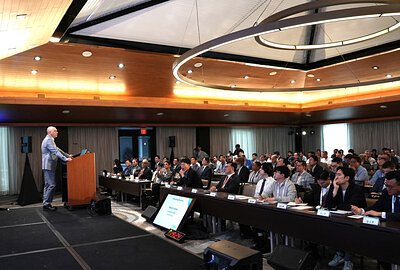
The company recently highlighted its progress at a technology seminar in Dallas, seeking to rally a domestic supply chain that has lain fallow for decades. The vision is clear: to build a next-generation private grid integrating nuclear, natural gas, and renewables to power massive data centers. However, as Fermi America races to break ground, it confronts the ghosts of past nuclear failures, mounting local environmental concerns, and significant legal and financial scrutiny.
A Bet on Foreign Expertise to Break a Domestic Curse
For nearly half a century, building large-scale nuclear reactors in the United States has been a tale of delays and crippling cost overruns. The most recent example, Georgia Power's Plant Vogtle, saw its two new units take 15 years to complete at a cost of $36.8 billion—more than double the original budget. That project utilized the same Westinghouse AP1000 reactor design that Fermi America plans to deploy in Texas, a modular model that ironically failed to deliver on its promise of faster, cheaper construction at Vogtle.
Fermi America believes it has the antidote to this domestic curse: foreign expertise. The company has deepened its strategic partnership with South Korea's Hyundai Engineering & Construction (Hyundai E&C), a firm with a global reputation for delivering complex infrastructure. "It's a very short line of companies eager to do nuclear here in America," said Toby Neugebauer, CEO and Co-Founder of Fermi America, in a recent statement. "Fermi is proud to partner with Hyundai, the only global company to have successfully built 24 nuclear reactors, ten of them simultaneously, on time and on budget."
This partnership is central to the project's credibility. By bringing in a seasoned international player, Fermi America hopes to bypass the institutional inertia and skills gap that plagued past U.S. efforts. The collaboration is already advancing Front-End Engineering Design (FEED) work, including site layout and cost development, to pave the way for a full engineering, procurement, and construction (EPC) contract. The goal is to prove that nuclear power can be built efficiently, restarting an industry critical for providing reliable, carbon-free baseload power.
The AI Power Imperative
The driving force behind Project Matador's colossal scale is the exponential growth of artificial intelligence. The computational demands of training and running AI models are creating an energy crisis in the technology sector, with data center electricity consumption projected to more than double globally by 2030. In the U.S. alone, data centers could account for over 10% of the nation's total electricity use within four years.
"AI-driven load growth is accelerating faster than most people realize," noted Mesut Uzman, Chief Nuclear Construction Officer of Fermi America. "The next decade will be defined by those who can build power infrastructure fast enough to support AI and industrial growth."
This demand is outstripping the capacity of public utility grids, leading major tech companies to seek direct, private power sources. Project Matador is designed as a direct answer, a "behind-the-meter" campus offering gigawatts of highly reliable power for hyperscale AI and advanced computing tenants. The project's vision includes not just the four nuclear reactors but also a massive natural gas plant, solar arrays, and battery storage, creating a resilient private grid capable of meeting the 24/7 power needs of modern data infrastructure.
High Stakes and Hurdles in the Lone Star State
While the project's ambition is global, its challenges are decidedly local. Project Matador is being developed on a 5,855-acre site leased from the Texas Tech University System in Carson County. The state of Texas has signaled strong support for a nuclear revival, recently establishing the Texas Advanced Nuclear Deployment Office with a $350 million fund to attract such projects.
Despite this support, the project has already hit a significant snag. Construction was temporarily halted pending a final Clean Air Permit from the Texas Commission on Environmental Quality (TCEQ), a move that led to the abrupt release of workers and sparked concern among local watchdog groups about a rushed development timeline.
Furthermore, the sheer scale of the campus raises pressing environmental questions, particularly concerning water. The proposed 18 million square feet of data centers, in addition to the nuclear reactors, will require immense volumes of water for cooling. In a state where water resources are a perennial concern, the project's consumption could place significant strain on local supplies, a detail that has drawn scrutiny from environmental advocates.
A Foundation of Big Money and Bigger Questions
Project Matador's financial foundation appears robust, built on hundreds of millions of dollars from major institutional players. In late 2025, Fermi America closed a $350 million financing package led by Macquarie Group, and more recently secured a $500 million loan facility from MUFG Bank to fund equipment purchases. This backing signals strong market confidence in the need for new energy infrastructure.
However, the company's rapid ascent has not been without controversy. Despite being a pre-revenue entity, its 2025 initial public offering reportedly minted several billionaires, including its founders. More critically, Fermi America is now facing multiple securities class action lawsuits. The complaints allege the company made misleading statements to investors regarding committed tenant demand and the project's funding, casting a shadow of legal and reputational risk over its operations.
As Fermi America and Hyundai E&C work to mobilize a global supply chain for their Texas megaproject, they must navigate this complex and hazardous landscape. The promise of powering America's AI future with clean, reliable nuclear energy is immense, but it is matched by the formidable challenges of overcoming historical industry failures, satisfying local environmental and regulatory standards, and weathering the storm of financial and legal scrutiny.
Topics & Related
IPO
Artificial Intelligence
Decarbonization
Machine Learning
Revenue
Nuclear
Data & Analytics
Related Company Pulse