
- 15 new electric buses delivered to Lithuania in April 2026
- 52% of new bus registrations in Lithuania were electric in 2025
- 650 tonnes of CO₂ emissions reduced per electric bus over 10 years
Experts agree that Lithuania is a leader in Europe's transition to electric public transport, with TEMSA playing a pivotal role in providing scalable, customer-focused solutions.
TEMSA Fuels Lithuania's Electric Bus Revolution
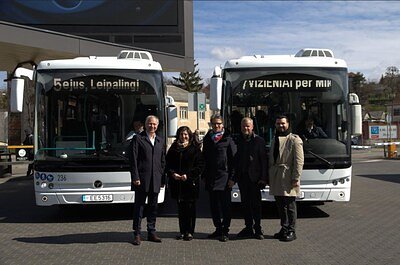
KAUNAS, LITHUANIA – April 13, 2026 – As a fleet of 15 new electric buses quietly rolled into service, it marked another significant milestone in Lithuania's ambitious journey to become a European leader in sustainable public transport. Turkish mobility giant TEMSA delivered the MD9 electriCITY models to UAB Kautra, one of Lithuania's largest and most established public transport operators, in a ceremony attended by European Commission officials and local leaders.
The delivery is more than a simple vehicle transaction; it's a powerful symbol of a continent-wide shift towards zero-emission urban mobility. For TEMSA, it strengthens its foothold in a key European market, with plans for further deliveries that will bring its total vehicle count in Lithuania to 321 units by the end of 2026. For Lithuania, it's another concrete step in a national strategy that has already positioned the Baltic state at the vanguard of transport electrification.
A Nation Leading the Charge
Lithuania is not just participating in the green transition; it is actively leading it. The country has distinguished itself as a European frontrunner, with recent data underscoring its commitment. In 2025, an impressive 52% of all new bus registrations in the nation were fully electric, a figure that dwarfs the adoption rates in many larger European countries. This achievement is the result of deliberate and forward-thinking policy.
The nation has set aggressive electromobility targets, aiming for a complete phase-out of new internal combustion engine vehicle registrations after 2030. This long-term vision is being implemented through concrete actions in cities across the country. In the capital, Vilnius, officials are pursuing a plan to convert the entire public transport fleet to electricity or alternative fuels by 2030. A recent public tender for 145 new electric buses, with an estimated vehicle cost of nearly 90 million EUR, demonstrates the scale and seriousness of this commitment. These initiatives are designed not only to replace aging diesel fleets but also to expand service and improve frequency for a growing ridership.
TEMSA's Strategic Expansion
Against this backdrop of rapid electrification, TEMSA is positioning itself as a pivotal player. The company, which boasts nearly six decades of experience and a presence in 70 countries, is executing an aggressive growth strategy focused on the burgeoning European EV market. The delivery in Kaunas is a cornerstone of this expansion, building on a strong 2025 performance that saw the manufacturer enter six new European markets: Czechia, Finland, Croatia, Malta, Norway, and Poland.
Commenting on the delivery, TEMSA CEO Evren Güzel emphasized a philosophy that extends beyond manufacturing. "At TEMSA, we are working towards becoming the 'preferred mobility brand'," he stated. "And throughout this journey, we have focused on one idea: Designing mobility around real needs... We listen carefully to our customers. And we turn what we hear into real and valuable solutions." This customer-centric approach is coupled with deep investment in technology. The company now has 11 zero-emission vehicles in its portfolio and has set a goal for electric models to constitute over 50% of its sales by 2030.
This strategy puts TEMSA in a highly competitive arena alongside established players like VDL, Solaris, and a rapidly growing Yutong. However, TEMSA's focus on becoming a comprehensive "mobility partner" by developing its own core technologies is a key differentiator.
More Than a Bus: The Ecosystem of Electrification
The successful transition to electric public transport requires more than just advanced vehicles; it demands a complete ecosystem of technology, infrastructure, and partnership. Linas Skardžiukas, CEO of UAB Kautra, a TEMSA partner for over two decades, highlighted this holistic view. "For us, it goes beyond purchasing vehicles; it also requires developing the necessary infrastructure and charging solutions," he explained.
TEMSA has embraced this challenge by vertically integrating key technologies. At its facility in Adana, Turkey, the company develops and manufactures its own battery packs, giving it control over quality, performance, and innovation. This R&D extends to next-generation battery chemistries and sophisticated Battery Management Systems (BMS). The MD9 electriCITY bus itself is a product of this focus, a 9.5-meter urban vehicle featuring a 250 kW motor and a 280 kWh battery pack capable of a 480 km range and a full recharge in just two hours.
This integrated approach allows TEMSA to offer solutions rather than just products, a critical factor for operators like Kautra who are managing a complex operational shift. The tangible impact, as Skardžiukas noted, is profound. A single electric bus, over its 10-year lifespan, can reduce CO₂ emissions by approximately 650 tonnes—the equivalent of taking around 360 gasoline-powered cars off the road for the same period.
The Quiet Revolution in Urban Life
The widespread adoption of electric buses promises to fundamentally reshape the urban environment. The most immediate benefit is a dramatic improvement in air quality. By eliminating tailpipe emissions, these vehicles remove harmful pollutants like nitrogen oxides and particulate matter, directly combating a major source of respiratory and cardiovascular illness in cities. While non-exhaust emissions from tire and brake wear remain, the overall impact on public health is overwhelmingly positive.
Beyond cleaner air, residents experience a quieter city. An electric bus is significantly less noisy than its diesel counterpart—by as much as 24-25 decibels—reducing the constant hum of urban traffic and creating more peaceful public spaces. For transport operators, the economic case is equally compelling. While the upfront purchase price of an electric bus is higher, the Total Cost of Ownership (TCO) is often lower. Maintenance costs can be reduced by 30-40% due to fewer moving parts and less wear on braking systems, thanks to regenerative braking. Furthermore, electricity as a fuel source is typically cheaper and less volatile in price than diesel.
Of course, challenges remain. The initial investment in charging infrastructure is substantial, and coordinating with utility providers to ensure grid capacity can be complex. However, as technology improves and economies of scale grow, these barriers are steadily diminishing, making the electric bus not just an environmental ideal but a financially sound investment for the future of urban transit.