
- 17% growth: Global cloud medical imaging market projected to grow by over 17% in 2026. - $400B market: Telehealth market expected to surpass $400 billion by 2034. - 70% reach: TeleRay serves 70% of the top 50 medical centers in the U.S.
Experts would likely conclude that TeleRay's dual-leadership restructuring is a strategic move to balance immediate operational growth with long-term innovation in the rapidly evolving health tech sector.
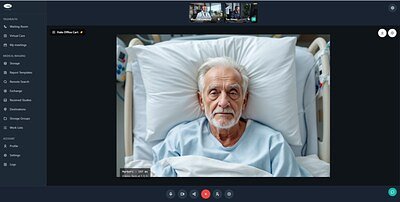
TeleRay Taps New CEO, Realigns Leadership for Future of Health Tech
CHICAGO, IL – March 19, 2026 – In a strategic move designed to accelerate growth while simultaneously sharpening its focus on long-term innovation, TeleRay has announced a significant restructuring of its executive leadership. Saumay Kumar has been appointed as the new Chief Executive Officer, while his predecessor, Timothy Kelley, transitions to the newly created role of Chairman and Chief Strategy Officer.
The change, effective March 10, 2026, signals a deliberate division of responsibilities at the helm of the cloud-based imaging and virtual care company. Kumar, whose tenure officially began during the 2026 HIMSS Global Health Conference, is tasked with driving operational excellence and scaling the company's current offerings. Kelley, the company's visionary founder, will now dedicate his full attention to navigating the future of radiology and virtual care technology.
This dual-leadership model aims to address two critical imperatives in the rapidly evolving health tech landscape: optimizing current business operations for maximum growth and market penetration, and investing in the research and development that will define the next generation of healthcare delivery.
A Dual-Pronged Strategy for a Shifting Market
The separation of the CEO and Chief Strategy Officer roles is a calculated decision reflecting the maturity and complexity of the digital health market. With Kumar managing day-to-day execution, Kelley is freed to concentrate on the technological horizon. This structure allows TeleRay to pursue aggressive growth targets without losing sight of the disruptive trends shaping its industry.
"Saumay brings a strong track record of scaling healthcare technology solutions and driving operational excellence across complex organizations," said Kelley in the official announcement. "His leadership will position TeleRay to meet accelerating demand for integrated imaging and remote care solutions, while I focus on advancing our long-term technology vision."
This move is particularly timely. The global market for cloud medical imaging is projected to grow by over 17% in 2026 alone, driven by the demand for remote diagnostics, cost-effective data storage, and the expansion of teleradiology. Simultaneously, the telehealth market is on a trajectory to surpass $400 billion by 2034. By creating distinct roles to manage its current success and future bets, TeleRay is positioning itself to capitalize on both trends.
The Operator Takes the Helm
Saumay Kumar steps into the CEO role with a clear mandate: scale the business. His background, characterized by leadership in technology-driven service organizations, emphasizes strategic growth and operational transformation. His focus will be on enhancing efficiency, improving the customer experience, and innovating across TeleRay's existing product portfolio.
"I'm honored to lead TeleRay at such a pivotal time for healthcare," Kumar stated. "As digital infrastructure continues to reshape care delivery, TeleRay is uniquely positioned to connect providers, facilities, and patients through secure, interoperable solutions. I look forward to building on our strong foundation and delivering meaningful value to our customers and partners."
Kumar's operational focus is critical for a company that already boasts a significant footprint, reportedly serving 70% of the top 50 medical centers in the United States. Managing relationships with and delivering value to high-profile clients such as Cleveland Clinic, Cedars-Sinai, and UPMC requires a deep understanding of complex clinical workflows and a commitment to seamless integration with major Electronic Medical Record (EMR) systems like Epic and Athena—a core strength of the TeleRay platform.
Charting the Future of Virtual Care and Radiology
As Chairman and Chief Strategy Officer, Timothy Kelley will leverage his deep industry knowledge to steer TeleRay's long-term technology roadmap. His new role is dedicated to exploring "radiology innovation and the expanding virtual care ecosystem." This involves looking beyond current product cycles to anticipate the next waves of technological change.
Kelley's past statements reveal a consistent vision centered on radiology as the primary diagnostic tool in a connected healthcare network. His focus will likely be on advancing TeleRay's capabilities in key growth areas identified by market analysts. These include the industry-wide shift from monolithic PACS (Picture Archiving and Communication System) to more flexible, composable enterprise imaging platforms and the critical need for standards-driven interoperability using DICOM, HL7, and FHIR protocols.
Perhaps most importantly, Kelley's strategic work will heavily involve the integration of Artificial Intelligence (AI). AI and machine learning are transforming diagnostics, streamlining workflows, and enabling predictive analytics. TeleRay already leverages AI for alerts and monitoring in its telesitting solutions, but the potential for deeper integration into image analysis and clinical decision support is vast. Kelley's role will be to ensure TeleRay is not just a participant but a leader in this AI-driven transformation, turning data into actionable clinical insights.
Solidifying a Leader's Position
TeleRay enters this new chapter from a position of strength. The company's claim of serving a majority of the nation's top medical centers underscores its established presence and the trust it has earned within elite healthcare institutions. Its FDA-approved, cloud-native platform offers a comprehensive suite of tools, from imaging exchange and live modality streaming to full-fledged virtual care and telesitting.
The competitive landscape, however, is fierce and fragmented, with specialized vendors in imaging solutions and a crowded field of telehealth providers. TeleRay's key differentiator has been its ability to integrate these functions into a single, cohesive platform. The new leadership structure is designed to sharpen that competitive edge.
By empowering Kumar to perfect the operational delivery of its current integrated platform, TeleRay can strengthen its core business. In parallel, by tasking Kelley with pioneering the next generation of integrated radiology and virtual care, the company is placing a strategic bet on its own evolution. This calculated division of leadership is TeleRay's answer to the challenge of thriving in the present while building the future of digital health.