
- $12M Investment: TECO Group's new armored busway manufacturing plant in Penang, Malaysia, represents a $12 million investment to support Southeast Asia's AI and data center boom.
- 400,000 Meters Annual Capacity: The plant will produce 400,000 meters of high-performance armored busway systems annually, critical for powering AI data centers.
- 26% CAGR: Southeast Asia's hyperscale data center market is projected to grow at a 26% compound annual rate, reaching $90 billion by 2033.
Experts view TECO's $12M Penang plant as a strategic move to strengthen Southeast Asia's AI infrastructure, aligning with regional growth trends and supply chain resilience strategies.
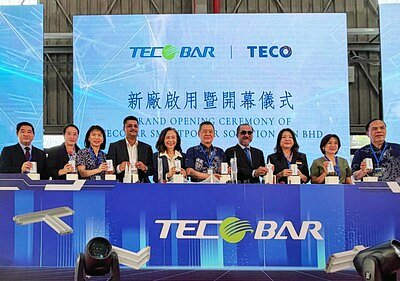
TECO Powers SEA's AI Boom with New $12M Penang Plant
PENANG, Malaysia – April 29, 2026 – In a significant move to power Southeast Asia's burgeoning digital economy, Taiwanese industrial giant TECO Group today inaugurated a new USD 12 million armored busway manufacturing plant in Penang. The facility, operated by its subsidiary TECOBAR, is strategically positioned to meet the voracious energy demands of the region's rapidly expanding artificial intelligence (AI) and data center sectors.
The opening ceremony for the plant, TECOBAR SMARTPOWER SOLUTION SDN. BHD., marks a critical milestone in TECO's strategy to become a key supplier for the digital infrastructure that underpins the modern internet, from international cloud service providers to high-tech manufacturing.
"Penang is a key hub for electronics and manufacturing in Southeast Asia," stated TECO Chairman Morris Li at the event. He emphasized that the new facility will not only provide "local sourcing and local servicing" but also "further enhance TECO's competitiveness in the global power supply chain market."
Fueling the Digital Rush
The new plant opens amidst an unprecedented boom in data center construction across Southeast Asia. The regional hyperscale data center market, valued at nearly USD 13 billion in 2024, is projected to skyrocket to almost USD 90 billion by 2033, growing at an astonishing compound annual rate of over 26%. This explosion is driven by widespread cloud adoption, digital transformation initiatives, and, most critically, the immense computational needs of AI and high-performance computing (HPC).
This digital gold rush carries a hefty power requirement. Data center electricity demand in Southeast Asia is expected to more than double by 2030. AI-specific data centers are particularly power-hungry, with rack power densities climbing from an average of 8 kilowatts (kW) just a few years ago to a projected 30 kW by 2027. Some advanced AI training models already demand over 80 kW per rack, pushing traditional power cabling solutions to their limits.
This is where TECOBAR's new facility comes in. The plant will specialize in high-performance armored busway systems—a more robust and efficient alternative to conventional cables for distributing high-current electricity within large facilities. With a planned annual production capacity of 400,000 meters, the Penang plant is set to become a critical supplier for the very backbone of the region's AI infrastructure.
Bolstering Malaysia's Tech Hub Ambitions
The USD 12 million investment has been warmly received by Malaysian officials, who see it as a validation of Penang's status as a premier high-tech manufacturing destination. The new plant, located within TECO's Penang Industrial Park, aligns perfectly with Malaysia's New Industrial Master Plan 2030 (NIMP 2030), which seeks to attract high-value investments in sectors like semiconductors, renewable energy, and AI infrastructure.
Penang Deputy Chief Minister II Jagdeep Singh, who was present at the inauguration, welcomed the investment and reaffirmed the state's commitment to providing a stable power supply for industrial growth.
Muhammad Ghaddaffi Sardar Mohamed, Director of the Malaysian Investment Development Authority (MIDA) in Penang, noted that TECO's expanded investment strengthens the local power supply chain and directly supports the region's economic and technological growth. The investment is supported by a robust framework of government incentives designed to attract exactly this type of high-tech, forward-looking manufacturing.
Also in attendance were Representative Lien Yu-Ping of the Taipei Economic and Cultural Office and other prominent government and business leaders, who highlighted the strong industrial synergy between Taiwan and Malaysia. "The TECOBAR Penang plant will create new opportunities for mutual growth and cooperation," Representative Lien stated.
A Resilient 'Dual-Base' Strategy
The Penang facility is a cornerstone of TECO's broader strategy to build a more resilient and responsive global supply chain. The move creates what the company calls a "Taiwan-Malaysia dual bases" network for its busway production.
"With armored busways manufactured in Malaysia and cast-resin busways in Taiwan, the two bases will form a coordinated regional network," explained TECOBAR Chairman Ta-Wen Lin. This diversification mitigates risks associated with relying on a single manufacturing location and enhances the company's ability to serve its diverse customer base across ASEAN and globally.
This strategy reflects a wider industry trend of de-risking supply chains in the face of geopolitical tensions and other global disruptions. By establishing regional production hubs, companies like TECO can improve delivery times, reduce logistical complexities, and better insulate themselves from supply shocks. Chairman Morris Li added that this investment will significantly "strengthen TECO Group's service capabilities in ASEAN."
Smart Manufacturing for a Sustainable Future
Covering 3.5 hectares, the TECOBAR plant is not just a new factory but a showcase of modern industrial technology. It is equipped with smart manufacturing systems and automation aligned with net-zero trends, focusing on sustainable operations. This commitment is crucial in a region grappling with the energy-climate dilemma posed by data center growth.
TECO has a proven track record in this area, having previously implemented smart factory solutions in its other facilities that have yielded significant energy savings of over 40%. By integrating IoT-based monitoring, automated production lines, and energy-efficient technologies, the Penang plant aims to set a new standard for industrial production in the region. The busway systems produced will be certified to stringent international standards, including IEC and UL, ensuring they meet the exacting requirements of global tech clients.
This focus on advanced manufacturing is part of TECO's evolution from its founding in 1956 as an electric machinery company to a comprehensive energy solutions provider. The company's recent strategic moves, including the acquisition of Malaysian MEP engineering firm NCL Energy and securing major data center projects in Selangor and Johor Bahru, demonstrate a clear and concerted push to capture a significant share of the AI data center value chain—from electromechanical engineering to the critical power equipment now being produced in Penang.