
- Chip Thickness: 0.31 millimeters (slimmer than a few sheets of paper)
- Power Consumption: 280 microwatts (µW) for speech inferences
- Market Projection: Wearable AI market expected to grow from $31 billion in 2023 to over $300 billion by 2033
Experts view Syntiant's new micro-AI chips as a strategic advancement in wearable technology, enabling smaller, more efficient AI integration that could redefine user experiences in health monitoring, smart devices, and IoT applications.
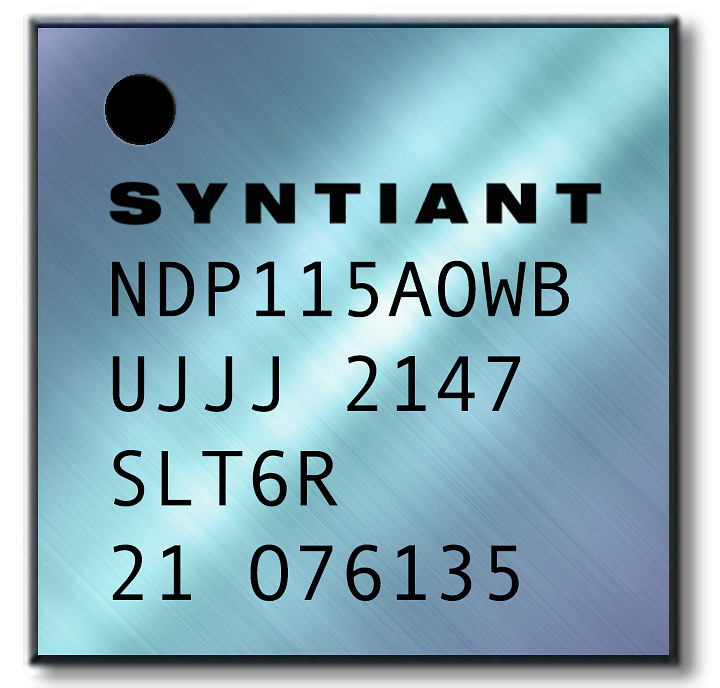
Syntiant's Micro-AI Chips to Power the Wearable Revolution
IRVINE, CA – December 29, 2025 – In a move poised to accelerate the integration of artificial intelligence into the smallest of devices, Syntiant Corp. today announced a significant expansion of its edge AI processor portfolio. The Irvine-based leader in ultra-low-power silicon has introduced two new miniature package options for its NDP115 Neural Decision Processor™, a chip designed to bring sophisticated AI capabilities to products where size, cost, and battery life are paramount.
The announcement introduces an embedded wafer-level ball grid array (eWLB) package and an ultra-thin package, both aimed at shrinking the physical footprint of AI hardware. These developments target the booming markets for high-volume consumer electronics, next-generation hearables, and advanced medical wearables, signaling a strategic push to make "always-on" intelligence a standard feature in devices that were previously constrained by physical and power limitations.
Engineering for the Invisible
The core of Syntiant's announcement lies in a feat of engineering that pushes the boundaries of miniaturization. The new ultra-thin package for the NDP115 boasts a maximum height of just 0.31 millimeters—slimmer than a few sheets of paper. This was achieved through advanced manufacturing techniques, including reducing the chip’s solder ball diameter to a mere 130 micrometers and thinning the silicon wafer itself to 180 micrometers.
For product designers, this dramatic size reduction unlocks a new frontier of possibilities. It means powerful AI processing, capable of running complex neural networks for voice commands and sound analysis, can now be integrated into devices like advanced hearing aids, discreet micro-wearables, and sleeker, more comfortable earbuds without compromising ergonomics or design aesthetics.
Simultaneously, the new eWLB package addresses a different but equally critical challenge: cost-effective manufacturing at scale. This package is specifically optimized for streamlined two-layer printed circuit board (PCB) designs, a common and economical choice for high-volume consumer products. By simplifying the integration process, Syntiant enables manufacturers of smart remotes, streaming media players, and other smart home gadgets to embed advanced AI features more efficiently, potentially lowering the barrier to entry for adding intelligence to a wider array of everyday items.
"As manufacturers look to integrate always-on intelligence into a wider range of products, Syntiant is enhancing the NDP115 portfolio with packaging options that diversify design choices," said Nathan Nunley, product line director for NDP Hardware at Syntiant, in the company's official release. "From consumer devices requiring streamlined PCB designs to wearable health tech requiring the thinnest form factor possible, the NDP115 packages enable our customers to design smarter, smaller and more efficient products."
A Strategic Play in a Multi-Billion Dollar Market
Syntiant's focus on miniaturization is not just a technical exercise; it's a calculated strategic move into some of technology's fastest-growing sectors. The company is positioning its NDP115 processor to capture a significant share of the wearable AI market, which was valued at over $31 billion in 2023 and is projected by some analysts to surge past $300 billion by 2033, expanding at a compound annual growth rate of over 25%.
This explosive growth is driven by consumer demand for continuous health monitoring, fitness tracking, and seamless smart-device integration. Similarly, the market for AI in medical devices is on a steep upward trajectory, with forecasts predicting it could exceed $21 billion by 2029. Here, the need for smaller, more powerful, and energy-efficient components for diagnostic tools and remote patient monitoring is critical.
The competitive landscape for ultra-low-power edge AI is fierce, with established players like Ambiq, known for its Sub-threshold Power Optimized Technology (SPOT®), and specialists like Eta Compute also vying for dominance. However, Syntiant is aiming to differentiate itself not just on power efficiency but on providing a complete, easy-to-integrate solution with these new application-specific packages. By addressing the physical design and manufacturing challenges head-on, the company is betting that it can become the go-to provider for brands looking to innovate in the ultra-compact space.
Redefining the User Experience
The true impact of these technological advancements will be felt in the user experience of everyday products. The NDP115 processor, powered by Syntiant's Core 2™ inference engine, is designed to perform its tasks while consuming an exceptionally small amount of energy—running speech inferences at just 280 microwatts (µW). This ultra-low power draw is the key to enabling "always-on" features without requiring users to constantly recharge their devices.
In practice, this could translate to a hearing aid that doesn't just amplify sound but intelligently distinguishes between a conversation and background noise, automatically suppressing the latter for crystal-clear hearing. It could mean true wireless earbuds that offer hands-free voice control and audio processing features for days, not hours, on a single charge. In the smart home, it allows for voice-enabled remotes and appliances that are always listening for a command without being a significant drain on battery or household power.
The chip's capabilities extend beyond just voice. It is engineered to natively run various deep neural networks, making it adept at audio event classification—such as detecting a smoke alarm, a baby crying, or glass breaking—and sensor fusion. By supporting interfaces for accelerometers, gyroscopes, and other sensors, the NDP115 can enable more context-aware and responsive behaviors in a wide range of IoT devices.
The Path to Pervasive Intelligence
With over 100 million of its chips already deployed worldwide in everything from earbuds to automobiles, Syntiant has established a strong track record in making edge AI a commercial reality. This latest expansion of the NDP115 portfolio builds on that foundation, directly addressing the industry's relentless push toward smaller, smarter, and more integrated technology.
The immediate availability of both new packages suggests the company and its supply chain are ready to meet demand. Syntiant plans to demonstrate these and other innovations at the upcoming CES 2026 in Las Vegas, providing a platform to engage with designers and manufacturers eager to build the next generation of intelligent products.
As the digital and physical worlds continue to merge, the demand for invisible, seamlessly integrated intelligence will only grow. The development of ultra-compact, power-sipping processors like the NDP115 is a critical step in this evolution, providing the fundamental building blocks for a future where technology is less about the device itself and more about the intuitive, helpful experiences it enables. These tiny silicon squares are not just components; they are the engines of a more connected and context-aware world.