
- 1:70 ratio: Only one donor cornea is available for every 70 patients in need globally.
- 800+ implants: EndoArt® has been successfully implanted in over 800 patients worldwide, with up to seven years of follow-up data.
- $180B market: The global Corneal Endothelial Dystrophy market was valued at over $180 billion in 2024.
Experts view EndoArt® as a groundbreaking synthetic solution that addresses critical gaps in corneal transplantation, offering a scalable, accessible alternative to donor tissue with strong safety and efficacy profiles.
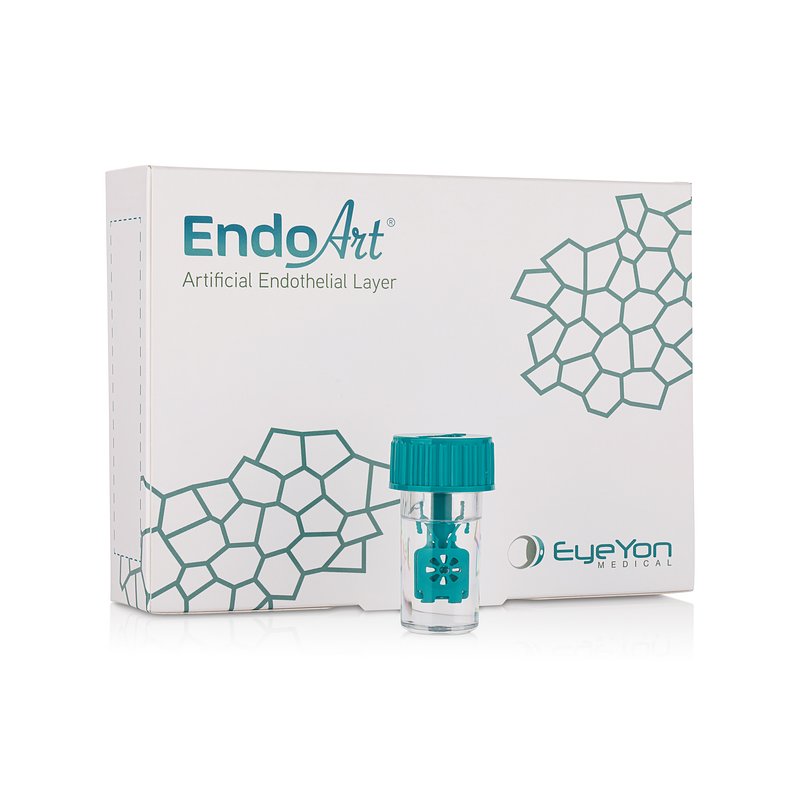
Synthetic Sight: EyeYon’s EndoArt Aims to Fix a Broken Transplant System
NES ZIONA, Israel – December 08, 2025 – In a move that could fundamentally reshape the treatment of corneal blindness, Israeli innovator EyeYon Medical announced it has received Investigational Device Exemption (IDE) approval from the U.S. Food and Drug Administration (FDA). The approval greenlights a U.S. clinical study for EndoArt®, the world's first synthetic endothelial layer for treating chronic corneal edema.
The device, already designated by the FDA as a Breakthrough Device, offers a potential solution to a global health crisis: the severe shortage of human donor corneas. The upcoming U.S. clinical trial will be led by Professor Francis Mah, MD, Director of Cornea and External Disease at Scripps Clinic Medical Group, and will involve at least ten leading surgical centers across the nation.
"The initiation of this U.S. clinical study marks an exciting moment for our field. EndoArt represents a truly novel approach to treating chronic corneal edema," said Prof. Mah. "I'm honored to lead this important investigation and to help evaluate a technology that may reshape the future of endothelial disease management."
The Fragile Infrastructure of Vision
Chronic corneal edema occurs when the innermost layer of the cornea, the endothelium, fails. These specialized cells are responsible for pumping fluid out of the cornea, maintaining the clarity required for sight. When they malfunction due to disease, trauma, or surgical complications, the cornea swells, becomes cloudy, and vision deteriorates, often leading to significant pain and blindness.
For decades, the definitive treatment has been corneal transplantation, typically using advanced procedures like Descemet's Stripping Automated Endothelial Keratoplasty (DSAEK) or Descemet's Membrane Endothelial Keratoplasty (DMEK). While effective, these surgeries rely on a fragile and overburdened infrastructure: the human donor tissue supply chain. The numbers are stark, with an estimated one available donor cornea for every 70 patients in need globally. This scarcity creates long, agonizing waiting lists and leaves countless individuals without access to sight-restoring surgery.
Beyond the supply bottleneck, human tissue transplants carry inherent risks, including immune system rejection, which can lead to graft failure. Patients must adhere to a lifelong regimen of immunosuppressive eye drops, and the surgical procedures themselves are complex, with a steep learning curve for surgeons and a lengthy visual recovery for patients. This system leaves a significant unmet need, particularly for patients who have already experienced multiple graft failures or are considered high-risk candidates for traditional transplantation.
A Synthetic, Scalable Solution
EndoArt® is designed to bypass these limitations entirely. The implant is a permanent, transparent, and foldable device made from a biocompatible copolymer. Rather than replacing the damaged endothelial cells with donor tissue, it is implanted into the eye's anterior chamber, where it acts as a physical barrier. This barrier prevents the influx of fluid into the cornea, allowing it to dehydrate and regain its clarity. It is a paradigm shift from a biological solution to an engineering one.
The FDA's "Breakthrough Device" designation underscores the significance of this approach. This status is reserved for technologies that may provide more effective treatment for life-threatening or irreversibly debilitating conditions. It provides EyeYon Medical with an expedited regulatory pathway, involving prioritized review and more frequent, collaborative communication with the agency. This process is designed to accelerate the delivery of critical innovations to patients.
"Securing FDA IDE approval marks a pivotal milestone for EyeYon Medical and for patients suffering from corneal endothelial diseases," said Nahum Ferera, CEO of EyeYon Medical. "EndoArt® has shown rapid adoption in Europe, and this study brings us one step closer to delivering a new hope for patients who are not reasonable candidates for human tissue implantation in the US."
The device already boasts a robust track record outside the United States. With a CE mark secured in 2021, EndoArt® has seen growing commercial adoption across Europe. Over 800 implantations have been performed worldwide, with follow-up data extending up to seven years demonstrating long-term stability, sustained therapeutic benefit, and a strong safety profile. Clinical studies have consistently shown significant reductions in corneal thickness and, in patients with visual potential, marked improvements in visual acuity.
Navigating a Multi-Billion Dollar Market
EyeYon Medical is entering a market ripe for disruption. The press release cites the global market for corneal endothelial diseases as exceeding $1 billion, but independent market analyses suggest the figure is far larger. The broader Corneal Endothelial Dystrophy market was valued at over $180 billion in 2024, with projections showing sustained growth. This massive market is fueled by an aging population and the rising prevalence of conditions like Fuchs' Dystrophy.
EndoArt® is not without competition. The field of ophthalmology is buzzing with innovation aimed at solving the donor tissue crisis. Cellular therapies from companies like Aurion Biotech and Emmecell, which involve injecting cultured endothelial cells into the eye, are advancing through clinical trials. Other artificial corneas, or keratoprostheses, are being developed by firms like CorNeat Vision. Furthermore, pharmacological approaches using ROCK inhibitors are being investigated to enhance the function of existing endothelial cells.
However, EndoArt® carves out a unique and powerful niche. As a synthetic, "off-the-shelf" implant, it eliminates the logistical complexities of tissue banking, the risk of disease transmission, and the threat of immune rejection. Its long shelf-life and standardized nature create a scalable and accessible infrastructure for treatment, a crucial advantage in a global market defined by scarcity. Independent experts note it is an ideal solution for patients caught in a "re-graft cycle" after repeatedly rejecting human tissue.
The U.S. clinical trial will focus on this high-need population, evaluating the device in patients for whom prior transplants have failed or who are not considered suitable candidates for a donor cornea. Success in this trial would not only validate the technology for a challenging patient group but also pave the way for broader applications, fundamentally altering the standard of care. By providing a reliable, synthetic alternative, EndoArt® is poised to build a new, more resilient infrastructure for restoring sight.