
- Middle East 5G market projected to grow from US$3.4 billion (2023) to US$109 billion by 2031 (CAGR 53.8%)
- Sunwave's R&D investment: ¥600 million (16.7% of total revenue)
- Sunwave's market capitalization: US$1 billion, TTM revenue: US$1.34 billion
Experts view Sunwave's Middle East expansion as a calculated move leveraging advanced 5G technology and proven project execution to compete with industry giants in a high-growth market.
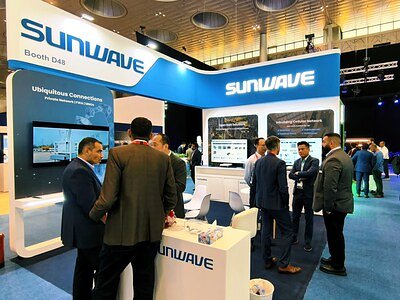
Sunwave's 5G Gambit: Targeting Middle East's Digital Transformation
DOHA, QATAR – November 27, 2025 – In the world of telecommunications infrastructure, where titans like Ericsson and Huawei cast long shadows, strategic market entries are critical events for smaller, ambitious players. This week, Sunwave Communications (SZ: 002115), a Chinese provider of wireless solutions, made just such a move, making its official debut at MWC Doha. While the event served as a platform to showcase new products, the real story lies in the company's calculated pivot towards the Middle East, a region in the throes of a multi-billion-dollar digital gold rush.
For investors and industry observers, Sunwave's appearance in Qatar is more than just a trade show formality; it's a clear signal of intent. The company is planting its flag in one of the world's fastest-growing 5G markets, betting that its technology and a proven track record can carve out a meaningful share. This move warrants a closer look at the opportunity Sunwave is chasing, the tools it's bringing to the fight, and the inherent risks of entering such a competitive arena.
A Strategic Push into a High-Growth Arena
The Middle East is not just adopting 5G; it's embracing it as a cornerstone of national economic strategy. The region's 5G services market, valued at over US$3.4 billion in 2023, is projected to skyrocket to nearly US$109 billion by 2031, expanding at a staggering compound annual growth rate (CAGR) of 53.8%. This explosive growth is fueled by ambitious national programs like Saudi Arabia's Vision 2030 and the UAE's "We the UAE 2031," which prioritize digital transformation and have allocated significant funding to build next-generation infrastructure.
Gulf Cooperation Council (GCC) countries already boast some of the highest mobile data consumption rates globally, and by 2026, 5G is expected to account for nearly three-quarters of all mobile subscriptions in the bloc. This creates immense demand for the very equipment and solutions Sunwave provides. As Roy Li, Sunwave's General Manager of Overseas Sales, noted in the company's announcement, "With the Middle East at a critical stage of digital transformation, the region is a key growth area for 5G innovation."
However, this opportunity is no secret. Sunwave is stepping into a market dominated by established global giants, including Huawei, Nokia, Ericsson, and ZTE, alongside major regional operators like STC and Etisalat who are already deep into their deployment cycles. To succeed, Sunwave cannot simply compete on price or scale; it must differentiate through superior technology and targeted solutions that address specific regional needs.
Technology as the Tip of the Spear
Sunwave's strategy appears to hinge on technological differentiation, a fact underscored by the products it chose to highlight in Doha. The company showcased two key innovations: the N3 Plus remote platform and the nCELL-M integrated small cell.
The nCELL-M, in particular, reveals a focus on cutting-edge performance and efficiency. It is built on Qualcomm's FSM200 4nm platform, a significant detail for those tracking the technology. This platform is the industry's first 5G Open RAN solution compliant with the advanced 3GPP Release 16 specifications. The 4-nanometer process technology translates directly to lower power consumption—a critical factor for operators managing the rising energy costs of dense 5G networks. Furthermore, its support for Open RAN provides network flexibility, while Release 16 compliance enables advanced industrial applications requiring ultra-reliable low-latency communication (eURLLC), opening doors to the burgeoning private 5G network market.
Alongside it, the N3 Plus platform offers a wide frequency band (600MHz–4200MHz) and multi-operator access, providing the versatility needed for complex urban deployments and diverse spectrum allocations across different countries in the region. By focusing on energy efficiency and advanced, flexible platforms, Sunwave is aiming to solve key operational pain points for network operators, creating a compelling value proposition beyond raw speed.
From Proven Projects to Future Frontiers
A strategy is only as good as a company's ability to execute it. Here, Sunwave is leveraging a recent success to build credibility. The company highlighted its completion of Turkey's first fully 5G-upgraded exhibition venue, the İstanbul Fuar Merkezi (IFM). This massive project, covering 11 halls and 96,000 square meters, serves as a powerful real-world case study. It demonstrates Sunwave's capability to handle large-scale, high-density deployments and deliver stable performance in a complex environment—a crucial reference point when bidding for contracts on convention centers, stadiums, and airports in the Middle East.
Beyond its current capabilities, Sunwave also teased its future direction with a "Satellite + Private Network" All-in-One solution concept. This is a forward-looking play that directly addresses the needs of key Middle Eastern industries like oil and gas, mining, and logistics, which often operate in remote terrestrial locations with no access to fiber backhaul. By integrating satellite connectivity with private 5G networks—a field where its subsidiary, Marinesat, already has experience—Sunwave is positioning itself to capture a high-value niche market. This solution, expected to be formally unveiled at MWC Barcelona 2026, shows a vision that extends beyond urban centers to the industrial heartlands that are vital to the region's economy.
The Investor's Perspective: Balancing Opportunity and Risk
For investors, Sunwave presents an interesting profile. With a market capitalization of just over US$1 billion and trailing twelve-month revenues around US$1.34 billion, it is a much smaller entity than its primary competitors. However, the company appears financially sound and has demonstrated consistent growth.
Crucially, Sunwave is backing its ambitions with significant capital, investing over ¥600 million (approximately 16.7% of total revenue) in research and development last year. This heavy R&D spend is the engine behind products like the nCELL-M and its future satellite solutions. The potential upside is clear: capturing even a small percentage of the MEA 5G market could have a substantial impact on Sunwave's top line.
The primary risk remains the fierce competition. Dislodging incumbents with deep relationships and massive scale is a monumental task. Success will depend on flawless execution, building strong local partnerships, and proving that its technological advantages in efficiency and performance translate into a lower total cost of ownership for operators.
Ultimately, Sunwave's move into the Middle East is not a speculative leap but a calculated expansion built on a foundation of advanced technology, proven project delivery, and a clear vision for addressing both mainstream and specialized market needs. The company is making a compelling case that in the 5G race, being nimble, innovative, and efficient can create a path to victory, even when running against giants.