
- World's First: Sterimove is the first mobile robot designed for all cleanroom grades (A-D).
- Market Growth: Pharmaceutical automation market projected to exceed $25 billion by 2031.
- Sterility Assurance: Robot features fully sealed, non-porous surfaces compatible with VHP decontamination.
Experts view Sterimove as a transformative solution for sterile pharmaceutical manufacturing, enhancing contamination control, operational efficiency, and supply chain resilience through advanced mobile robotics.
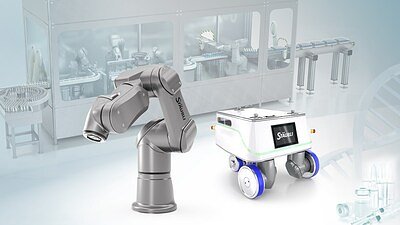
Stäubli Unveils Sterimove, a New Era for Sterile Robot Automation
NEW YORK, NY – February 23, 2026 – Industrial automation leader Stäubli Robotics is set to unveil a groundbreaking innovation at INTERPHEX 2026, promising to reshape the landscape of sterile drug manufacturing. The company will debut the enhanced Sterimove, which it bills as the world's first mobile robot specifically engineered to operate across all cleanroom grades, including the most stringent Grade A aseptic environments. This development marks a significant step forward in the industry's push towards "Pharma 4.0," addressing critical challenges in contamination control, operational efficiency, and supply chain resilience.
The Sterility Imperative: Redefining the Cleanroom
The pharmaceutical industry operates under immense pressure to ensure product purity and patient safety. In sterile manufacturing, the greatest threat is contamination, and the primary source has always been human operators. Regulatory bodies worldwide have taken notice, with frameworks like the revised EU GMP Annex 1 strongly advocating for the reduction of human intervention in aseptic processing areas. This regulation explicitly encourages the use of robotics and other advanced technologies to create a barrier between personnel and sterile products.
For years, the industry has wrestled with this challenge. While fixed robotic arms have been successfully integrated into contained environments like isolators and RABS (Restricted Access Barrier Systems), the transfer of materials between these sterile zones has remained a complex, often manual, process. Moving materials through different cleanroom classifications—from Grade D up to the critical Grade A zones where sterile products are exposed—requires meticulous procedures to prevent contamination. The introduction of a mobile robotic solution designed to navigate these highly controlled spaces represents a paradigm shift. By automating material transport in these sensitive areas, manufacturers can minimize human traffic, reduce the risk of microbial and particulate contamination, and ensure a higher level of sterility assurance.
A 'World's First' in Mobile Robotics
Stäubli's claim that the Sterimove is the "world's first" mobile pharma robot for Grade A, B, C, and D environments hinges on its unique design philosophy. While autonomous mobile robots (AMRs) have been adopted for logistics in warehouses and less-critical Grade C/D cleanroom areas, their design has historically precluded them from operating in the sterile core of pharmaceutical production.
The Sterimove was engineered from the ground up to overcome these limitations. It features a fully sealed, encapsulated architecture with smooth, non-porous surfaces that comply with stringent hygienic design guidelines. This design eliminates retention areas where contaminants could accumulate and allows for effective and repeatable cleaning, including compatibility with vaporized hydrogen peroxide (VHP) decontamination—a standard sterilization process in the industry. Its aerodynamic profile is even designed to minimize disruption to the critical laminar airflow found in Grade A zones.
Key features highlighted by the company include advanced safety-forward mobility, with integrated collision avoidance sensors, dual emergency stop controls, and clear status lighting to ensure safe operation alongside human personnel. This combination of mobility, sterility, and safety is what sets the Sterimove apart. It is not merely an AMR adapted for a cleaner environment; it is a purpose-built solution designed to perform tasks like material flow and batch changeovers within the most sensitive and regulated spaces in drug manufacturing.
Reshaping Pharma Production and Supply Chains
The operational and economic implications of a technology like Sterimove are profound. For pharmaceutical companies, the potential benefits extend far beyond simply replacing a manual task. By automating intralogistics in cleanrooms, the robot can create a seamless, efficient, and highly controlled flow of materials. This optimizes batch changeovers, reduces bottlenecks, and allows for 24/7 operation, significantly boosting productivity and throughput.
This enhanced efficiency can directly translate into faster time-to-market for new therapies, a crucial advantage in a competitive industry. Economically, while the initial investment in such advanced automation is significant, the return is calculated in reduced labor costs, minimized product loss due to contamination events, and improved resource utilization. The consistency and repeatability offered by a robotic system also lead to higher product quality and fewer batch-to-batch variations, which simplifies regulatory compliance and reduces the risk of costly recalls.
On a broader scale, this level of automation contributes to a more resilient pharmaceutical supply chain. By reducing reliance on manual processes that are prone to error and disruption, manufacturers can build more robust and reliable production lines. This is critical for ensuring a steady supply of essential medicines and responding effectively to public health crises. The ability to maintain consistent, high-quality production with minimal human intervention is a cornerstone of building a more dependable global drug supply.
Navigating a Competitive and Evolving Market
Stäubli's launch of the Sterimove places it at the forefront of a rapidly growing market for pharmaceutical automation, which is projected to more than double in value to over $25 billion by 2031. The company is not without competition; established robotics giants like ABB and FANUC have long offered specialized cleanroom robots. These competitors provide highly effective fixed-base robotic arms certified for various ISO cleanroom classes, excelling at tasks like vial filling, assembly, and packaging within a contained workspace.
However, Stäubli appears to have carved out a new niche by focusing on mobility across the full spectrum of cleanroom grades. The Sterimove complements its existing portfolio of Stericlean robots, which are designed for aseptic production, creating an integrated ecosystem that can automate both manipulation and transport within sterile environments. This strategic move positions the company as a provider of comprehensive solutions for the "Pharma 4.0" factory of the future.
"Our goal with the introduction of the Sterimove is to give pharmaceutical companies peace of mind by combining unmatched hygienic design with the proven efficiencies of mobile robotics," stated Olivier Cremoux, Head of LIFE North America for Stäubli Robotics, in the company's announcement. "What we're presenting at Interphex reflects our commitment to making pharmaceutical production both safer, more resilient, and more reliable."
As the industry continues its march toward greater digitalization and automation, solutions that can bridge the gap between isolated automated processes will be critical. Visitors at INTERPHEX 2026 will get a first-hand look at whether the Sterimove is truly the missing link that can unlock the next level of efficiency and safety in sterile drug manufacturing.