
- $1.2 billion investment in the new hospital campus
- 805,000-square-foot facility with 328 inpatient beds and 18 state-of-the-art operating rooms
- Projected $2.5 billion economic impact and 3,600 related jobs
Experts view this project as a transformative investment in regional healthcare, addressing critical capacity needs while leveraging innovative engineering and design to enhance patient care and community resilience.
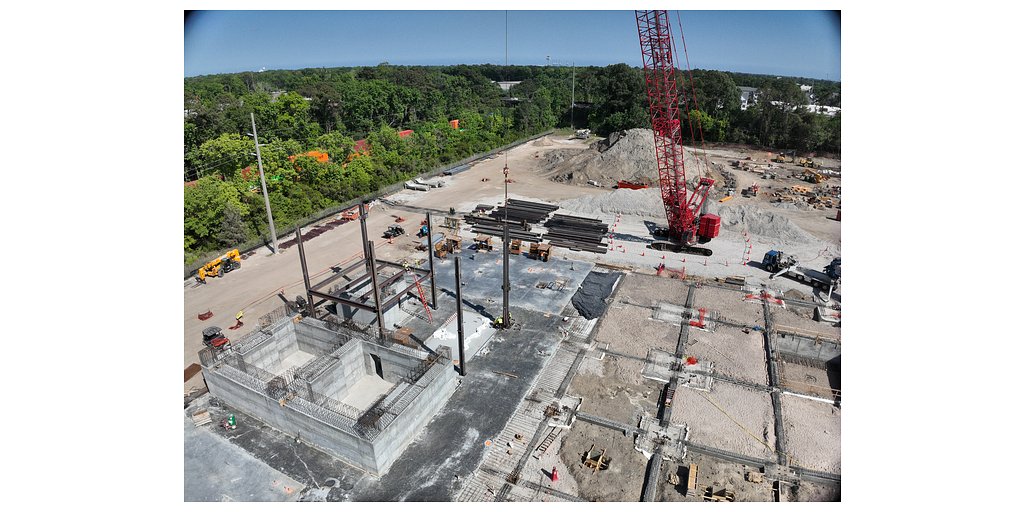
Steel Rising: North Charleston's $1.2B Hospital Campus Takes Shape
NORTH CHARLESTON, S.C. – April 29, 2026 – The North Charleston skyline is undergoing a dramatic transformation as massive steel beams now reach for the sky, marking a pivotal milestone in the construction of Roper St. Francis Healthcare's new $1.2 billion hospital campus. The joint venture of Barton Malow and Edifice Construction has officially begun structural steel work, transitioning the monumental project from below-grade foundation work to its highly anticipated vertical ascent. For residents of the Lowcountry, this visible progress is the first tangible sign of a new era in regional healthcare.
Located on a 27-acre site, the project represents one of the most significant healthcare investments in South Carolina's history. The start of steel erection signals that the building's form is finally emerging, bringing architectural blueprints into three-dimensional reality.
“Beginning structural steel is a moment every project team works toward. It’s when the community will start to see the building take shape as a place they will receive care,” says Dan Buchta, Barton Malow | Edifice Vice President of Project Delivery. “We’re proud to hit this milestone on schedule and look forward to continuing to build on the momentum.”
A New Era for Lowcountry Healthcare
The new Roper Hospital campus is a direct response to the pressing healthcare needs of a rapidly growing population across Berkeley, Charleston, and Dorchester counties. As the region expands, so does the demand for accessible, advanced medical services. The 805,000-square-foot facility is designed to meet this demand head-on, significantly boosting the area's healthcare capacity.
Upon its targeted completion in 2029, the campus will feature 328 inpatient beds, a 47-bay emergency department, 44 critical care beds, and 18 state-of-the-art operating rooms. It will also house a comprehensive imaging department and a 12-bay hemodialysis unit, addressing key needs identified in community health assessments. This expansion is a central component of Roper St. Francis Healthcare's “Strategic Plan 2030,” a forward-thinking initiative aimed at modernizing technology, expanding services, and optimizing its physical footprint to care for more patients closer to where they live and work.
Engineering a Landmark on Challenging Terrain
Constructing a facility of this magnitude in the Lowcountry presents a unique set of engineering hurdles. The project team is navigating a complex trifecta of site-specific challenges: the region's seismic activity, a high-water table common in coastal areas, and strict FAA height restrictions due to proximity to an airport. Overcoming these obstacles requires a blend of sophisticated engineering and innovative project management.
The Barton Malow | Edifice joint venture is employing a target-value delivery (TVD) method, a collaborative approach that allows the team to adapt design elements in real-time to maintain budget and schedule integrity without compromising quality. This flexibility has been crucial for addressing the site’s complexities. The architectural team, led by Skidmore, Owings & Merrill (SOM) and E4H Environments for Health Architecture, has implemented a performance-based seismic design, ensuring the structure is resilient enough to withstand potential earthquakes and other natural disasters like hurricanes and floods.
A Legacy of Care, Reimagined for Healing
While the technology and architecture are firmly rooted in the 21st century, the hospital’s mission continues a legacy stretching back nearly 200 years. This new campus will be the fourth home for Roper Hospital since its founding on the Charleston peninsula in 1856. The move represents a strategic evolution, continuing its long-standing tradition of service by relocating to a more accessible location for the wider community.
The design philosophy goes beyond mere function, aiming to create a patient-centered environment designed for healing. Drawing inspiration from the native flora and historic streetscapes of the Lowcountry, the campus masterplan is organized around a central pedestrian green belt. This spine will connect the site's parcels with shaded walkways, gardens, and plazas, fostering a sense of tranquility. This biophilic design approach, which integrates natural elements into the built environment, is proven to reduce stress, speed up recovery, and improve overall patient satisfaction.
The layout is not just aesthetically pleasing but also clinically efficient. Over 550 hours were spent in hands-on design sessions with nurses, physicians, and other teammates. Using full-scale mock-ups and virtual reality tours, the staff who will one day work in the hospital fine-tuned every detail, from room layouts to the strategic placement of departments, ensuring the new facility supports the highest standard of interdepartmental care.
Powering Regional Growth and Opportunity
The impact of the new Roper Hospital campus extends far beyond its walls. The $1.2 billion investment is a powerful economic engine for the region, projected to generate a $2.5 billion economic impact and create 3,600 related jobs. These positions will span both the multi-year construction phase and the permanent, high-skilled technical and professional roles within the hospital itself.
Roper St. Francis Healthcare is already the second-largest private employer in the Lowcountry, and this project solidifies its role as a cornerstone of the regional economy. The organization's commitment is further evidenced by its community benefit contributions, which included over $24 million in 2024, along with substantial investments in charity care and outreach programs. The new campus is not just a building but an investment in the long-term health and prosperity of the entire community. As the steel framework continues to climb, it stands as a powerful symbol of progress, resilience, and an unwavering commitment to serving the people of the Lowcountry for generations to come.