
- CES 2026 Debut: Stareep's AI-powered SmartSleep ecosystem will be unveiled at CES 2026, with live demonstrations from January 6-9.
- BIG Innovation Awards Nomination: The company is nominated for the prestigious BIG Innovation Awards 2026, with winners announced in mid-January.
- Dual-Layer AI Architecture: The mattress features an industry-first dual-layer AI system for real-time adjustments and personalized sleep optimization.
Experts view Stareep's AI mattress as a significant advancement in sleep technology, with its dual-layer AI architecture and active intervention capabilities setting a new standard for personalized sleep optimization.
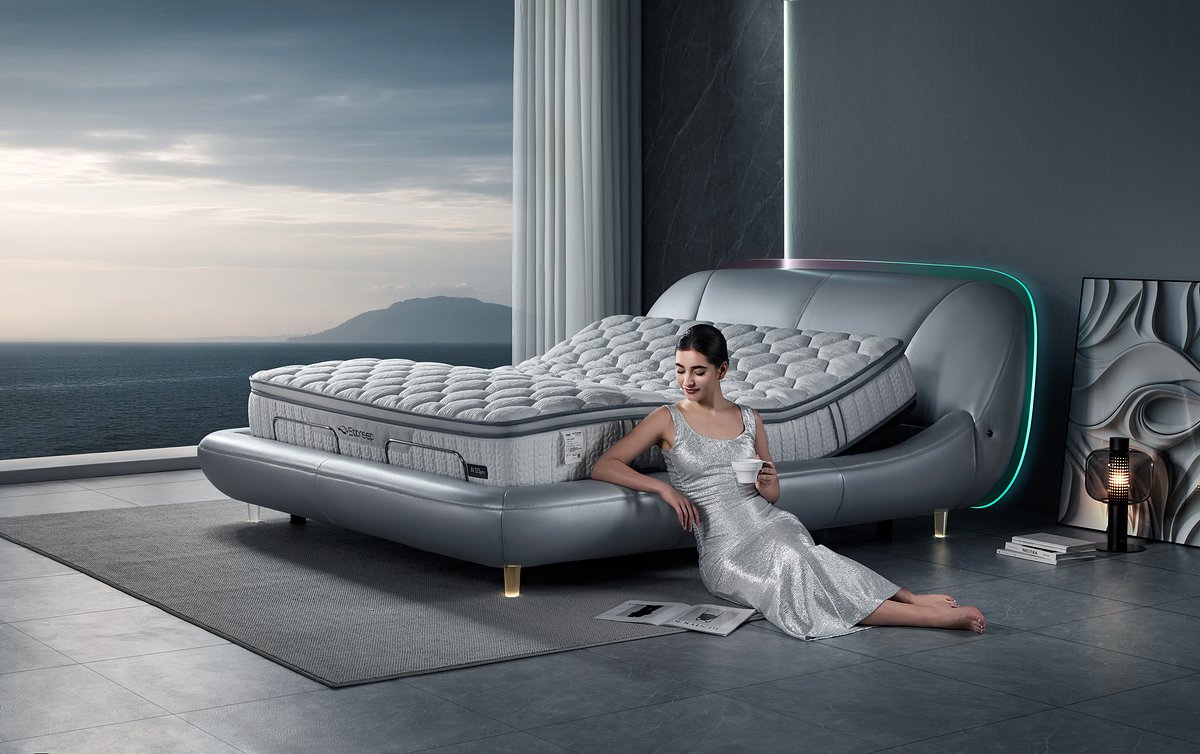
Stareep's AI Mattress Aims to Actively Reshape Sleep at CES 2026
LAS VEGAS, NV – December 29, 2025 – The multi-billion dollar sleep technology market has long been dominated by devices that track, measure, and report on our slumber. Now, a new contender is emerging with a bold promise: to move beyond passive monitoring and actively intervene to perfect the sleep cycle itself. Shenzhen-based Stareep is set to make its global debut at CES 2026, unveiling what it calls the world's first fully integrated, AI-powered SmartSleep ecosystem designed to adjust to the human body in real time.
While the concept of a "smart bed" is not new, Stareep claims its system represents a fundamental paradigm shift. Instead of simply providing users with a morning report of their sleep data, the company's AI mattress is built to be an active participant throughout the night. It aims to continuously optimize posture, support, and comfort, making micro-adjustments based on a constant stream of physiological data. This ambitious vision has already garnered industry attention, earning the company a nomination for the prestigious BIG Innovation Awards 2026, with winners to be announced in mid-January.
"Sleep technology has barely scratched the surface of what AI can do," said Allen Cai, Founder of Stareep, in a recent press release. "We didn't want to build another mattress that just reports data. We built a system that understands the body and actively responds to it, night after night."
A New Architecture for Active Intervention
At the heart of Stareep's system is what the company describes as an industry-first "dual-layer AI architecture." This design separates the learning and response functions between the mattress and its smart base. The top layer of the mattress is engineered to adapt to the body's contours for immediate comfort, while the lower layer and base work in tandem to dynamically adjust overall firmness and structural support. According to the company, this allows for a more nuanced and responsive approach to sleep optimization.
This architecture powers several key features Stareep is promoting as market firsts. Its Self-Adaptive Sleep Optimization enables the mattress to evolve its behavior, learning a user's habits and preferences over time to make more effective adjustments. The system also incorporates Multi-Sensory Sleep Assistance, using a combination of gentle motion, sound, and environmental cues to help users fall asleep, a feature the company describes as a "cradle-style sleep aid."
Further personalizing the experience is MatchFit 2.0, an AI-driven system that analyzes a user's body data to recommend the ideal initial mattress firmness and pillow height. For those seeking even deeper health insights, Stareep plans for extensive wearable integration, allowing data from EEG devices and AI rings to be fed into the ecosystem for a more holistic view of sleep quality.
Navigating a Crowded Field of Smart Beds
Stareep enters a fiercely competitive and increasingly sophisticated market. While its claims are bold, the concept of a mattress that actively adjusts during the night is a battleground where several major players have already staked their claims. Established giant Sleep Number has for years offered its "Responsive Air" technology in its 360 smart beds, which automatically adjusts firmness in response to movement.
More recent innovators have pushed the boundaries even further. DeRucci, for example, launched a smart mattress with dozens of AI sensors and airbags designed to make real-time adjustments and even provide health warnings. Other companies like ReST, QREM, and Anssil have all introduced their own AI-driven systems, each boasting proprietary algorithms and sensor technologies that promise automatic, dynamic support tailored to the sleeper's body across different zones.
Where Stareep aims to differentiate itself is in the depth of its integration and the sophistication of its dual-layer AI. By creating a comprehensive ecosystem - including smart bases, pillows, monitoring systems, and connected wearables - the company is betting that a holistic, fully integrated approach will offer a superior experience. Its success will depend on whether its technology can deliver a noticeably more effective and seamless intervention than its competitors, moving from a novel gadget to an indispensable wellness tool.
The Shenzhen Effect: A Global Debut
Stareep's arrival at CES, the world's premier consumer technology showcase, is significant not only for its product but also for its origins. Hailing from Shenzhen, China's bustling technology hub, the company represents a growing trend of Chinese firms transitioning from being the world's manufacturers to becoming global innovators and brand leaders. A global debut at CES signals a clear ambition to compete directly with established American and European brands on the world stage.
The company's vision extends beyond the bedroom. Stareep positions itself as a smart home company committed to building an ecosystem that spans the entire household, with full-home data integration at its core. This places its SmartSleep system as the foundational element of a much larger strategy, where data from sleep patterns could inform other smart devices in the home, and vice versa.
The Promise of Perfect Sleep
The underlying science for such technology is promising. Independent academic studies have validated that advanced smart mattresses can accurately monitor vital signs like heart rate and respiration, with some showing accuracy comparable to medical-grade devices. Research has also demonstrated the potential for these systems to correctly identify sleep stages, which is critical for timed interventions like Stareep's intelligent wake-up feature, designed to rouse users during their lightest sleep phase.
The ultimate test for Stareep will come at CES 2026, where it will hold live demonstrations from January 6-9 at the Venetian Expo. Attendees will have the chance to see the real-time pressure mapping, breathing-responsive support, and AI-driven firmness changes in action. The industry will be watching closely to see if Stareep’s technology can live up to its transformative promise and truly redefine what it means to get a good night's sleep.