
- KRW 200 million (approx. $145,000 USD) annually for three years: Government funding for commercialization activities under the DIPS program.
- 5 South Korean startups: Selected for the delegation to IBM's quantum research center.
- May 19, 2026: Date of the follow-up event 'IBM Quantum Connect APAC: Seoul' to expand collaboration.
Experts view this alliance as a strategic milestone that accelerates South Korea's transition from quantum research to global commercialization, positioning the country as a leader in the quantum technology race.
South Korea's Quantum Leap: Startups and IBM Forge Global Alliance
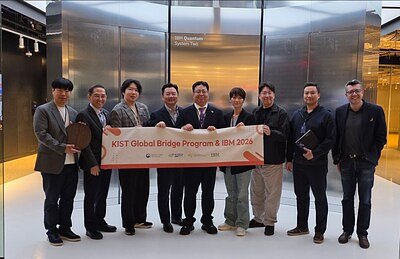
NEW YORK, NY – May 08, 2026 – A delegation of South Korea’s most promising quantum startups, led by the prestigious Korea Institute of Science and Technology (KIST), has concluded a strategic visit to the IBM Thomas J. Watson Research Center. This initiative marks a pivotal moment in South Korea's ambitious push to transition its cutting-edge quantum research from domestic laboratories to the global commercial stage, forging a critical link with one of the world's leading technology giants.
The visit, more than a simple tour, represented a deep dive into the heart of IBM's quantum ecosystem. It provided a platform for direct, high-level technical exchanges between the founders of five innovative Korean startups and IBM's top quantum researchers, laying the groundwork for future joint research, proof-of-concept projects, and market entry.
The Engine Room: Government Backing and Strategic Vision
This transatlantic collaboration is no accident. It is the calculated result of a multi-pronged national strategy spearheaded by the South Korean government. The initiative is supported by the Ministry of SMEs and Startups (MSS) and organized by the Korea Institute of Startup & Entrepreneurship Development (KISED) under the "Deeptech Incubator Project for Startups (DIPS)" program.
Launched to cultivate globally competitive deep-tech firms, the DIPS program is a cornerstone of South Korea's innovation policy. It identifies and nurtures startups across ten advanced sectors, with quantum technology being a key priority. The program provides substantial support, including up to KRW 200 million (approx. $145,000 USD) annually for three years for commercialization activities, alongside a suite of "linked support" mechanisms like R&D funds and technology guarantees.
KIST, established in 1966 as the nation's first government-funded research institute, serves as the designated lead institution for the quantum sector within DIPS. It leverages its own "Global Bridge Program," developed in collaboration with the U.S. Embassy in Korea, to connect its deep-tech portfolio with international partners and investors. This program acts as a crucial catalyst, transforming raw technological potential into market-ready ventures.
"This visit to the IBM Watson Research Center is a pivotal milestone that enables Korean startups to align directly with the frontiers of global innovation," stated SunJoon Kang, Program Director at KIST. "Under the DIPS initiative, we are committed to forging strategic alliances that will accelerate the transition of quantum technology from the lab to the global marketplace."
Inside the Quantum Hub: A Glimpse into IBM's Global Ecosystem
For the Korean delegation, the destination was as significant as the journey. The IBM Thomas J. Watson Research Center is a legendary institution and the nerve center of IBM Quantum's global operations. It is here that much of the innovation in quantum hardware, software, and cloud-based services originates.
During the visit, the startup representatives engaged in detailed technical exchanges, most notably with George Tulevski, Program Director at IBM Research Think Lab. A key focus of these discussions was the architecture and operational framework of the "IBM Quantum System Two," a modular and scalable quantum processor system that represents a major step towards practical quantum computing. These sessions provided the Korean founders with an invaluable, firsthand look at IBM's technology roadmap and industrial application strategies.
The collaboration highlights IBM's broader strategy of fostering a worldwide quantum ecosystem. Rather than developing its technology in isolation, IBM is actively building a network of partners—from academic institutions to startups—to accelerate discovery and find real-world applications. By opening its doors to the KIST-led delegation, IBM not only gains access to a new pool of talent and innovation but also strengthens its position as a central hub in the rapidly expanding global quantum economy.
The Vanguard: Meet South Korea's Quantum Innovators
The five startups chosen for the delegation represent the breadth and dynamism of South Korea's burgeoning quantum ecosystem, each tackling a different challenge with a unique technological approach. Their diverse specializations illustrate how quantum technology is poised to disrupt multiple industries.
QUAD: Specializing in quantum sensing, QUAD develops superconducting nanowire single-photon detectors (SNSPDs). This technology offers unparalleled sensitivity in detecting individual particles of light, a critical capability for secure quantum communication, advanced semiconductor inspection, and next-generation defense systems.
OptiQ-Labs: This startup is addressing a key bottleneck in one of the leading quantum computing modalities. OptiQ-Labs develops compact, ultra-stable laser-based optical modules for ion-trap quantum computers, aiming to improve the scalability and reliability of these complex systems. The company has already gained international acclaim, having secured a coveted pitching slot at the SelectUSA Investment Summit from a pool of over 20,000 global applicants.
SLEEX: Moving into the domain of environmental sensing, SLEEX is creating an advanced perception technology that fuses Quantum LiDAR with electric field sensing. Their primary application is to revolutionize underwater navigation by eliminating the critical "blind zone" within the first two meters, a long-standing problem for existing sonar and sensor systems in autonomous maritime vehicles.
Elixir (StatUpAI): This firm operates at the intersection of quantum computing and artificial intelligence. Elixir is developing a drug discovery and biomarker analysis platform that utilizes quantum-classical hybrid algorithms. By applying quantum machine learning to complex bioinformatics data, it aims to accelerate clinical trials and bring new precision medicines to market faster.
SQK (QMEDIC): Tackling a critical issue in modern medicine, SQK is developing medical imaging AI based on quantum-physics constraints. Their solutions aim to eliminate the "hallucination" problem in conventional AI-driven image reconstruction for CT and MRI scans, ensuring that the generated images are physically consistent. This enhances diagnostic reliability and can reduce the need for costly and time-consuming re-scans.
Bridging Continents: The Road from New York to Seoul
The momentum generated by this visit is not expected to wane. The collaboration is set to continue and deepen with an upcoming event on home soil. On May 19, the "IBM Quantum Connect APAC: Seoul" will be held at the Conrad Seoul, bringing IBM's top quantum leaders and technical experts to the heart of South Korea's tech scene.
This event will serve as a direct follow-up, expanding the conversation to a wider audience of industry leaders, researchers, and policymakers. Key topics will include IBM's technology roadmap, the practical application of quantum algorithms in various industries, and strategies for building robust, interconnected global quantum ecosystems.
These continued engagements are designed to weave South Korean startups more tightly into the fabric of the global quantum community. For a nation that has built its economic success on technological prowess and global trade, securing a leading role in the quantum era is a strategic imperative. The partnership between KIST and IBM, powered by a new generation of ambitious startups, is a clear signal that South Korea is not just participating in the quantum race—it intends to be one of its leaders. This bridge between New York and Seoul is more than a pathway for collaboration; it is a foundational piece of infrastructure for the future of quantum technology.