
- 110 million men globally affected by BPH, a number expected to grow as populations age.
- Up to 80% of men over 80 suffer from BPH symptoms like frequent urination and weak stream.
- The BPH device market is projected to exceed $3.7 billion by 2033.
Experts view histotripsy as a promising, non-invasive alternative to traditional BPH treatments, but emphasize the need for robust clinical data to confirm its safety and efficacy before widespread adoption.
Sound Waves Shatter Old Limits in New BPH Treatment Trial
MINNEAPOLIS, MN – March 30, 2026 – A novel medical technology that uses focused sound waves to mechanically liquefy unwanted tissue is now being tested as a completely non-invasive treatment for one of the most common conditions affecting aging men. HistoSonics, the developer of the Edison® Histotripsy System, has announced the successful treatment of the first patients in a clinical trial evaluating its technology for benign prostatic hyperplasia (BPH), or an enlarged prostate.
The landmark treatments, which took place at the Prince of Wales Hospital in Hong Kong, mark the beginning of the WOLVERINE trial. This study represents a pivotal step in expanding the use of histotripsy—a platform already cleared in the U.S. for destroying liver tumors—into the vast field of urology, offering a potential paradigm shift for the millions of men who experience the disruptive symptoms of BPH.
A New Approach to a Common Problem
Benign prostatic hyperplasia is a near-universal aspect of male aging. Approximately half of men over 50 and up to 80 percent of those over 80 suffer from symptoms like frequent urination, a weak stream, and an urgent need to go. Globally, over 110 million men are affected, a number expected to swell as populations age.
For decades, treatment has followed a well-worn path: from lifestyle changes and medications like alpha-blockers to surgical intervention. The long-standing gold standard, Transurethral Resection of the Prostate (TURP), effectively removes obstructing tissue but involves an invasive procedure with risks of bleeding, infection, and side effects like retrograde ejaculation.
In recent years, a wave of Minimally Invasive Surgical Therapies (MISTs) has offered alternatives with better safety profiles. Treatments like Rezūm™, which uses steam to ablate tissue, and the UroLift® System, which uses implants to hold the urethra open, have gained popularity by reducing recovery time and preserving sexual function. However, they still require instruments to be passed into the body.
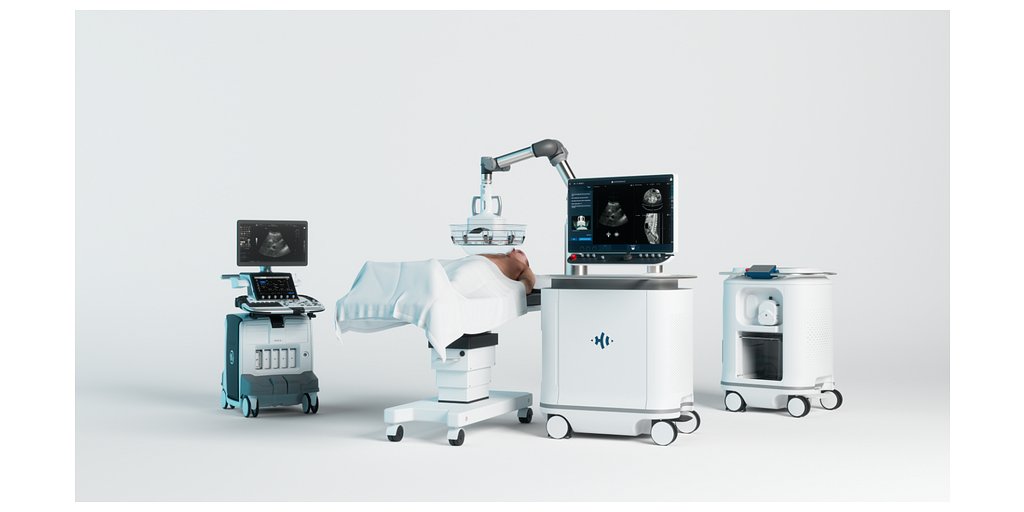
HistoSonics’ approach is fundamentally different. Histotripsy is entirely non-invasive and non-thermal. It uses focused ultrasound waves from an external source to create a tightly controlled “bubble cloud” at a specific point inside the body. The rapid expansion and collapse of these microbubbles, a phenomenon called acoustic cavitation, mechanically breaks down and liquefies targeted prostate tissue without using heat, radiation, or a single incision. An integrated ultrasound imaging system allows the physician to plan, target, and monitor the destruction of tissue in real-time.
“We believe histotripsy’s ability to mechanically destroy targeted tissue, completely non-invasively, has the potential to transform how BPH is treated,” said Mike Blue, Chairman and CEO of HistoSonics, in a recent statement.
The WOLVERINE Trial and Global Hopes
The WOLVERINE trial is a prospective, single-arm feasibility study designed primarily to assess the safety of using the Edison system for BPH. The trial aims to enroll up to 20 patients, who will be monitored closely after the procedure. Imaging performed within 72 hours will assess the immediate treatment effect, with longitudinal follow-up over six months to evaluate safety and procedural outcomes.
The choice of Hong Kong for the trial’s launch underscores the global nature of the BPH challenge. “We are excited and extremely proud that Prince of Wales Hospital is the first center in the world to offer this novel treatment approach in a clinical trial,” said Dr. Peter Chiu, the study investigator and an Associate Professor at The Chinese University of Hong Kong. “If shown to be safe and effective, the non-invasive nature of histotripsy has the potential to change how BPH is treated for many patients suffering from lower urinary tract symptoms around the world.”
While the technology holds immense promise, it is crucial to note that its use for BPH is currently investigational and not approved for commercial use anywhere in the world. The journey from a small feasibility study to widespread clinical adoption is long and requires robust data on both long-term safety and efficacy.
A Platform Technology with Broad Ambitions
The move into BPH treatment is a key part of HistoSonics' broader strategy. The company envisions histotripsy not as a single-use tool but as a versatile platform technology applicable to a range of conditions. Having already secured U.S. clearance for its Edison system to treat liver tumors, the company is actively pursuing applications in the kidney and pancreas in addition to the prostate.
This expansion places HistoSonics in a highly competitive and lucrative BPH device market, which is projected to exceed $3.7 billion by 2033. To succeed, the company must prove its technology offers clear advantages over established players. The potential benefits are compelling: a truly non-invasive procedure could eliminate anesthesia risks for some patients, shorten or eliminate catheterization time, and offer a faster return to normal activities with minimal side effects.
However, significant hurdles remain. The company must navigate the complex regulatory pathways in the U.S., Europe, and Asia. It will also need to secure reimbursement from insurers and convince physicians to adopt a new technique, which involves a learning curve. Ultimately, success will hinge on the clinical data generated by the WOLVERINE trial and subsequent larger studies, which must demonstrate that histotripsy is not just a novel idea, but a superior solution for patients.
For the millions of men managing the daily frustrations of BPH, the initiation of this trial represents a new glimmer of hope—a future where relief might be achieved not with a scalpel or a heated probe, but with the precise and powerful force of sound.