
- 26,100 fps: The IMX711 captures images at 26,100 frames per second, enabling rapid X-ray inspections.
- 34 e-rms noise level: Unprecedented low-noise performance for high-precision detection.
- 6.5 TWh by 2030: Projected global EV battery capacity, highlighting the sensor's industrial relevance.
Experts would likely conclude that Sony's IMX711 represents a breakthrough in X-ray imaging, merging high-speed capture with low-noise precision, and is poised to revolutionize industrial inspections and scientific research.
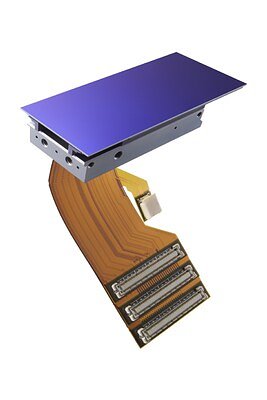
Sony's New X-Ray Sensor Sees Faster and Deeper Than Ever Before
ATSUGI, Japan – June 09, 2026 – In the world of high-stakes manufacturing and advanced scientific research, progress is often measured by the ability to see the unseen. Today, Sony Semiconductor Solutions Corporation unveiled a new set of eyes for industry and science: the IMX711, a direct conversion X-ray CMOS sensor that represents a formidable leap in imaging technology. With claims of industry-leading speed and unprecedented low-light fidelity, this component is poised to have an outsized impact on everything from electric vehicle battery production to fundamental materials science.
The press release details a sensor capable of capturing images at a blistering 26,100 frames per second (fps) while simultaneously reducing the electronic 'noise' that has traditionally plagued such high-speed, high-sensitivity measurements. More significantly, the IMX711 merges two historically separate capabilities: the high-accuracy measurement of total X-ray energy and the ability to acquire energy data from individual photons. This dual-mode functionality, previously a difficult technical compromise, effectively gives a single sensor the power of two distinct systems, a development that will ripple through global supply chains and research laboratories.
Redefining the Industrial Inspection Bottleneck
The most immediate impact of the IMX711 will be felt on the factory floor. In sectors like semiconductor fabrication and the booming electric vehicle battery market, quality control is both a critical necessity and a persistent bottleneck. As production lines accelerate to meet surging global demand—with EV battery capacity projected to hit 6.5 TWh by 2030—the ability to inspect components without slowing down output becomes a powerful economic driver.
X-ray inspection, particularly Computed Tomography (CT), is the gold standard for non-destructively finding microscopic flaws: misaligned electrode layers in a battery cell, hairline cracks in a weld, or foreign metal particles that could lead to catastrophic failure. However, high-resolution 3D CT scans can take several minutes, a lifetime on a modern assembly line. The IMX711’s staggering frame rate promises to slash these inspection times dramatically. By capturing data at over 26,000 fps, the sensor allows for the rapid acquisition of the multiple projection images required for a CT scan, enabling high-speed inspection of moving objects. This could transform quality control from a spot-check process into a comprehensive, in-line 100% inspection protocol, improving safety and reliability while boosting throughput.
The sensor's low-noise performance is equally crucial. With a typical random noise level of just 34 e-rms, the IMX711 can reliably detect faint X-ray signals that would be lost in the electronic static of conventional sensors. This means higher precision in low-flux conditions, enabling the detection of subtler defects and the use of lower, safer radiation doses. Of course, this performance creates a new challenge: managing the deluge of data. Operating at full capacity, the sensor produces a torrent of information that will require robust, high-bandwidth data transfer and powerful real-time processing, pushing system integrators to innovate in their own hardware and software infrastructure.
A New Lens for Scientific Discovery
Beyond its industrial utility, the IMX711’s most profound long-term impact may lie in the realm of pure science. Its development, a collaboration with Japan's esteemed RIKEN research institute and based on a pixel structure invented by Dr. Takaki Hatsui, points to its deep scientific pedigree. The sensor's ability to acquire photon-level energy information is a game-changer for materials analysis.
Traditionally, scientists have faced a trade-off. Charge-integrating sensors are excellent for measuring high-flux X-ray beams but struggle to provide detailed energy information. Conversely, photon-counting detectors offer superb energy resolution for individual photons but are easily overwhelmed by high-flux beams. The IMX711 bridges this divide. Its charge-integrating method, refined with proprietary low-noise circuitry, allows it to function with the precision of a photon counter in low-flux conditions while retaining the ability to handle the high-flux environments common in structural analysis.
This enables a powerful new methodology: the simultaneous measurement of a material's crystal structure (from the pattern of scattered X-rays) and its elemental composition (from the energy of those X-rays). An analytical process that once required two separate experiments on different machines can now be performed in a single shot. For a researcher developing next-generation battery cathodes, this means they can analyze changes in the material's crystal lattice and detect the presence of trace contaminants at the same time, dramatically accelerating the cycle of discovery and innovation. This capability for 'elemental mapping'—visualizing the two-dimensional distribution of different elements within a sample—opens up new frontiers in fields from chemistry to art history, where it could be used to analyze the composition of pigments beneath a painting's surface.
Sony's Strategic Play in a High-Performance Niche
The launch of the IMX711 is more than a technical achievement; it is a shrewd strategic move by Sony's semiconductor division. While the company is famous for the image sensors in consumer cameras and smartphones, it has been steadily cementing its dominance in specialized, high-margin industrial and scientific markets. In the competitive landscape of X-ray detectors, which includes established players like Hamamatsu Photonics and Teledyne DALSA, Sony is carving out a unique and valuable position.
By creating a single sensor that resolves the long-standing conflict between high-flux integration and low-flux energy resolution, the company is not just improving on an existing product category but defining a new one. This positions the IMX711 as a highly differentiated offering for system integrators who previously had to choose one capability over the other or engineer complex, costly dual-detector systems.
However, adoption will not be without its hurdles. The sensor's advanced capabilities come with a commensurate price tag and significant integration challenges. The sheer volume of data it produces necessitates investment in cutting-edge data handling and processing infrastructure. End-users will need to develop new software and analytical workflows to fully exploit the rich, multi-dimensional data the sensor provides. For many, the transition will require a substantial R&D investment. Yet, for critical applications where speed, precision, and depth of analysis provide a decisive competitive advantage, the IMX711 represents a compelling value proposition that many will find impossible to ignore.