
- $100M+: Initial funding for high-integrity carbon credit projects in Central Asia.
- 2023 Market Drop: Significant decline in voluntary carbon market value due to low-quality projects.
- Central Asia Focus: Untapped potential for nature-based carbon projects in Kazakhstan and surrounding regions.
Experts would likely conclude that Solis Capital's innovative financing model addresses critical gaps in the voluntary carbon market, but its success hinges on navigating complex regional challenges and maintaining rigorous credit integrity.
Solis Capital Bets on a New Model for Carbon Finance in Central Asia
NEW YORK, NY – June 11, 2026 – In a market grappling with a crisis of confidence, Solis Capital has announced a move that is both ambitious and calculated: the formation of a dedicated financing vehicle to fund high-integrity carbon credit projects, with an initial focus on the vast, untapped landscapes of Central Asia. The vehicle employs a "carbon stream financing" model, a structure borrowed from the mining industry, to provide upfront capital to project developers. This isn't just another fund; it's a strategic bet that financial innovation can solve the twin challenges plaguing the voluntary carbon market (VCM): a lack of credible, early-stage funding and a desperate need for verifiable, high-quality credits.
A New Lifeline for Climate Projects
The core of Solis Capital's strategy lies in its financing model. Carbon stream financing provides project developers with upfront and milestone-based payments in exchange for a share of future carbon credits or the revenue from their sale. This structure directly addresses one of the most significant barriers for nature-based climate solutions: the long, capital-intensive journey from project conception to the issuance of a single, sellable carbon credit.
Traditionally, developers of projects like reforestation or improved agricultural land management have faced a chicken-and-egg problem. They need substantial funds for feasibility studies, landholder agreements, baseline analysis, and the complex process of Measurement, Reporting, and Verification (MRV). Yet, traditional lenders are often wary of the long timelines and inherent risks—what if the trees don’t grow as planned, or if a change in methodology disqualifies the credits? Solis’s model acts as a bridge across this valley of death, providing the critical liquidity needed to get projects off the ground. For investors, the model offers direct exposure to the carbon credit asset class, tied to the project’s actual production. However, it also concentrates the risk; if the project fails to deliver the contracted volume of credits, the financier’s return is directly impacted. It’s a high-stakes model that aligns the interests of the funder and the developer around a single goal: successfully generating verified credits.
The Multi-Billion Dollar Question of 'Integrity'
Solis Capital’s repeated emphasis on “high-integrity” is no accident. It is a direct response to the turbulence that has shaken the VCM to its core. Following years of explosive growth, the market value of traded credits dropped significantly in 2023 amid widespread reports of low-quality projects that failed to deliver genuine climate benefits. Accusations of greenwashing have left corporate buyers skittish, creating a market-wide “flight to quality.”
This is the landscape Solis Capital is navigating. The firm specifies it will prioritize projects with strong additionality (the action wouldn't have happened otherwise), conservative baselines, protections against carbon leakage, and clear, transparent benefit-sharing with local communities. These criteria mirror the benchmarks being set by standard-setting bodies like the Integrity Council for the Voluntary Carbon Market (ICVCM), whose Core Carbon Principles (CCPs) are becoming the global litmus test for credit quality. By focusing on these principles from the outset, Solis is wagering that the future of the VCM is a bifurcated one, where premium, high-integrity credits are not just preferred but are the only ones with long-term value.
“Carbon stream financing gives serious project sponsors a practical way to fund development costs before carbon credits are issued,” said Katy Goncharova, PR Contact for Solis Capital, in the announcement. “Our focus is on projects that can meet institutional buyer expectations around integrity, traceability, verification, and long-term credit quality.” This statement positions the firm’s strategy not just as a financial one, but as a solution to the market’s trust deficit, aiming to build a portfolio of credits that are resilient to the scrutiny that has sunk lesser projects.
The Central Asian Frontier
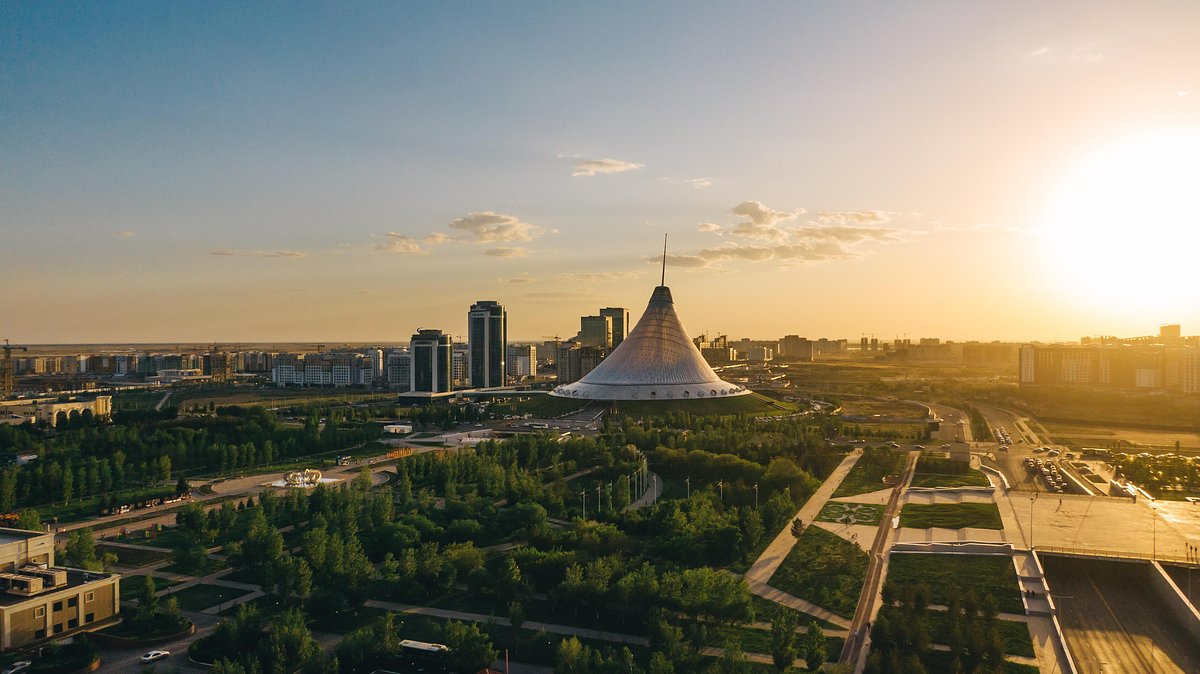
The choice of Central Asia as the initial focus is perhaps the most intriguing element of Solis Capital's strategy. The region, including countries like Kazakhstan, possesses enormous potential for nature-based carbon projects thanks to its vast land base, significant agricultural sector, and opportunities for ecosystem restoration. It is a frontier for carbon finance that has been largely overlooked by global investors.
However, this potential is matched by considerable challenges. Navigating land rights can be complex, local capacity for implementing projects to international standards may be limited, and the regulatory environment for voluntary carbon projects is still nascent in many areas. While Kazakhstan has shown regional leadership with its own Emissions Trading System, the specific rules governing voluntary, nature-based projects are still evolving. Success will require more than just capital; it will demand deep regional expertise, strong local partnerships, and the ability to manage significant political and operational risks. Solis Capital’s venture is an early test of whether the VCM can effectively operate in such complex environments, moving beyond the more established project locations in Latin America and Southeast Asia.
Connecting Capital to Carbon
The initiative is led by a team with a background in creating structured financial products. Solis Capital was created by Christopher Down, who previously founded and managed Hearthstone Investments, a residential fund manager. This background in structuring investments around tangible assets provides a different lens through which to view carbon credits—not as abstract derivatives, but as the verifiable output of a real-world asset. This entity is distinct from Solis Capital Partners, a U.S.-based private equity firm, highlighting the specialized nature of this new carbon-focused vehicle.
The success of this model will depend on an entire ecosystem. Solis must not only identify promising projects but also work with a network of technical consultants, verification bodies, and land aggregators to ensure those projects meet the high-integrity threshold. Ultimately, it must connect the supply of credits generated in Central Asia with the institutional buyers—corporations and financial institutions—seeking to meet net-zero targets with offsets they can stand behind. As the rulebook for the Paris Agreement's Article 6 solidifies international carbon trading, the demand for robustly verified and authorized credits will only grow. Solis Capital is betting that by building the financial plumbing to fund these projects now, it will be perfectly positioned to capitalize on the next, more mature phase of the global carbon market.