
- 10,900 pilots needed by 2030 (CAPA India projection)
- 30,000 pilots required in next 20 years (Civil Aviation Ministry estimate)
- 1,622 CPLs issued in 2023 (record by DGCA, still insufficient to meet demand)
Experts agree that India's aviation industry faces a critical pilot shortage, requiring urgent expansion of high-quality training programs like CAA's to meet growing demand and ensure safe, sustainable growth.
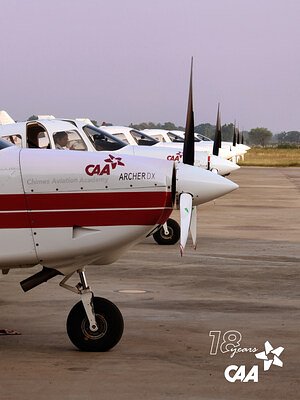
Soaring Ambitions: CAA Fuels India's Pilot Pipeline After 18 Years
GURUGRAM, India – April 23, 2026 – As Chimes Aviation Academy (CAA) celebrates 18 years of flight training operations, its milestone arrives at a critical juncture for India's aviation industry. The nation is experiencing unprecedented growth, with a sky-high demand for skilled pilots that far outstrips current supply. Since its inception in 2008, the academy has trained over 1,000 pilots, establishing itself as a vital contributor to the country's aviation ecosystem.
India's Urgent Need for Aviators
The Indian aviation market is in the midst of an explosive expansion. With domestic airlines having placed orders for over 1,700 new aircraft to supplement an existing fleet of more than 800, the skies are set to become much busier. Passenger traffic has already rebounded past pre-pandemic levels, and government initiatives aim to expand the number of commercial airports to over 200 within the next decade.
This rapid growth has created a formidable challenge: a severe shortage of qualified pilots. Industry analysts and government officials have sounded the alarm. Aviation consulting firm CAPA India projects a need for an additional 10,900 pilots by 2030, while the Civil Aviation Ministry estimates a demand for approximately 30,000 pilots over the next two decades.
Currently, India’s 35 DGCA-approved Flying Training Organizations (FTOs) collectively produce between 800 to 1,000 Commercial Pilot License (CPL) holders annually. While the Directorate General of Civil Aviation (DGCA) issued a record 1,622 CPLs in 2023, this rate is insufficient to close the widening gap. The recent implementation of stricter Flight Duty Time Limitation (FDTL) rules, which increase mandatory rest periods for pilots, has further intensified the demand for flight crew, creating what some experts call a critical bottleneck for airline expansion.
From Classroom to a Guaranteed Cockpit
In this high-stakes environment, institutions like Chimes Aviation Academy have become indispensable. Operating from strategic airfields in Madhya Pradesh, CAA has built a robust training infrastructure centered around a modern fleet of 33 aircraft, including the Cessna 172, Piper Archer DX, and the advanced Diamond DA42, many equipped with Garmin G1000 NXi glass cockpits that mirror modern airline flight decks.
A cornerstone of the academy's success is its deep-rooted partnership with IndiGo, India's largest airline, through a highly sought-after Cadet Pilot Program (CPP). This program offers a direct and structured pathway for aspiring pilots, guiding them from having zero flying experience to securing a position as a Junior First Officer on an Airbus A320. The comprehensive program, which costs upwards of ₹94 lakhs, involves rigorous ground school training in Gurugram, followed by flight training to obtain a CPL, and finally, a type-rating for the specific aircraft they will fly for the airline.
The success and scale of this partnership are evident in the growing batch sizes. CAA recently inducted its largest-ever single intake of 67 cadets for the IndiGo program, a significant increase from the 47 cadets in the preceding batch, reflecting the airline's escalating need for cockpit-ready professionals. This guaranteed career path provides a powerful incentive for students and a reliable talent pipeline for IndiGo.
Navigating a Competitive Training Landscape
While CAA has carved out a significant niche, it operates within a competitive landscape of Indian FTOs. The field includes the venerable, government-run Indira Gandhi Rashtriya Uran Akademi (IGRUA), a joint venture like CAE Gondia, and historic institutions such as The Bombay Flying Club.
CAA distinguishes itself through its scale, modern fleet, and, most critically, its direct airline integration. While other FTOs also have airline partnerships, the depth of the IndiGo relationship provides a level of career certainty that is a major draw. The DGCA's inaugural FTO rankings in 2025, which placed CAA as the top school in its category, further solidified its reputation for quality, safety standards, and training efficacy. This focus on industry-aligned, disciplined training is a key part of its appeal to both students and airline partners.
Speaking on the academy's 18-year journey, Mr. Uday Punj, Managing Director, highlighted this commitment. "As the aviation industry in India continues to grow, and the vision of Atmanirbhar Bharat takes shape, our path is clear: to train pilots with professionalism, high-quality standards, discipline, and a strong emphasis on safety for their successful aviation careers."
Fueling a Self-Reliant Aviation Sector
CAA's mission directly aligns with the Indian government's 'Atmanirbhar Bharat' (Self-Reliant India) initiative. By providing high-quality domestic training, the academy helps reduce the country's dependence on expensive foreign FTOs, keeping talent and capital within India. The government has supported this vision by investing in airport infrastructure, promoting indigenous manufacturing, and offering financial aid, such as scholarships and subsidized loans, to make the costly dream of becoming a pilot more accessible.
The government's push to expand regional connectivity and strengthen the domestic aviation ecosystem depends entirely on a steady supply of well-trained personnel. Institutions that can deliver pilots trained to international standards on modern equipment are therefore not just private enterprises but crucial enablers of national economic strategy. As India's aviation sector continues its upward trajectory, the role of dedicated training academies in navigating the turbulence of workforce shortages will only become more critical.
The journey from a student with a dream to a First Officer in the cockpit of a commercial airliner is long and demanding, but it is a path that thousands more must travel to keep India flying high. Chimes Aviation Academy's 18-year legacy is a testament to its foundational role in this national endeavor, shaping the aviators who will command the next generation of India's fleet.