
- 48% reduction in ignitions on circuits with fast-trip settings and Gridscope monitoring
- 16% median reduction in outage duration across monitored zones
- 13.4 marginal benefit-cost ratio for Gridware's technology
Experts conclude that Active Grid Response (AGR) technology significantly enhances wildfire prevention and power reliability, offering a cost-effective, proactive solution for modern electrical grids.
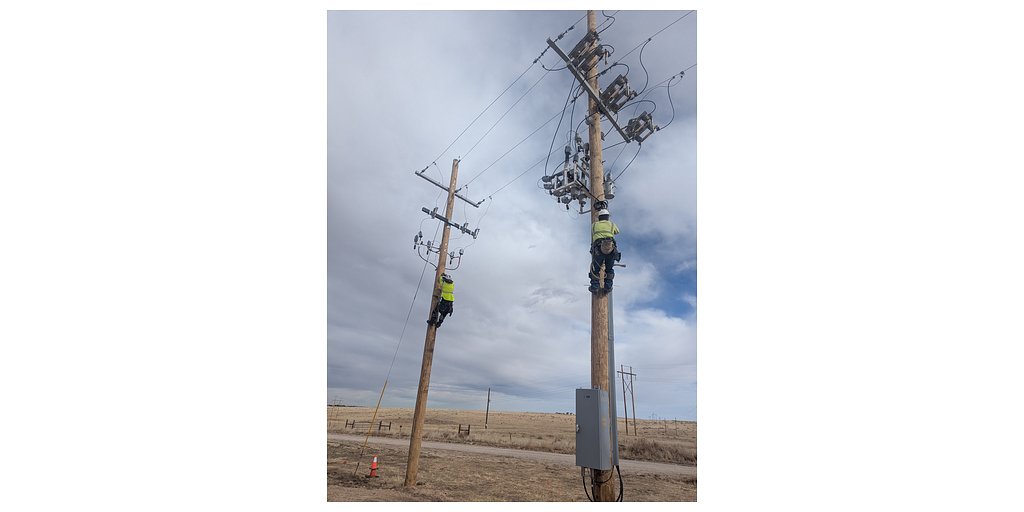
Smart Grid Tech Slashes Wildfire Risk, Boosts Power Reliability
SAN FRANCISCO, CA – February 04, 2026 – A groundbreaking study has validated a technology that simultaneously addresses two of the most pressing challenges for modern electric utilities: mitigating the risk of catastrophic wildfires and improving day-to-day power reliability for customers. The research, conducted in partnership with an economist from the University of California, Berkeley's Haas Business School, provides a rigorous, data-driven look at the performance of Active Grid Response (AGR) technology from San Francisco-based Gridware.
Deployed across thousands of miles of Pacific Gas and Electric’s (PG&E) highest-risk power lines, the technology demonstrated a dramatic ability to prevent potential fire-starting incidents while also significantly reducing the duration of power outages. The findings suggest that such smart grid monitoring systems are not just a reactive tool, but a highly cost-effective, proactive strategy for building a safer and more resilient electrical grid.
The Anatomy of a Smarter Grid
At the heart of the study is Gridware's Active Grid Response platform, which relies on a network of pole-mounted sensors called Gridscopes. These devices, which can be rapidly deployed, act as a constant set of eyes and ears on the grid. They are engineered to monitor the physical, mechanical, and environmental conditions of utility infrastructure in real-time, detecting subtle anomalies that often precede major failures.
Unlike traditional grid management, which can be reactive and often blind to developing problems, the AGR system captures a continuous stream of data on everything from power line vibrations to hardware degradation. This allows utilities to identify and locate hazards before they escalate. One of the most critical issues the technology addresses is high-impedance faults—subtle electrical faults that may not draw enough current to trip conventional protection systems but can create sparks sufficient to ignite dry vegetation.
The study analyzed the system's performance when used in conjunction with operational strategies like Enhanced Powerline Safety Settings (EPSS), also known as "fast trip" settings, which make circuits more sensitive to faults. While fast trip settings reduce ignition risk, they can also lead to more frequent outages. The research showed Gridware’s technology provides a crucial secondary layer of defense, catching the sensitive faults that even fast-trip settings might miss.
By the Numbers: Validating Safety and Reliability
The research, titled Quantifying the Economic Value of Active Grid Response in High Fire-Risk Areas, was led by Cody Warner, a project scientist and energy economist at UC Berkeley’s Haas School of Business. Utilizing four years of high-resolution ignition and outage data from 2022 to 2025, the study employed a rigorous differences-in-differences methodology. This approach compared outcomes in high-risk areas monitored by Gridware's technology against similar, unmonitored control groups within PG&E's vast service territory.
The results were striking. For wildfire safety, the study found that on circuits where fast-trip settings were enabled, the addition of Gridscope monitoring led to a further 48% reduction in ignitions. This highlights the system's ability to detect and flag the most elusive and dangerous types of faults.
Beyond fire prevention, the technology delivered significant improvements in grid reliability. Across the monitored circuit protection zones, the platform drove a median 16% reduction in outage duration, as measured by the Customer Average Interruption Duration Index (CAIDI). The impact was even more pronounced in areas historically plagued by frequent service disruptions, where customers experienced an average 24% reduction in outage duration. This demonstrates a tangible benefit for consumers, translating to fewer hours spent without power.
The Economic Case for Resilience
Perhaps the most compelling aspect of the research is its powerful economic argument. The authors conducted a detailed benefit-cost analysis (BCA) of major wildfire mitigation strategies across PG&E's 80 riskiest circuits, which span more than 5,000 miles of lines. The analysis found that an operational strategy combining AGR with measures like fast-trip settings produced a robust benefit-cost ratio of 3.3, meaning it delivered $3.30 in benefits for every dollar spent.
Even more impressively, when isolating the specific contribution of Gridware's technology, the marginal benefit-cost ratio soared to 13.4. This finding suggests that adding AGR to existing operational strategies is an exceptionally prudent financial decision for utilities, yielding significant returns by avoiding the immense costs associated with wildfires, liability, and widespread power outages.
"Mitigating dangerous events across the grid by deploying AGR is now a critical tool for utilities and provides real benefits for customers while also keeping rates affordable," said Tim Barat, co-founder and CEO for Gridware, in a statement accompanying the results. He credited PG&E for its multi-year effort to innovate and make the grid safer in Northern California.
From Wildfires to Hurricanes: A National Blueprint
While the study's data was rooted in California's wildfire crisis, Gridware emphasizes that the technology offers a blueprint for hardening electrical grids against a wide array of hazards nationwide. The same high-impedance faults that can spark a wildfire in the West can cause dangerous live-wire-down events and customer outages in the East, especially during severe storms.
This thesis is already being tested. Utility partners like Duquesne Light Company (DLC) in Pittsburgh and Con Edison in New York are deploying the AGR platform to combat faults and outages associated with the increasingly frequent and severe storms battering the East Coast. By enabling rapid fault identification and localization, the technology helps utilities triage damage, stage crews more effectively, and restore power faster after a major weather event.
This growing adoption signals a broader shift in the utility industry, moving away from costly, slow-moving system overhauls and toward more dynamic, data-driven grid management. With deployments already active in ten states and a reported waitlist of utilities on the West Coast, the success documented in the PG&E study appears to be a powerful catalyst for change, offering a scalable model for enhancing grid resilience in an era of climatic uncertainty.