
- 24% reduction in carbon footprint from switching to LNG
- 100 tonnes of linens and uniforms processed daily across three plants
- S$25 per tonne carbon tax in 2024, rising to S$45 per tonne in 2026
Experts view this LNG conversion as a scalable model for industrial decarbonization, proving that cleaner energy transitions can align with economic pragmatism and regulatory demands.
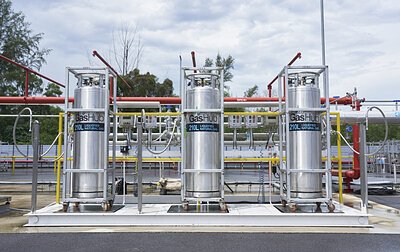
Singapore's Green Shift: H2G Powers Industry with Cleaner LNG Energy
SINGAPORE – April 28, 2026 – In a significant step for Singapore's industrial decarbonization, H2G Green Limited (SGX:5AI) and its subsidiary GasHub have successfully commissioned a major liquefied natural gas (LNG) facility for one of the nation's largest professional laundry providers. The conversion from diesel fuel is projected to slash the facility's carbon footprint by an estimated 24%, demonstrating a tangible pathway for heavy industry to align with national climate objectives.
The project, engineered and delivered by GasHub, provides a powerful case study in the transition to cleaner energy. The client, a key player in the hospitality sector's supply chain, services hotels and serviced apartments across the island, processing over 100 tonnes of linens and uniforms daily across three plants. The new LNG infrastructure will initially power the immense thermal energy and steam requirements for one of these high-volume facilities, with discussions already underway to expand capacity.
This move marks a critical milestone, showcasing how established industrial operations can pivot towards sustainability without sacrificing productivity. It highlights a growing trend where environmental responsibility and economic pragmatism are increasingly intertwined, driven by both corporate initiative and a supportive, yet demanding, national policy landscape.
The Blueprint for Industrial Decarbonization
The laundry sector, with its constant need for high-temperature water and steam for washing and drying, is notoriously energy-intensive. By successfully transitioning a portion of this massive operation from diesel to LNG, GasHub has created a blueprint that can be replicated across a wide range of Singapore's industrial sectors, from food manufacturing to engineering.
"Industrial facilities continue to represent a significant opportunity for Singapore to reduce emissions and strengthen energy security through switching to LNG," said Bentinck Ng, CEO of GasHub, in a statement. "This is our third laundry provider customer, and it showcases how LNG can deliver various benefits. By replacing diesel and liquefied petroleum gas, companies can significantly reduce carbon footprints and maintenance costs while benefiting from cleaner, more efficient operations."
The project's significance extends beyond the immediate carbon reduction. It serves as a proof-of-concept for the viability of LNG as a transitional fuel in Singapore's journey towards net-zero emissions. As an island nation with limited renewable energy options, Singapore relies on diversifying its energy mix to ensure security and sustainability. LNG, being the cleanest-burning fossil fuel, plays a pivotal role in this strategy, bridging the gap as future technologies like green hydrogen and advanced carbon capture become commercially scalable.
Beyond Emissions: The Compelling Business Case for LNG
While the 24% reduction in carbon emissions is the headline achievement, the switch to LNG offers a suite of compelling operational and financial advantages that make it a strategic business decision. For the laundry provider, the benefits extend deep into their daily operations and long-term financial planning.
One of the most significant advantages is cleaner and more efficient operations. Unlike diesel, which can leave behind soot and carbon residue, LNG combustion is virtually residue-free. This drastically reduces the need for frequent boiler cleaning and maintenance, minimizing downtime and lowering associated labor and material costs. The result is improved boiler efficiency, meaning more of the fuel's energy is converted into useful steam, optimizing every dollar spent on energy.
Furthermore, the move offers greater stability in energy costs. While global energy markets are notoriously volatile, LNG supply chains can offer more predictable and stable pricing structures compared to diesel, allowing a high-consumption business to better forecast expenses and manage its budget. This financial predictability is invaluable for maintaining competitive pricing for its own clients in the hotel industry.
The benefits are also felt on the factory floor. The switch eliminates the pungent odor associated with diesel fuel storage and combustion, creating a more pleasant and healthier workplace environment for employees. It also removes the risk of diesel spills or contamination, a crucial consideration for a business handling high volumes of clean linen for the hospitality sector.
Navigating Singapore's Green Policy Landscape
The decision to invest in LNG infrastructure is not happening in a vacuum. It is a direct and strategic response to Singapore's ambitious and increasingly stringent environmental policies. The government's multi-pronged approach of incentives and penalties is actively shaping the future of industrial energy use.
The centerpiece of this strategy is the national carbon tax. Implemented in 2019, the tax was raised significantly to S$25 per tonne of emissions in 2024 and is legislated to increase again to S$45 per tonne in 2026. This escalating price on carbon makes emissions a direct and growing line item on a company's balance sheet, creating a powerful financial incentive to decarbonize.
By switching to LNG and cutting emissions by nearly a quarter, the laundry provider not only reduces its environmental impact but also mitigates its future tax liability, a move that will yield increasing financial returns as the carbon price continues its upward trajectory toward a planned S$50-S$80 per tonne by 2030. This project is a clear example of a company proactively managing regulatory risk and turning a potential liability into a competitive advantage.
Complementing the carbon tax, government initiatives under the Singapore Green Plan 2030, such as the Energy Efficiency Grant, provide financial support for companies willing to invest in greener technologies. This 'carrot and stick' approach fosters a fertile ground for companies like H2G and its clients to collaborate on projects that are both ecologically and economically sound.
GasHub's 'Last-Mile' Expertise
Executing such a transition requires deep, specialized expertise, which is where GasHub has carved its niche. While Singapore has a world-class LNG terminal, the challenge for many industrial users lies in the 'last-mile'—getting the fuel from the terminal to the factory floor in a safe, reliable, and cost-effective manner. GasHub has positioned itself as a leader in this critical segment.
Trusted for its proven engineering capabilities, GasHub was selected for its ability to design, build, and maintain bespoke LNG infrastructure tailored to the specific needs of industrial clients. The company has a strong track record across diverse sectors, including aviation and food manufacturing, demonstrating its versatility.
This project, the third in the laundry sector, solidifies GasHub's domain expertise and highlights its role as a key enabler of Singapore's energy transition. Ng's statement emphasized this point, noting that the project "highlights the unique, homegrown engineering expertise GasHub brings to Singapore's industrial energy sector."
As Singapore continues its determined march toward a net-zero future, the success of projects like this LNG conversion will be paramount. They represent the practical, on-the-ground work that turns ambitious national targets into measurable industrial reality, one facility at a time.