
- 130 million monthly active outbound travel users on Xiaohongshu (2025)
- 90% of Xiaohongshu users actively search for travel-related content
- Chinese outbound tourism market projected to reach $184 billion in 2026
Experts agree that the shift from traditional destination marketing to hyper-personalized, interest-driven travel requires destinations like Singapore to leverage social commerce platforms to capture niche audiences and convert digital engagement into tangible tourism revenue.
Singapore Taps Social Commerce to Redefine Tourism for Chinese Visitors
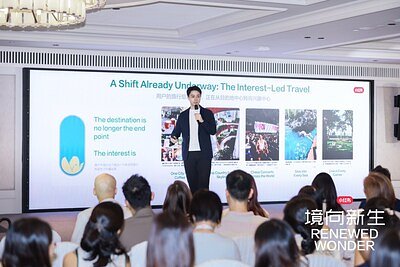
SINGAPORE – May 14, 2026 – In a landmark move signaling a paradigm shift in global tourism marketing, Singapore is deepening its ties with Chinese social commerce giant Xiaohongshu. The partnership, crystallized at the recent 2026 Xiaohongshu Business x Singapore Outbound Tourism Forum, aims to move beyond traditional advertising and tap directly into the powerful current of interest-driven travel that now dictates the plans of millions of Chinese tourists.
Hosted by Xiaohongshu Business, the forum brought together representatives from the Singapore Tourism Board (STB) and global industry leaders to dissect a profound transformation in travel logic. The consensus is clear: modern travelers, particularly from China, no longer set off for a destination, but to pursue a passion. This pivot from geography to personal interest is forcing destinations to rethink how they capture attention in a crowded digital landscape.
The New Logic of Travel: From Destination to Desire
The era of one-size-fits-all travel brochures is over, replaced by a hyper-personalized, algorithm-influenced discovery process. According to Xiaohongshu's data from 2025, the platform boasted 130 million monthly active outbound travel users, with an astonishing 90% actively searching for travel-related content. This vast audience isn't just browsing; they are planning, curating, and validating their trips based on the authentic, user-generated content they find.
Tim ZHANG, General Manager of Xiaohongshu Commercial Cross-border & Internet Industry Group, highlighted a key trend emerging from this behavior: "blind box-style travel." This concept is driven by what he identified as three core motivations: a search for spiritual resonance, a curiosity for novelty, and the pursuit of local lifestyle aesthetics. Travelers are increasingly willing to embrace spontaneity and discovery, drawn by a compelling photo, a niche activity, or the promise of an authentic local experience rather than a famous landmark. This aligns with broader industry reports from analysts like Booking.com and Amadeus, which predict a surge in ultra-personalized journeys where travelers reject convention in favor of unique passions.
This behavioral shift is rewriting the rules of engagement. Instead of searching for "Singapore," a potential visitor on Xiaohongshu is more likely to search for "Peranakan-style cafes in Singapore," "Singapore's best family-friendly rooftop pools," or "vintage shopping in Haji Lane." Capturing these highly specific, long-tail searches is the new frontier for destination marketing.
Singapore's Strategic Bet on Social Commerce
For the Singapore Tourism Board, the partnership with Xiaohongshu is a strategic and calculated maneuver. It represents a sophisticated evolution of its digital outreach to the lucrative Chinese market, which is projected to reach nearly $184 billion in 2026. This collaboration builds on STB's existing digital initiatives, including renewed partnerships with payment platforms like Weixin Pay, to create a seamless and engaging experience for Chinese visitors.
Xiaohongshu's user base—predominantly young, female, affluent, and based in China's top-tier cities—is a perfect match for Singapore's brand of premium, experience-rich tourism. However, the forum also revealed a critical challenge: a growing "supply-demand gap" in content. KWONG Dodo, Regional Head of Xiaohongshu Commercial Cross-border for Asia & Middle East, pointed out that existing tourism content is failing to keep pace with the rapidly evolving and specific demands of consumers.
Based on Xiaohongshu's analysis, four fast-growing consumer segments highlight this gap:
- Urban youth traveling with parents: A segment showing remarkable growth, yet underserved by tailored content.
- Users aged 19-25: This group relies heavily on real-time travel searches, but finds a lack of immediate, relevant options.
- Taste-driven middle-class: This demographic seeks premium nighttime consumption and sophisticated experiences, but finds current offerings too generic.
- New generation parents: A cohort of over 20 million monthly active users who prioritize authentic travel shared from a maternal perspective, a content category that remains scarce.
By identifying these niches, the partnership aims to arm Singapore's tourism stakeholders with the insights needed to create and promote content that resonates deeply, transforming latent interest into actual bookings.
Seeding, IP, and the Future of Destination Marketing
To bridge the content gap, Xiaohongshu unveiled a three-step marketing strategy designed to convert digital buzz into tangible economic benefits. LAI Sisi, Strategy Head of Xiaohongshu Commercial Cross-border, outlined the plan, which focuses on "seeding," brand perception, and sustainable growth.
First, the strategy calls for building a segmented content matrix. This involves using refined targeting to deliver hyper-relevant content to the specific consumer groups identified, effectively "seeding" the platform with inspiration. This leverages the well-documented power of user-generated content and influencer marketing, which consumers trust far more than traditional advertising. Research shows that ads featuring user content can see a 3x higher click-through rate.
Second, the plan emphasizes the creation of exclusive "Singapore IPs"—unique, shareable events, concepts, or experiences that can only be had in Singapore. By creating signature moments, the city-state can shape travel expectations and drive consumption behavior, making a trip to Singapore an aspirational goal.
Finally, the strategy aims to foster win-win growth by creating a clear pathway to convert this digital seeding into commercial returns, establishing a sustainable cycle for the tourism industry. This reflects a mature understanding that likes and shares must ultimately translate into heads in beds and revenue for local businesses.
A Crowded Digital Battlefield for the Global Tourist
Singapore's deep dive into social commerce does not exist in a vacuum. It is a necessary response to an intensely competitive digital ecosystem. Major online travel agencies (OTAs) in China, such as Trip.com Group and Alibaba's Fliggy, are deploying their own sophisticated AI-powered tools like 'TripGenie' and 'AskMe' to offer personalized itinerary planning. Simultaneously, short-video platforms like Douyin (TikTok's Chinese counterpart) have become massive drivers of travel discovery, with travel content views growing exponentially.
This convergence of e-commerce, social media, and travel platforms has created a new digital battlefield where everyone is vying to "own the traveler interface." In this environment, a destination's ability to partner effectively with platforms that hold the trust and attention of their target audience is paramount. The collaboration between the Singapore Tourism Board and Xiaohongshu serves as a compelling case study for how to navigate this new world, offering a potential blueprint for other destinations seeking to capture the hearts, minds, and wallets of the modern global traveler.