
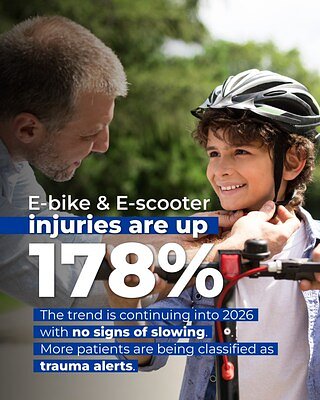
- 178% surge in e-bike and e-scooter injuries between 2024 and 2025 in South Florida
- 82% of injured riders not wearing helmets
- 44% of injuries in 2025 involved patients under 18
Experts emphasize that e-bikes and scooters are motorized vehicles requiring proper safety measures, including helmets and regulatory oversight, to prevent severe and often preventable injuries.
Silent Speed, Severe Toll: E-Bike Injuries Overwhelm Florida ERs
HOLLYWOOD, FL – April 29, 2026 – Emergency rooms across South Florida are grappling with a rapidly escalating public health crisis as injuries related to electric bikes and scooters skyrocket, leaving a trail of devastating and often preventable harm. A startling new report from Memorial Healthcare System reveals a 178% surge in e-bike and e-scooter injuries between 2024 and 2025, a grim trend that physicians confirm has continued unabated into 2026.
The data paints a picture of a recreational trend turned into a significant source of trauma, affecting riders of all ages. The problem, however, is not confined to one hospital system. Medical professionals at other major regional facilities, including Nicklaus Children's Hospital in Miami-Dade, are reporting a parallel and troubling increase in severe trauma cases, confirming this is a widespread regional issue with statewide echoes.
A Regional Health Crisis Unfolds
What concerns doctors most is not just the sheer volume of injuries, but their escalating severity. More patients are now arriving at trauma centers with injuries so severe they trigger the highest levels of emergency alerts. These are not minor scrapes and bruises; they are life-altering events including severe head trauma, skull fractures, internal organ damage, and complex orthopedic injuries requiring extensive surgery and long-term rehabilitation.
"We are seeing patients of all ages come in with serious, sometimes life-altering injuries," said Dr. Oliver Lao, Medical Director of Pediatric Trauma Services at Joe DiMaggio Children's Hospital, part of the Memorial system. "These are not toys. These are motorized vehicles capable of significant speed, and when something goes wrong, the consequences can be devastating."
This sentiment is echoed at Nicklaus Children's Hospital, where doctors have seen serious injuries from these devices more than double in the past year, with children as young as 10 suffering from multiple broken bones and punctured lungs. The data from Memorial shows that while 44% of injuries in 2025 involved patients under 18, the majority of cases were adults, with victims spanning from young children to seniors in their 80s.
The Demographics of Danger
The common thread linking the vast majority of these severe incidents is the absence of a simple piece of safety equipment: a helmet. According to Memorial's data, an alarming 82% of injured riders treated at their facilities were not wearing one. This, combined with the high speeds that many e-bikes and scooters can achieve, creates a formula for disaster.
"We're seeing a rise in injuries across all age groups, including younger riders, which increases the risk for serious outcomes," noted Rachele Solomon, Trauma Injury Prevention Coordinator at Memorial Healthcare System. "These devices are faster and more powerful than many people realize, and safety behaviors simply aren't keeping up."
Nowhere is this disconnect more apparent than among young riders. Over half of all pediatric injuries at Memorial in 2025 occurred in children aged 12 to 15. Experts warn that many children in this age group lack the developmental judgment, coordination, and risk assessment skills needed to operate what are essentially motorized vehicles in live traffic.
The American Academy of Pediatrics advises that children under 16 should not operate motorized scooters or e-bikes, yet their popularity among middle and high schoolers continues to grow, fueled by wide online availability and affordability.
Lagging Laws and a Legislative Push
The surge in injuries has cast a harsh spotlight on Florida's regulatory framework, which critics argue has failed to keep pace with the explosion of e-micromobility. Current state law classifies e-bikes similarly to traditional bicycles, requiring no license, registration, or insurance. While a helmet is mandatory for any rider under 16, enforcement can be challenging, and the 82% unhelmeted figure suggests the message is not getting through.
In response to the crisis, Florida lawmakers are considering new legislation (CS/SB 382 and HB 243) during the 2026 session. The proposed bills aim to close critical safety gaps by:
- Establishing new speed limits: Prohibiting riders from exceeding 10 mph on sidewalks when near pedestrians.
- Improving data collection: Requiring law enforcement to specifically document when an e-bike is involved in a crash, which will provide a clearer picture of the problem's scale.
- Banning modifications: Outlawing after-market changes that allow e-bikes to exceed their factory-set speed limits.
- Mandating education: Integrating e-micromobility safety content into learner's permit and driver's license courses.
- Creating a task force: Establishing a Micromobility Device Safety Task Force to conduct a comprehensive review of state laws and recommend further improvements.
These measures represent a crucial step toward aligning regulations with the reality on Florida's roads and bike paths.
A Call for Rider Responsibility
While legislators debate policy, safety experts and physicians stress that immediate change must begin with riders and their families. The most critical step is consistent and proper helmet use. Experts now warn that as e-bike speeds increase, a standard bicycle helmet may not be enough.
"We know helmets save lives, but not all helmets are created equal," Dr. Lao cautioned. "Some of these devices exceed speeds that standard bike helmets are designed for. Please make sure you are purchasing a helmet that is specified for speeds above 15 mph."
Beyond helmets, prevention hinges on a fundamental shift in mindset. Solomon urges families to stop viewing e-bikes as recreational toys and treat them as the motorized vehicles they are. This means understanding the device's power, knowing and following all traffic laws, riding predictably, and ensuring younger riders are developmentally ready and properly supervised.
As communities across South Florida reckon with the true cost of this new form of convenience, the message from the front lines of the healthcare system is clear and urgent. "Communicate the rules of the road, ride predictably and set the standard—no helmet, no ride," Solomon said.