
- Production Capacity: SIG's Querétaro plant will double its output from 1.5 billion to 3 billion aseptic carton packs annually by 2028.
- Job Creation: The expansion will generate approximately 40 new direct jobs, adding to the current workforce of 254 employees.
- Market Growth: The North American aseptic packaging market is projected to grow at a CAGR of over 9%, reaching $22 billion by 2030.
Experts would likely conclude that SIG's strategic expansion in Mexico is a well-timed move to capitalize on the nearshoring trend, rising demand for sustainable packaging, and Mexico's favorable industrial environment, positioning the company for long-term growth in North America.
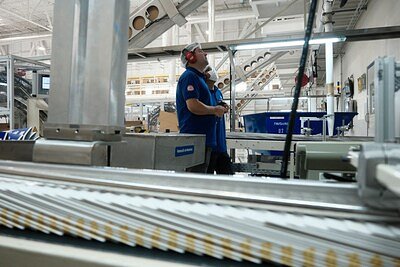
SIG Doubles Down in Mexico, Fueling North American Packaging Boom
QUERÉTARO, Mexico – April 28, 2026 – Swiss packaging giant SIG has unveiled an ambitious expansion plan for its Querétaro manufacturing plant, a strategic move set to double its production capacity in North America by 2028. The investment highlights a powerful convergence of global supply chain shifts, rising consumer demand for sustainable goods, and Mexico's growing prominence as a critical industrial hub.
The company announced that it will increase the plant's output from 1.5 billion to 3 billion aseptic carton packs annually. The project, slated to begin this year, is expected to generate approximately 40 new direct jobs, bolstering the facility's current workforce of 254 employees and injecting further vitality into the regional economy. The announcement was made at a high-profile event attended by Querétaro Governor Mauricio Kuri González, reinforcing the project's significance for the state's industrial development strategy.
Riding the Nearshoring Wave
SIG's expansion is a prime example of the accelerating nearshoring trend, where multinational corporations are relocating manufacturing operations closer to their primary consumer markets. By moving key production processes from Europe to Mexico, SIG aims to significantly enhance its supply chain resilience and efficiency across North America.
This strategic relocation is designed to shorten delivery times, increase operational flexibility, and mitigate risks associated with long-distance logistics and geopolitical uncertainties. The Querétaro plant currently serves a diverse clientele, including leading food and beverage brands in Mexico, with 70% of its production destined for the domestic market. The remaining 30% is exported to the United States and Canada, a figure likely to grow as the expansion comes online.
"Mexico is key to SIG's growth in North America," said Ricardo Rodríguez, President Americas at SIG, in a statement. "With this plant expansion, we can double our production capacity and strengthen our operations to be more agile, efficient, and closer to our customers in the region."
This move taps into the clear advantages Mexico offers under the United States-Mexico-Canada Agreement (USMCA), which facilitates tariff-free trade. The country's geographic proximity to the U.S.—its largest export market—allows for ground transportation that can reach most of the country within days, a stark contrast to the weeks-long transit times from Asia or Europe. This proximity, combined with a skilled labor force and government incentives, has made Mexico a magnet for foreign investment aimed at de-risking and optimizing supply chains.
Tapping a Surging Market for Sustainable Packaging
The decision to double down on production is directly tied to the robust growth of the North American aseptic packaging market. Industry analysts project the market to expand at a compound annual growth rate (CAGR) of over 9%, potentially reaching a value of more than $22 billion by 2030. This surge is driven by a fundamental shift in consumer behavior.
Today's shoppers increasingly prioritize convenience, seeking out ready-to-consume products like juices, dairy, soups, and plant-based beverages that fit busy lifestyles. Aseptic packaging, which allows these products to maintain freshness, flavor, and nutritional value for months without refrigeration or preservatives, is perfectly positioned to meet this need. The technology has been particularly instrumental in the rising popularity of UHT (ultra-high temperature) milk, valued for its extended shelf life.
Furthermore, sustainability has become a critical purchasing driver. SIG's portfolio of recyclable carton packs, made primarily from paperboard, resonates with environmentally conscious consumers and aligns with tightening regulations around recycled content. The expansion will enable the company to more effectively meet this demand across the continent, particularly in Mexico, which is forecasted to be the fastest-growing segment of the North American aseptic market with a CAGR exceeding 11%.
Querétaro's Role as a Premier Manufacturing Hub
The choice of Querétaro for this significant investment is no accident. The state has cultivated a reputation as one of Mexico's most stable and attractive destinations for foreign direct investment (FDI), consistently outperforming the national average in economic expansion. In the first half of 2025 alone, Querétaro attracted nearly $1 billion in FDI, with the manufacturing sector capturing the lion's share.
The presence of Governor Kuri González at the announcement underscores the strong partnership between the government and private industry. The state is known for its pro-business climate, political stability, and superior logistics infrastructure, which are critical factors for companies like SIG. A high rate of reinvestment from existing foreign firms signals deep-seated confidence in the region's long-term prospects.
SIG's two-phase expansion will methodically build upon this foundation. Phase I, beginning in 2026, involves adding new finishing technologies, followed by a new state-of-the-art printing line in 2027. Phase II, set for completion by the end of 2028, will integrate strategic processes like extrusion, which will further streamline operations and generate economies of scale. This phased approach ensures a steady ramp-up of capabilities to meet the growing demands of a competitive marketplace where rivals like Tetra Pak and Elopak are also vying for market share. By enhancing its regional production footprint, SIG is making a decisive play to solidify its position as a leading packaging partner for the food and beverage industry across North America.