
- 20% increase in throughput for PepsiCo's manufacturing facilities
- 10 to 15% reduction in capital expenditure (Capex) for PepsiCo
- 90% of potential issues identified before real-world delays or failures
Experts agree that the industrial metaverse, as demonstrated by Siemens and PepsiCo, is becoming a practical tool for enhancing manufacturing efficiency, reducing costs, and optimizing operations through high-fidelity digital twins and AI-driven simulations.
Siemens and PepsiCo Bring the Industrial Metaverse to the Factory Floor
LAS VEGAS, NV – January 06, 2026 – The long-promised industrial metaverse is transitioning from a futuristic concept to a factory-floor reality. At CES 2026, Siemens unveiled its Digital Twin Composer, a breakthrough software solution designed to build and manage large-scale industrial metaverse environments. In a powerful demonstration of its real-world impact, early adopter PepsiCo is already leveraging the technology to digitally transform its U.S. manufacturing facilities, reporting significant gains in efficiency and reductions in capital spending.
The announcement marks a pivotal moment for manufacturing, showcasing how the fusion of comprehensive digital twins, real-time data, and artificial intelligence can solve complex operational challenges before a single physical component is altered. By creating a persistent, physics-based virtual replica of its operations, Siemens is empowering industrial companies to design, simulate, and optimize in the digital realm with unprecedented speed and accuracy.
The Industrial Metaverse Made Real
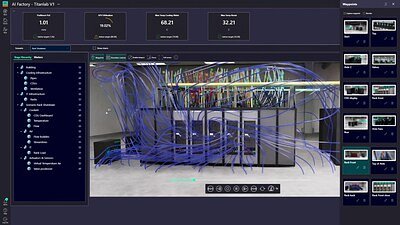
At the heart of the announcement is the Digital Twin Composer, a new addition to the Siemens Xcelerator open digital business platform. The software breaks down traditional silos between design, engineering, and operations by creating a single, living digital twin that mirrors a product, process, or entire factory. This is not just a static 3D model; it's a dynamic, photorealistic environment that integrates 2D and 3D data with live information from the physical world.
Built using NVIDIA Omniverse libraries, the Composer creates high-fidelity, physically accurate visual scenes. It connects to an array of real-world data sources, including Manufacturing Execution Systems (MES), Quality Management Systems (QMS), and data from machine controllers (PLCs) and Industrial Internet of Things (IIoT) sensors. This constant stream of data ensures the digital twin is a true, up-to-the-minute reflection of its physical counterpart.
“The new Digital Twin Composer delivers on our vision for the industrial metaverse,” said Joe Bohman, executive vice president of PLM Products at Siemens Digital Industries Software. “It helps manufacturers to overcome the unprecedented challenges of mastering complexity, accelerating production, reducing costs and increasing profitability.”
This unified model allows engineers and operators to visualize and interact with any aspect of their production environment. They can test new automation layouts, simulate the flow of materials, and validate process changes in minutes, not months. The goal is to identify bottlenecks, optimize workflows, and stress-test systems virtually, long before committing to costly hardware investments or disruptive physical changes on the factory floor.
PepsiCo's Blueprint for Digital-First Manufacturing
The most compelling evidence of the Digital Twin Composer's power comes from PepsiCo. The global food and beverage giant has embarked on a multi-year collaboration with Siemens to implement a "digital-first" planning strategy at select U.S. manufacturing and warehouse facilities. By converting these sites into high-fidelity digital twins, PepsiCo has created a virtual sandbox to reimagine its supply chain.
The results from the initial deployment are striking. PepsiCo reports a 20 percent increase in throughput by optimizing and validating new equipment configurations in the virtual world. The company has also achieved nearly 100 percent design validation before construction and identified up to 90 percent of potential issues before they could cause real-world delays or failures.
This proactive approach has led to a 10 to 15 percent reduction in capital expenditure (Capex). By recreating every machine, conveyor belt, and operator path with physics-level accuracy, PepsiCo's teams can uncover hidden capacity in existing layouts and precisely validate the ROI of new investments. Within weeks of implementation, teams were able to simulate new configurations that boosted plant capacity and throughput, all while gaining a unified, real-time view of their operations.
A Strategic Alliance Forging Industrial AI
The Digital Twin Composer is the latest product of a deep and expanding strategic alliance between Siemens and NVIDIA. This partnership combines Siemens' century of industrial expertise with NVIDIA's leadership in accelerated computing, AI, and real-time 3D simulation. The collaboration aims to build the foundation for the next generation of AI-driven factories.
By integrating NVIDIA Omniverse libraries directly into the Digital Twin Composer, Siemens leverages a powerful platform for building and simulating physically accurate virtual worlds. This allows for photorealistic rendering and real-time ray tracing, making the digital twin not just data-rich but also visually immersive and intuitive for users.
“In an era where every physical object and process will have a digital twin, Siemens' Digital Twin Composer establishes a digital thread that connects the silos of design, engineering, and operations across the Siemens Xcelerator ecosystem,” said Rev Lebaredian, vice president of Omniverse and Simulation Technology at NVIDIA. He emphasized that this integration allows enterprises to “validate their entire lifecycle... in the virtual world before committing a single atom to the real one.”
The partnership extends beyond visualization. The companies are working to infuse Siemens' software portfolio with NVIDIA's AI capabilities, creating a closed loop where AI agents can be trained and tested in the digital twin before being deployed to optimize the physical factory, enabling a new level of intelligent automation.
Overcoming Hurdles on the Path to Adoption
Despite the clear advantages demonstrated by Siemens and PepsiCo, the path to widespread adoption of the industrial metaverse is not without its challenges. The technology, while powerful, requires significant investment and expertise. For many manufacturers, especially small and medium-sized enterprises (SMEs), the upfront cost of software, sensors, and data infrastructure can be a major hurdle, with implementations often running into the millions of dollars.
Beyond cost, there is the challenge of technical complexity and integration. Creating and maintaining a high-fidelity digital twin requires specialized skills in modeling, data science, and systems integration. Companies must grapple with connecting disparate legacy systems and ensuring the security and privacy of the vast amounts of operational data being fed into the twin.
A significant skills gap also exists in the market. Many organizations lack the in-house talent to manage such sophisticated systems, creating a need for extensive upskilling and training. Furthermore, successful adoption is as much a cultural challenge as it is a technical one. It requires visionary leadership and a willingness to overhaul long-standing processes and embrace a data-driven, digital-first mindset across the organization.
However, the tangible ROI reported by early adopters like PepsiCo provides a powerful catalyst. As industry giants prove out the technology and establish best practices, it helps de-risk the investment for others and builds momentum for the development of industry standards, making the transformative power of the industrial metaverse more accessible to the broader market.